


1. Idle Breakout Game Overview
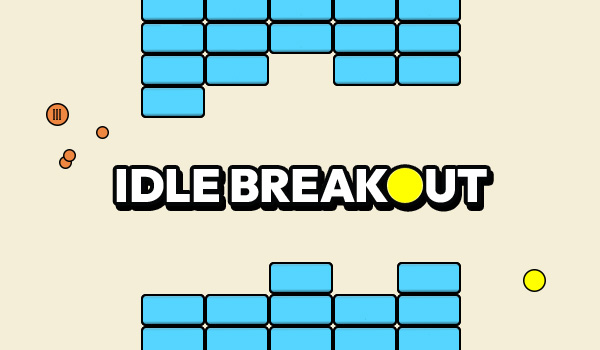
Idle Breakout is the irresistible collision of two game genres that have no business working this well together: the classic brick-breaking arcade formula and the compulsive progression loop of idle clicker games. The result is something that starts as simple clicking and gradually evolves into a full-blown upgrade management system where bricks are breaking themselves while you're doing other things entirely.
The premise is satisfyingly straightforward. Bricks fill the screen. Each click deals damage. Break enough bricks, earn enough resources, and unlock upgrades that make each click more powerful — or better yet, unlock power-ups that deal damage automatically without any clicking at all. The transition from active clicking to passive idle destruction is the game's most satisfying arc: watching a screen full of bricks crumbling under accumulated upgrade power you built through dozens of sessions is exactly the kind of compounding progress idle games do best.
The level scaling creates the game's long-term hook. Level 1 bricks shatter in one click. Level 2 bricks require two hits. The number scales upward with each level, making raw clicking increasingly inadequate without the upgrade infrastructure to support it. This is by design — the upgrade system isn't optional, it's essential, and building the most efficient upgrade stack becomes the real game beneath the brick-breaking surface.
Power-ups like Crash Up, Click Frenzy, Demon Core, Snowball, and x2 Gold aren't just bonuses — they're game-changers that transform what's possible at high levels and reward players who collect the brick milestones required to unlock them.
Key Details:
| Genre: | Idle Clicker / Arcade / Incremental |
| Difficulty Level: | Easy |
| Average Play Time: | 5–30+ minutes per session (idle play supported) |
| Best For: | Idle game fans and casual players who enjoy satisfying progression loops with active and passive gameplay phases |
2. How to Play Idle Breakout
Getting Started:
- Click any brick on the screen to deal damage and begin breaking it.
- Earn resources from destroyed bricks and spend them on click damage upgrades.
- Progress through levels — brick HP scales up with each new level, requiring more clicks or stronger upgrades.
- Unlock power-ups by collecting enough bricks, adding automated damage and special effects.
- Build an upgrade stack powerful enough that bricks break passively without continuous active clicking.
Basic Controls:
- Mouse Click (Bricks): Click any brick to deal click damage.
- Mouse Click (Upgrades / Power-ups): Click upgrade and power-up buttons to purchase improvements with earned resources.
Objective: Progress through increasing brick levels by managing your upgrade stack efficiently. Earn enough bricks to unlock all power-ups and build a passive damage system capable of breaking even the highest-level bricks without constant active input.
3. Idle Breakout Features & Highlights
- ✓ Active-to-idle progression arc — starts with clicking and evolves into full passive automated brick destruction
- ✓ Level-scaling brick HP — continuously increasing brick durability ensures upgrades remain relevant and necessary
- ✓ Multiple power-up types — Crash Up, Click Frenzy, Demon Core, Snowball, and x2 Gold each transform gameplay in distinct ways
- ✓ Click damage upgrade system — scalable click strength ensures active clicking remains meaningful alongside passive damage
- ✓ No fail state — completely pressure-free progression where every session contributes to cumulative advancement
4. Idle Breakout Tips & Strategies
Beginner Tips:
- Upgrade click damage first. In the early game before passive power-ups are available, your click rate is your entire damage output. Click damage upgrades directly multiply every click you make — they have the highest immediate return in the early progression.
- Don't ignore the brick count threshold. Power-ups unlock when you've collected a specific number of bricks, not when you've spent resources on them. Actively tracking how close you are to the next power-up unlock milestone helps you anticipate when your gameplay will shift.
- Click actively in short bursts. You don't need to click continuously for hours. Concentrated active clicking sessions to push through upgrade thresholds, followed by idle periods where passive damage accumulates, is a more sustainable and often more efficient approach.
Advanced Strategies:
- Prioritize power-ups that provide passive damage. Any power-up that deals damage without active clicking creates compounding value over idle time. These passive sources become your primary damage output at high levels — investing brick milestones toward them pays dividends across all subsequent sessions.
- Time x2 Gold power-up with high-resource-cost upgrade purchases. x2 Gold doubles your resource income for its duration. Activating it before purchasing expensive upgrades that require large brick earnings maximizes the effective value of the multiplier.
- Balance click upgrades with passive investment. At high levels, pure active clicking can't keep pace with brick HP growth. Players who invest exclusively in click damage hit a wall; players who build passive damage infrastructure alongside click upgrades maintain continuous progression.
What to Watch Out For:
- Passive damage gaps. If your passive damage systems are too weak relative to current brick HP, progression slows dramatically during idle periods. Ensure passive damage is scaling with your level progression — not just your click damage.
- Under-investing in power-ups. Players who focus entirely on click damage upgrades and defer power-up unlocks miss the game's most powerful progression accelerators. Check power-up unlock requirements frequently and ensure you're consistently working toward the next threshold.
5. Idle Breakout Game Elements Explained
The Click and Damage System: Idle Breakout's fundamental mechanic is click-to-damage: each mouse click deals a fixed amount of damage to the targeted brick, and bricks break when their HP reaches zero. The click damage value starts at 1 per click (matching level 1 brick HP) but can be upgraded multiple times, with each upgrade adding to the base click damage. At sufficient upgrade investment, a single click can break even high-HP level bricks in one hit — restoring the satisfying "one click, one brick" feedback loop that early levels provide naturally. The click system is the game's active component: it's always relevant regardless of passive power-up investment, because faster active clicking provides a burst damage ceiling above what passive systems sustain.
The Level Scaling System: Brick HP scales directly with level number — level 2 bricks require 2 damage, level 10 bricks require 10, and so on indefinitely. This scaling is the engine of the game's long-term challenge: without upgrades, each new level requires exponentially more clicking than the last. The scaling is deliberately calibrated to make raw clicking alone inadequate at moderate levels, forcing players to engage with the upgrade and power-up systems rather than simply clicking faster. This design ensures that progression always feels earned — each new level conquered represents the accumulated upgrade investment of all previous sessions, not just the clicking effort of a single moment.
The Power-Up System: Power-ups are Idle Breakout's most transformative mechanics and are unlocked by collecting specific cumulative brick totals rather than purchased with resources. Each power-up fundamentally changes some aspect of the game: Crash Up generates automatic damage over time without clicking, Click Frenzy multiplies click speed for a duration, Demon Core provides a persistent passive damage aura, Snowball creates a bouncing damage object that breaks bricks automatically, and x2 Gold doubles resource income. The distinction between active power-ups (triggered for a duration) and passive power-ups (always running) matters strategically — passive power-ups like Crash Up and Snowball provide consistent idle value, while active power-ups like Click Frenzy create burst windows that pair best with concentrated active clicking sessions.
6. Idle Breakout Frequently Asked Questions
Q: How do I unlock new power-ups?
A: Power-ups unlock when you've collected a specific total number of bricks — not when you spend resources. Track the brick collection milestones for each power-up in the game's upgrade panel and work toward those totals to trigger unlocks.
Q: Does the game progress while I'm not playing?
A: Yes — once passive power-ups are unlocked, they continue dealing damage to bricks even when you're not actively clicking. Return to the game after idle time to collect the accumulated resources from passive damage. Active clicking accelerates this, but passive progression continues without it.
Q: What should I upgrade first?
A: Early in the game, prioritize click damage upgrades to handle escalating brick HP without excessive clicking. As power-ups become available, shift focus toward passive damage sources — Crash Up and Snowball in particular — to build a foundation for idle progression.
Q: Is there a way to fail or lose progress in Idle Breakout?
A: No — Idle Breakout has no fail state. Every click contributes to progress, every upgrade persists between sessions, and there's no penalty for slow advancement. The game is designed around pure incremental progression with no risk of losing ground.
Q: How many levels are there?
A: Idle Breakout's levels increase indefinitely — brick HP continues scaling upward without a defined ceiling. The game is an endless incremental challenge rather than a finite progression toward a specific ending.