






1. Trimerge Game Overview
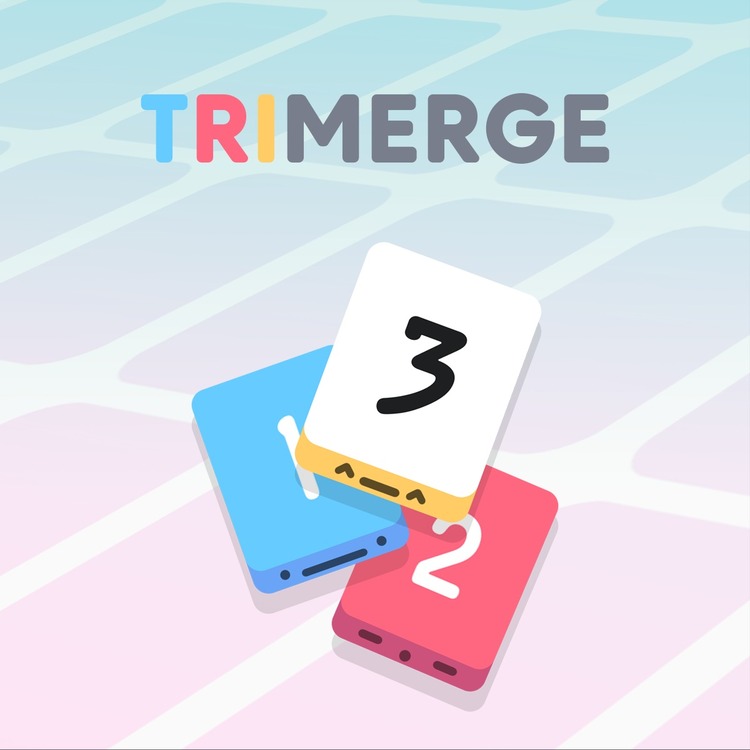
TriMerge is a number-merging puzzle that uses a beautifully counterintuitive rule set to create a game that feels completely distinct from every other merge puzzle you've played. The starting rule is simple: only a 1 and a 2 can combine (to make 3). From there, only identical tiles can merge — and only if their value is a multiple of 3. Twos will never merge with Twos. Fours will never merge with Fours. Only 3s merge with 3s (making 6), 6s with 6s (making 12), 12s with 12s (making 24), and so on up through the doublings.
This specific rule set creates a puzzle fundamentally different from 2048-style games. In 2048, any two matching tiles can merge. In TriMerge, 1s and 2s are special — the only tiles that can merge with different values, and the most important tiles to manage because the entire merging chain starts with them. If your board fills with disconnected 1s and 2s that have no paths to each other, your higher-value tiles become unreachable.
After every move, a new 1 or 2 tile appears on the board — relentlessly filling space and demanding that you always have a plan for processing small tiles into useful 3s. The game ends when the grid is completely filled and no merges are possible. Reaching numbers like 96, 192, or 384 requires the kind of sustained strategic discipline the game's description correctly calls "long-term planning for a campaign."
Key Details:
| Genre: | Puzzle / Merge / Number Strategy |
| Difficulty Level: | Medium to Hard |
| Average Play Time: | 10–30 minutes per session |
| Best For: | Number puzzle fans who enjoy 2048-style games and want a more complex rule set; strategy players who enjoy long-term spatial planning under pressure |
2. How to Play Trimerge
Getting Started:
- The grid starts with some tiles — a mix of 1s, 2s, and small multiples of 3.
- Swipe in any direction to slide all tiles that direction simultaneously.
- A 1 touching a 2 (or vice versa) merges into a 3.
- Any two identical tiles that are multiples of 3 and touch each other merge (3+3=6, 6+6=12, etc.).
- After every move, a new 1 or 2 tile appears on the board.
Basic Controls:
- Swipe / Arrow Keys: Slide all tiles in the swiped direction to trigger merges.
Merge Rules:
- 1 + 2 = 3 (the only cross-value merge)
- 3 + 3 = 6
- 6 + 6 = 12
- 12 + 12 = 24 (continues doubling)
- No other tile combinations are valid
Objective: Achieve the highest tile value possible before the grid fills completely with no available merges. Reach milestones like 96, 192, 384, and beyond through sustained strategic planning.
3. Trimerge Features & Highlights
- ✓ Unique 1+2=3 merge rule — a completely novel number-pairing mechanic that creates gameplay distinct from 2048
- ✓ Multiples-of-3 chain doubling — elegant mathematical progression from 3 through 6, 12, 24, and beyond
- ✓ Relentless 1/2 tile spawning — new tiles after every move create constant space pressure
- ✓ Corner strategy optimization — positioning the highest tile in a fixed corner is the key long-term technique
- ✓ High milestone targets — 96, 192, 384 as achievable benchmarks for advanced players
4. Trimerge Tips & Strategies
Beginner Tips:
- Keep your highest tile in one corner. Choose a corner at the start and keep your largest tile there permanently. A high-value tile stuck in the board's interior gets surrounded by smaller tiles that block its merging partners. A corner tile only has two adjacency directions to manage, reducing the risk of isolation.
- Prioritize 1+2 merges constantly. 1s and 2s spawn after every move — they're your primary board pressure. Keeping them paired and merging into 3s continuously prevents the board from filling with small tiles that block everything above them.
- Use the grid edges for 1/2 management. The game's description specifically advises using grid edges to merge 1s and 2s — positions near edges naturally funnel small tiles into merge contact with fewer interference paths.
Advanced Strategies:
- Look for multi-merge swipe opportunities. A single swipe in the right direction can trigger multiple merges simultaneously — clearing more space and increasing score more efficiently than swipes that only trigger one merge. Before swiping, trace all possible merges in that direction.
- Build the merge chain from the top. Your highest tile sits in the corner. Below it should be the second-highest. Below that, the third-highest, and so on — a cascading sequence where each new merge of smaller tiles contributes upward toward the top. This "merge chain" pattern allows you to repeatedly merge toward the corner tile when its partner value appears.
- Never let 1/2 tiles accumulate in the corner area. If your corner and the tiles adjacent to it fill with 1s and 2s, your high-value tile is completely surrounded by tiles it can never merge with. Aggressively process 1s and 2s out of the corner area before they create blockades.
What to Watch Out For:
- The 1/2 flood. Since 1s and 2s spawn every move, any strategy that doesn't continuously process them into 3s eventually drowns the board in small tiles. Always have a 1/2 management strategy active, not just an occasional cleanup.
- High tile isolation. A 48 or 96 tile that has become surrounded by tiles it can't merge with is effectively dead weight — it occupies precious space without contributing to future merges. Prevent this by maintaining clear paths to potential merge partners.
5. Trimerge Game Elements Explained
The 1+2 Seeding System: TriMerge's most distinctive rule is that 1 and 2 are the only tiles that can merge with different values — and this asymmetry is structurally central to the entire game. Every other merge requires identical values. But 1s and 2s feed into each other to create 3s, making them the entry point of the entire multiplication chain. New 1 and 2 tiles spawn after every move, which means these small tiles are the game's primary resource: processed correctly, they become the 3s that become 6s that become 12s that become your highest-value tile. Ignored or mismanaged, they clog the board and prevent every other merge from happening. The 1/2 management skill is the foundational TriMerge competency — everything else builds on how well you handle the constant seed tile spawning.
The Multiples-of-3 Chain System: From 3 onward, TriMerge's merge rule is mathematically elegant: only identical tiles that are multiples of 3 can merge, and they always double. 3+3=6, 6+6=12, 12+12=24, 24+24=48, 48+48=96, and so on. This doubling chain is the game's progression sequence — each milestone is exactly double the previous, and reaching a new milestone requires assembling two tiles of the current maximum value in the same position. The multiples-of-3 rule creates the game's strategic spacing challenge: at any given board state, you have one "current maximum" tile and need to generate another identical tile to create the next level. The entire board management strategy is oriented around this next-merge creation while preventing 1/2 spawning from consuming all available space.
The Grid Pressure System: After every move in TriMerge, a new 1 or 2 tile appears on the board. This constant spawning creates relentless spatial pressure — the grid never stops filling, and the only way to maintain space is to merge faster than tiles arrive. In early game, when the grid is sparse and small tiles merge quickly, this pressure is manageable. As the game progresses and larger tiles occupy more of the fixed grid space, the spawning rate becomes more threatening — each 1 or 2 that can't immediately find a merge partner occupies space that won't be recovered. The game ends when the grid is completely filled with no valid merges possible, which almost always happens when unprocessed 1s and 2s have occupied all remaining empty cells.
6. Trimerge Frequently Asked Questions
Q: Why can't I merge two 2-tiles together?
A: TriMerge's rule is that only 1 and 2 can merge with each other (making 3), and from 3 onward, only identical multiples of 3 can merge. Two 2s cannot merge in TriMerge — this is a deliberate design rule that distinguishes it from 2048.
Q: What's the correct order of merges?
A: 1+2=3 → 3+3=6 → 6+6=12 → 12+12=24 → 24+24=48 → 48+48=96 → 96+96=192, and so on. Only identical multiples of 3 merge beyond the initial 1+2 step.
Q: Why should I keep the highest tile in a corner?
A: A corner position only requires two adjacency directions to manage — far fewer than central positions. This means your high-value tile is less likely to become surrounded by tiles it can't merge with. Consistently directing merges toward the corner tile allows you to feed it partners from a controlled direction.
Q: Does the game get harder over time?
A: Yes — as higher-value tiles occupy more of the fixed grid space, the available space for 1/2 tile spawning decreases. Simultaneously, generating the partner values needed for high-level merges takes more moves. Both factors increase the difficulty the longer a session runs.
Q: What's a realistic score target for new players?
A: Reaching a 96 tile is a solid initial milestone for players learning TriMerge's rule set. Beyond that, 192 and 384 represent increasing levels of strategic mastery. The game's own description identifies these as benchmarks that require deliberate long-term planning to achieve.