

1. Refuge Solitaire Game Overview
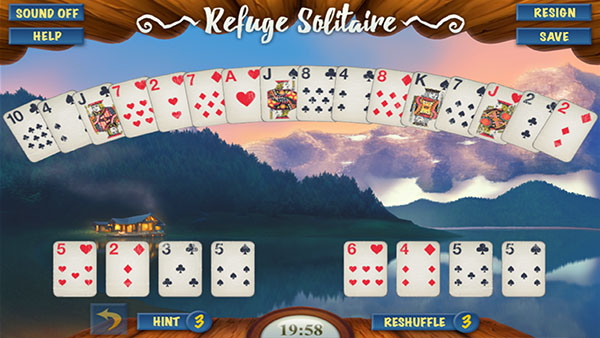
Refuge Solitaire is a deliberately calming card game that pairs the relaxing challenge of solitaire with an atmosphere specifically designed to feel like an escape. A quiet lake at sunset. Gentle sounds. Simple, drag-and-drop controls. This is solitaire in its most unhurried, restorative form — a game you come to when you want something engaging without being demanding, strategic without being stressful.
The setting isn't just aesthetic dressing. Refuge Solitaire takes its name seriously: the experience is crafted to feel like stepping away from the noise, not into it. The controls are as frictionless as possible — drag-and-drop cards to where they need to go, and the game handles the rest. There are no timers, no penalty systems, no score pressure. You play until the cards are sorted, and sorting them is the reward.
The gameplay structure is solitaire in a familiar tradition: move cards from the playfield onto eight foundation stacks, stacking in alternating colors as you go, and reveal all face-down cards to maintain a full view of your options. The goal is to place all cards in ascending order by suit on the foundations — clean, organized, complete.
For players who want a card game they can settle into without cognitive overhead or competitive pressure, Refuge Solitaire delivers exactly the peaceful, focused experience its name promises.
Key Details:
| Genre: | Card Game / Solitaire / Casual |
| Difficulty Level: | Easy |
| Average Play Time: | 15–25 minutes per session |
| Best For: | Players seeking a calming, pressure-free solitaire experience; ideal for relaxation sessions and unwinding |
2. How to Play Refuge Solitaire
Getting Started:
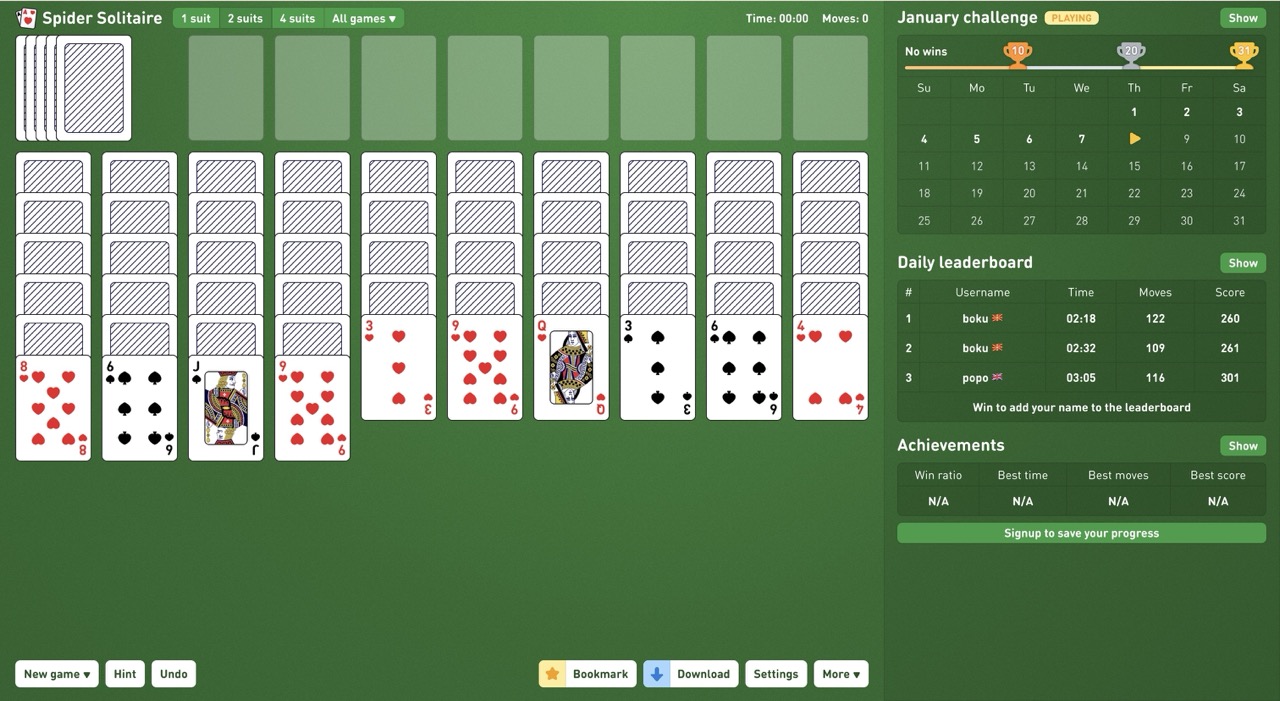
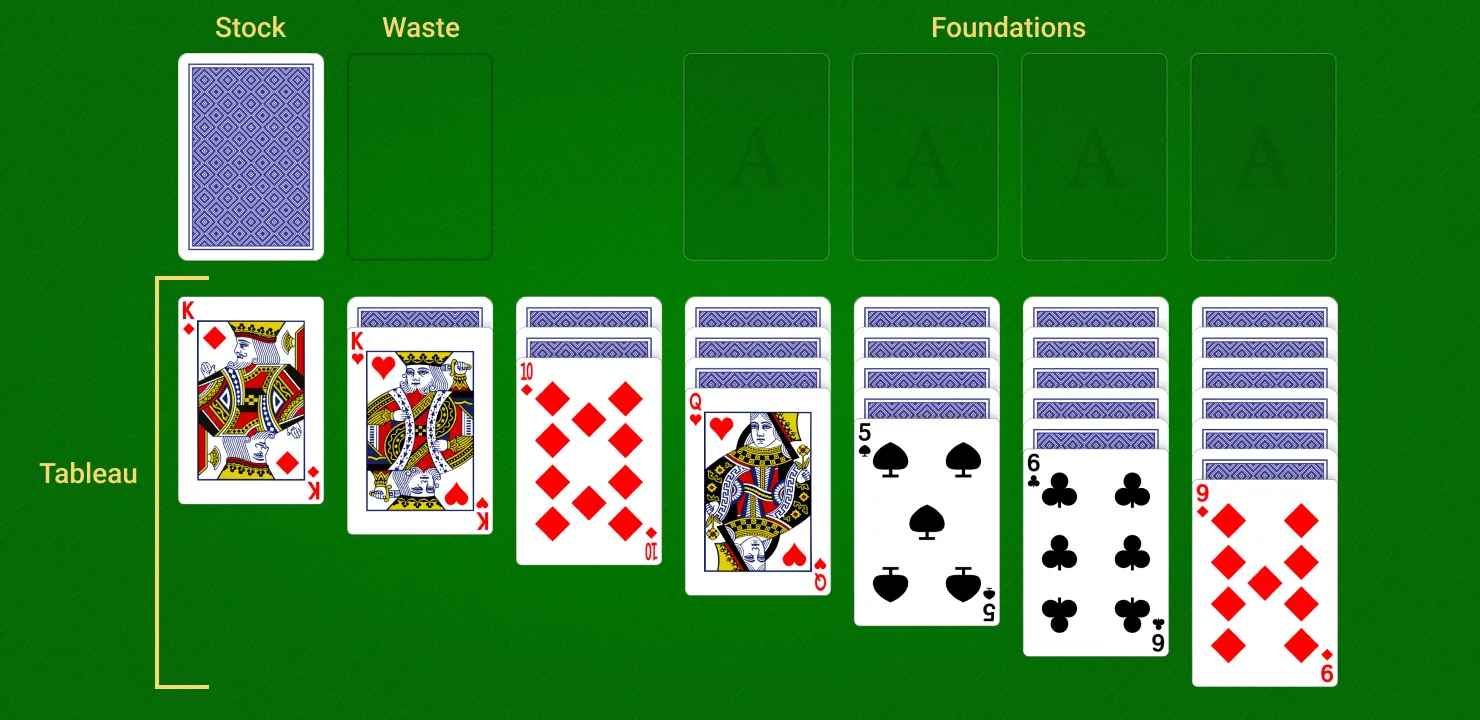
- Cards are dealt across the playfield with some face-down.
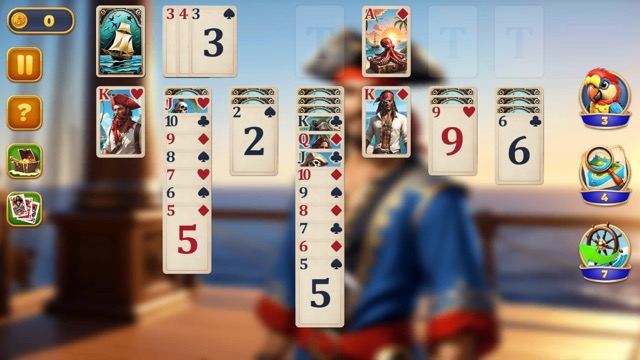
- Drag and drop face-up cards onto other face-up cards in alternating colors to build sequences.
- As face-up cards are moved, face-down cards beneath them are revealed.
- Move cards to the eight foundation stacks when they're ready to be sorted by suit in ascending order.
- Clear the entire playfield into the foundations to win.
Basic Controls:
- Drag & Drop: Click and hold a card, drag it to the destination, and release to place it.
- Foundation Stacks: Drag eligible cards to the foundation area to build suit sequences.
Objective: Move all cards from the playfield into the eight foundation stacks, arranged in ascending order by suit. Reveal all face-down cards as you build sequences, and clear the playfield completely to win.
3. Refuge Solitaire Features & Highlights
- ✓ Peaceful lake-at-sunset atmosphere — visual design and audio specifically crafted for a calming, restorative experience
- ✓ Drag-and-drop controls — frictionless, intuitive card interaction that removes interface as a source of frustration
- ✓ Eight foundation stacks — a generous sorting target that accommodates a broader card spread than four-foundation solitaire
- ✓ No time limit or pressure — completely self-paced play where the only goal is completing the sort at your own rhythm
- ✓ Face-down card revelation — a satisfying information-reveal loop as you uncover and sort through the full card set
4. Refuge Solitaire Tips & Strategies
Beginner Tips:
- Reveal face-down cards as a primary goal. The more face-down cards remain on the playfield, the more limited your options. Any move that flips a face-down card to face-up is valuable — it expands your known card set and opens new placement possibilities.
- Alternate colors deliberately. Refuge Solitaire's alternating-color stacking rule means you can only place a card on one of the opposite-colored cards that's one rank higher. Build this habit: before dragging any card, confirm the destination is both the right color and the right rank.
- Don't rush to the foundations. Sending cards to foundations immediately when they become eligible can sometimes strand a card you still need in the tableau. Confirm that sending a card to the foundation doesn't deprive another card of its only valid destination.
Advanced Strategies:
- Create empty columns when you have a card ready to place there. Open playfield columns can receive any card, not just Kings — giving you temporary staging flexibility. Clear a column intentionally when you have a card that needs parking space to enable a sequence you're building.
- Work from the deepest buried cards upward. Cards in columns with many face-down cards beneath them are your highest-priority targets — revealing them opens the most new options. Prioritize clearing above deep stacks over dealing with already-accessible edge cards.
- Suit-track the foundations. With eight foundation stacks (two per suit), keep a rough mental track of how each suit is progressing. A suit lagging significantly behind the others may have key cards buried somewhere in the playfield — identify them early and plan a path to them.
What to Watch Out For:
- Color mismatch placements. In the calm of a relaxed session, it's easy to drag a card to a destination that looks right but violates the alternating-color rule. Confirm color before releasing — a misplaced card can disrupt a sequence you were building.
- Over-building one column. Concentrating all activity in one area of the playfield while face-down cards in other columns remain unrevealed creates an imbalanced board that eventually limits your moves. Spread activity across columns to maintain broad option availability.
5. Refuge Solitaire Game Elements Explained
The Eight Foundation Stack System: Refuge Solitaire's foundation structure accommodates eight separate stacks rather than the four of standard solitaire. This expanded foundation (two stacks per suit) gives the game a slightly different visual organization and a broader sorting target — cards can be distributed across more stacks as they're organized, reducing congestion and visual complexity as the playfield empties. Building all eight stacks in ascending order by suit constitutes the win condition. The eight-stack format is more generous than four-stack solitaire, which contributes to the game's calmer, lower-pressure character — there's more room to organize, and the foundations feel more accommodating of different clearing sequences.
The Drag-and-Drop Interface: Refuge Solitaire's drag-and-drop control system is the most deliberate aspect of its calm design philosophy. Rather than click-then-click selection (which requires precision on two separate actions), drag-and-drop lets you fluidly move a card from its origin directly to its destination in one continuous gesture. This continuity makes the interaction feel more physical and more satisfying — more like actually handling cards — while also removing the intermediary state of "card selected but not yet placed" that can feel awkward in click-based interfaces. The drag-and-drop approach also works naturally on touchscreen devices, where it translates directly to touch-and-drag gestures that require no translation of desktop conventions.
The Calming Design Philosophy: Refuge Solitaire's design is explicitly built around the concept of peaceful escapism. The quiet lake at sunset setting, the gentle audio, the absence of timers and score pressure, and the frictionless controls all work together to create a gameplay atmosphere that functions as genuine relaxation rather than stimulation. Many puzzle games seek to engage through urgency or challenge escalation — Refuge Solitaire's approach is the opposite: engagement through calm focus, where the satisfaction of solving the card puzzle emerges from a state of peaceful attention rather than competitive pressure. This design makes it particularly well-suited to players who use casual games as a stress management tool or a way to create mental space after a demanding day.
6. Refuge Solitaire Frequently Asked Questions
Q: How do I move cards in Refuge Solitaire?
A: Click and hold a face-up card to pick it up, drag it to your desired destination, and release to place it. Cards can be dragged to other playfield positions (following alternating-color stacking rules) or to the foundation stacks when they're eligible.
Q: What order do the foundation stacks need to be built in?
A: Each of the eight foundation stacks is built in ascending order within a single suit — starting from the lowest card of that suit and building upward in sequence. Cards placed on the foundation must follow this ascending, same-suit order.
Q: What does alternating colors mean for the playfield stacking?
A: Cards placed on the playfield must alternate between red and black suits. A red card (hearts or diamonds) can only be placed on a black card (clubs or spades) that is one rank higher, and vice versa.
Q: Is there a time limit in Refuge Solitaire?
A: No — Refuge Solitaire has no time limit. Play at whatever pace feels comfortable and complete the card sort in your own time.
Q: Is Refuge Solitaire available on mobile?
A: Yes — the drag-and-drop controls work naturally with touch gestures on mobile devices, and the peaceful visual design is well-suited to phone and tablet screens.