



1. A Difficult Game About Climbing Game Overview
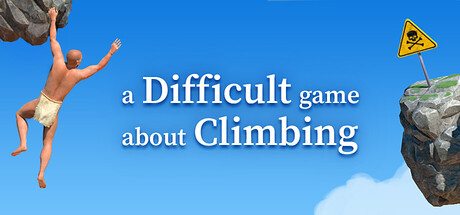
A Difficult Game About Climbing is exactly what it says on the tin — and that brutal honesty is part of its charm. You play as a determined climber ascending treacherous cliffs with nothing but your bare hands. No ropes, no safety net, no shortcuts. Just you, two hands, and an unforgiving mountain that doesn't care how long you've been at it.
This game has become a genuine phenomenon among streamers and content creators, and it's easy to see why. It delivers the rare combination of brutal difficulty and pure physical comedy that makes it equally compelling to play and to watch. Every handhold is a negotiation. Every new terrain section is a puzzle. And every unexpected slip — tumbling back down a cliff face you spent ten minutes climbing — is the kind of moment that makes you laugh, groan, and immediately try again.
What makes it distinct from other challenging climbing games like Getting Over It is the two-handed control scheme. Each mouse button controls a separate hand, and both hands work independently to grip, release, and pull. Coordinating them smoothly is its own skill that takes time to develop — and the moment it clicks is genuinely satisfying.
The appeal is primal: can you conquer the mountain? That simple question, combined with just enough control to make progress feel achievable, keeps players coming back through every fall. If you enjoy hard games that reward persistence, A Difficult Game About Climbing will test your patience and reward your grit.
Key Details:
| Genre: | Adventure / Climbing / Skill Challenge |
| Difficulty Level: | Hard |
| Average Play Time: | 20–60+ minutes (highly variable based on skill) |
| Best For: | Players who enjoy challenging skill games, persistence-based gameplay, and don't mind starting over from setbacks |
2. How to Play A Difficult Game About Climbing
Getting Started:
- Your character begins at a water surface at the base of the cliffs.
- Hold the left mouse button to activate and grip with your left hand.
- Hold the right mouse button to activate and grip with your right hand.
- Use both hands alternately to grab surfaces, pull yourself up, and ascend the terrain.
- Release a button to let go of that hand — be careful not to release both at once unless your other hand has a solid grip.
Basic Controls:
- Left Mouse Button (Hold): Left hand grips nearby surfaces.
- Right Mouse Button (Hold): Right hand grips nearby surfaces.
- Mouse Movement: Repositions your hands in space — move the cursor to reach for new grip points.
Objective: Climb as high as possible up increasingly difficult cliff terrain. There is no time limit, but there are no checkpoints either — losing your grip means falling back, potentially to much lower sections of the mountain. Reach the summit to complete the challenge.
3. A Difficult Game About Climbing Features & Highlights
- ✓ Unique dual-hand control scheme — each mouse button controls an independent hand for immersive climbing mechanics
- ✓ Genuinely challenging terrain — varied cliff faces, slippery surfaces, and tricky overhangs provide constant new obstacles
- ✓ No checkpoints by design — falls are meaningful, making every successful section feel truly earned
- ✓ Viral streaming appeal — one of the most watchable skill games, beloved by content creators and their audiences alike
- ✓ Pure skill progression — every session builds real muscle memory and climbing intuition
4. A Difficult Game About Climbing Tips & Strategies
Beginner Tips:
- Never fully release both hands simultaneously. Always maintain at least one active grip before repositioning the other. Releasing both at once is almost always a fall.
- Move slowly through new sections. Rushing unfamiliar terrain leads to mis-grabs and tumbles. Take the time to understand a new surface before committing to a move.
- Test the grip before committing weight. Lightly hover your hand near a surface to confirm it will grip before releasing your other hand. Not every surface is grippable.
Advanced Strategies:
- Develop a rhythm. Experienced players find a natural alternating cadence — grip, pull, reposition, grip, pull, reposition — that becomes almost automatic on familiar sections.
- Study the route before climbing it. Look ahead at the next few grip points before you reach them. Knowing your next three moves makes transitions smoother and reduces panic reactions.
- Use momentum deliberately. On some sections, swinging your body with one hand anchored and using the momentum to reach a far grip point is faster and more reliable than cautious static climbing.
What to Watch Out For:
- Slippery surfaces. The game features terrain that your hands cannot grip, including certain stream sections. Recognize these surfaces early and plan a route around them — attempting to grip them will cost you your hold.
- Overconfidence after a clean run. Falls most often happen when players relax on a section they've passed before. Stay focused and deliberate even on terrain you've climbed successfully many times.
5. A Difficult Game About Climbing Game Elements Explained
The Two-Hand Control System: The defining mechanic of A Difficult Game About Climbing is its independent two-hand control system. Your left and right mouse buttons each correspond to one hand, and the two operate completely independently. Holding a button causes that hand to grip the nearest valid surface; releasing it lets go. Moving the mouse repositions your hand's reach in space. Effective climbing requires coordinating these two inputs fluidly — gripping with one hand, repositioning and gripping with the other, then releasing the first to progress. Early on, this coordination feels unnatural and awkward. With practice, it becomes intuitive and deeply satisfying, with a learning curve that mirrors the physical act of actual climbing. The system also creates natural moments of panic — an unexpected slip requires an instinctive one-handed catch, which either saves your run or ends it.
The Terrain System: The mountain in A Difficult Game About Climbing is composed of diverse terrain types that demand different approaches. Basic rock faces are forgiving and grippy. Overhangs require deliberate swinging moves and precise timing. Slippery surfaces like certain stream sections are entirely ungrippable and serve as environmental hazards that force route changes. Higher sections of the mountain introduce increasingly unforgiving terrain where the margin for error shrinks considerably. Each new terrain type is effectively a new puzzle that must be solved before it becomes routine. The variety ensures the game never becomes purely mechanical repetition — there's always something new to figure out, even for experienced climbers.
The No-Checkpoint Consequence System: A Difficult Game About Climbing has no checkpoints. When you fall, you fall — sometimes all the way back to the base. This design choice is intentional and central to the game's identity. The absence of checkpoints transforms every section of the mountain into genuinely high-stakes territory. The fear of losing progress is real, which makes every successful ascent feel meaningful. It also means the game's difficulty is partly psychological — managing frustration, staying calm after setbacks, and maintaining focus despite the risk of a long fall are mental skills the game actively develops. Players who accept the fall as part of the experience rather than fighting against it tend to improve far faster than those who tilt after each setback.
6. A Difficult Game About Climbing Frequently Asked Questions
Q: How do I make my character grab onto a surface?
A: Hold the left mouse button to grab with your left hand and the right mouse button for your right hand. Move your mouse cursor to position each hand near a grippable surface before pressing.
Q: What should I do if I keep falling from the same spot?
A: Stop rushing and study the section. Look at where exactly the grip fails — is the surface ungrippable, or are you reaching too far before securing your other hand? Break the problem into individual hand movements and practice each transition slowly.
Q: Are there checkpoints or save points?
A: No — the game has no checkpoints by design. Falls can send you back significant distances. This is intentional and core to the game's challenge.
Q: Is this game compatible with mobile or touchscreen devices?
A: The game is designed for mouse-based two-button input and works best on desktop. Touchscreen compatibility may be limited or absent depending on your device and browser.
Q: How long does it take to reach the summit?
A: This varies enormously by player. Some take 30 minutes; others invest many hours across multiple sessions. Every fall is a learning opportunity, and most players find their progress accelerates noticeably after the first few attempts as muscle memory develops.