





1. Solitaire Garden Game Overview
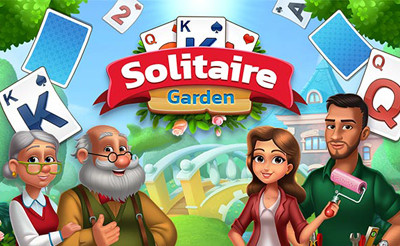
Solitaire Garden is a beautifully presented solitaire game that wraps 800 levels of classic card gameplay in a lush, animated garden aesthetic that makes even extended play sessions feel like a pleasant outdoor escape. If you've ever wanted a solitaire game that's as enjoyable to look at as it is to play — and that gives you enough content to last for months — Solitaire Garden is a strong answer.
The core is faithful Klondike solitaire: build the tableau in descending alternating-color sequences, uncover buried cards, and progressively populate the four foundation piles from Ace to King in suit. What Solitaire Garden layers on top of this familiar foundation is a content depth and polish that elevates the experience. Special cards — wild cards and bonus cards that appear throughout play — add strategic moments where a well-timed special play can clear a stubborn section or accelerate a foundation pile. Power-ups earned through level completion provide additional tools for the most demanding configurations.
The scoring system rewards efficient play: fewer moves and faster completion times produce higher scores, creating an optimization incentive for players who want more than just clearing each level. The garden-themed animation and level presentation give each completed level a visual payoff that makes progress feel meaningful rather than merely incremental.
With 800 levels of progressively intricate puzzle design, Solitaire Garden is built for the player who wants a solitaire game that's both aesthetically satisfying and substantively deep in content.
Key Details:
| Genre: | Card Game / Solitaire / Casual |
| Difficulty Level: | Easy to Hard (escalates across 800 levels) |
| Average Play Time: | 10–20 minutes per session |
| Best For: | Solitaire fans who want a long-form content library with beautiful garden visuals, special card mechanics, and score optimization |
2. How to Play Solitaire Garden
Getting Started:
- Each level presents a garden-themed tableau — cards laid out in the game's signature visual style.
- Move face-up tableau cards onto other tableau cards in descending order, alternating colors.
- Click the draw pile (bottom left) to deal a card to the waste pile when no tableau move is available.
- Move Aces to the four foundation piles to begin each suit; build each pile upward to King.
- Use special cards and power-ups strategically on challenging configurations.
Basic Controls:
- Click to Select: Click a face-up card to select it.
- Click Destination: Click a valid tableau or foundation position to move it.
- Click Draw Pile: Draw a new card from the bottom-left draw pile when stuck.
- Power-Up Buttons: Activate earned power-ups from the interface.
Objective: Clear all cards from the tableau to the four foundation piles (Ace to King, same suit) in each level. Complete levels in fewer moves and less time for higher scores. Progress through 800 levels of escalating garden puzzle content.
3. Solitaire Garden Features & Highlights
- ✓ 800 levels — a massive content library providing months of daily solitaire engagement
- ✓ Beautiful garden animation — lush, animated visuals that create a genuinely pleasant playing environment
- ✓ Special wild and bonus cards — strategic wildcards and bonus effects that add variety to standard Klondike mechanics
- ✓ Power-up system — earned tools for challenging level configurations
- ✓ Move and time scoring — efficiency-based scoring that rewards cleaner, faster solutions
4. Solitaire Garden Tips & Strategies
Beginner Tips:
- Uncover face-down cards as your first priority. Face-down tableau cards are your most valuable unknown resources. Any play that reveals a face-down card expands your options — prioritize these over moves that only shuffle already-visible cards.
- Send Aces and Twos to foundations immediately. These lowest cards have no tableau utility — there's nothing that can be placed on them. Move them to foundations the moment they're accessible.
- Conserve draw pile cards. The draw pile has limited cards — each click deals one to the waste pile. Don't draw when tableau plays are available, and think carefully about which waste pile card you need before clicking.
Advanced Strategies:
- Time special card use for maximum impact. Wild cards and bonus cards are most valuable when they clear a blocking card that's preventing access to a buried sequence, or when they complete a foundation pile ahead of schedule. Don't use them on problems you could solve naturally.
- Optimize for both speed and moves simultaneously. The scoring system rewards both low move count and fast completion. These goals don't always align — sometimes a slight detour in moves produces a faster overall completion. Find the path that balances both.
- Identify your lagging suits early. If three suits are progressing quickly to the foundations but one is significantly behind, that suit's cards are likely buried. Find them and route your clearing sequence to expose them before the level's endgame creates impossible positions.
What to Watch Out For:
- Draw pile exhaustion. With limited draws, reaching a stuck tableau with no more draw pile cards is a serious problem. Be conservative about using the draw pile — only draw when genuinely necessary, not when tableau play seems difficult but possible.
- Stranding high-value sequences. Building long descending sequences is powerful, but moving an entire sequence to a new column can sometimes leave the vacated column empty with no King ready to fill it. Plan column-level moves carefully.
5. Solitaire Garden Game Elements Explained
The 800-Level Garden System: Solitaire Garden's 800 levels represent a solitaire progression of unusual depth and variety. Rather than generating random deals indefinitely, each level is a designed puzzle with specific card arrangements that introduce new challenges at appropriate points in the progression. Early levels establish the core mechanics with manageable configurations; mid-game levels introduce more complex buried card situations and timing challenges; late levels feature intricate arrangements that require careful planning from the opening move. The garden theme evolves visually across level sets, providing aesthetic variety that matches the escalating strategic complexity. The 800-level scope means the game doesn't exhaust its design vocabulary quickly — there's always a new configuration type or challenge structure ahead.
The Special Card System: Throughout Solitaire Garden's levels, two types of special cards appear amid the standard deck: wild cards (which can be placed on any valid tableau position regardless of suit or color, or used to continue any foundation pile) and bonus cards (which provide score multipliers, extra moves, or other advantages when cleared). These special cards appear naturally in the tableau's deal and must be used deliberately rather than as reflexive plays — a wild card burned on a convenient move rather than a critical one wastes its potential to resolve a otherwise stuck configuration. Learning to recognize high-value special card plays versus convenient-but-wasteful ones is a skill that develops across many sessions.
The Scoring and Power-Up System: Solitaire Garden tracks two performance dimensions per level: move count and completion time. Each dimension contributes to the final level score — fewer moves and faster times combine for the highest possible scores per level. The scoring system creates an explicit optimization incentive beyond basic level completion: players who want to maximize scores must play efficiently rather than experimentally. Power-ups earned through level completion supplement the scoring challenge: they're strategic tools that help navigate difficult configurations without requiring a full restart, but using them costs the "pure" completion status that some players pursue. The ecosystem of scoring, power-ups, and special cards creates a multi-layered performance system that rewards both casual progression and competitive optimization.
6. Solitaire Garden Frequently Asked Questions
Q: How many levels does Solitaire Garden include?
A: 800 levels of progressively designed garden-themed solitaire puzzles — enough content for sustained daily engagement over many months.
Q: What are wild cards and how do they work?
A: Wild cards are special cards that can be placed on any valid tableau position regardless of the standard alternating-color, descending-rank rules. They're powerful tools for clearing otherwise blocked positions — use them strategically rather than as convenience plays.
Q: Does the draw pile ever refresh?
A: The draw pile has limited cards per level. When exhausted, no additional cards can be drawn. Manage your draw pile usage carefully — only draw when the tableau genuinely has no valid plays.
Q: How do I earn power-ups?
A: Power-ups are earned through level completion and game progression milestones. They can also potentially be obtained through in-game currency depending on your version. Check the power-up interface for your current availability and earning requirements.
Q: How is my score calculated?
A: Score is based on your move count (fewer moves = higher score) and completion time (faster = higher score). Both dimensions contribute — aim to complete each level efficiently and quickly for the best combined score.