




1. Spider Solitaire Blue Game Overview
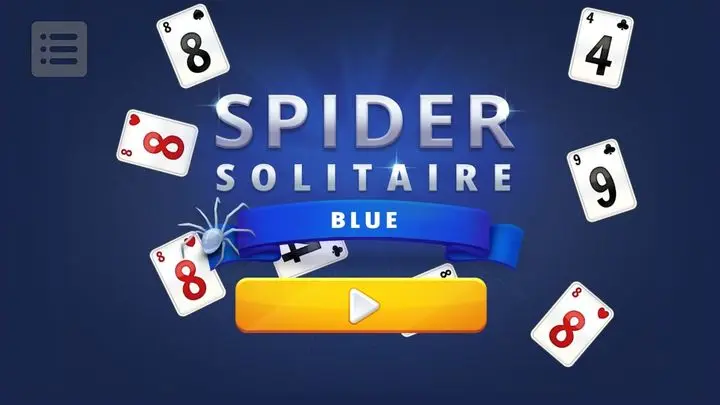
Spider Solitaire Blue is a clean, comfortable Spider Solitaire implementation that distinguishes itself through both its calming visual identity and a three-mode suit selection that gives every player the precise difficulty level they want. The signature blue background isn't just aesthetic — it's a deliberate design choice that creates a relaxed playing environment where card matches feel genuinely enjoyable rather than mentally taxing.
The three suit modes — 2 suits, 3 suits, and 4 suits — represent a genuine spectrum of challenge rather than incremental variations of the same experience. Two-suit play involves cross-color management between red and black groups; three-suit play adds a third dimension of suit tracking; four-suit play requires maintaining all four suits in simultaneous sequence-building order across the crowded 10-column tableau. Players who master 2-suit mode and move to 3-suit will discover they've entered a genuinely different strategic environment, and the jump to 4-suit is more demanding still.
The core Spider goal never changes regardless of mode: arrange cards from King to Ace in matching suit sequences, remove completed sequences from the board, and clear everything to win. The blue visual design makes this sustained strategic work feel pleasant rather than grinding — which matters considerably when working through a long Spider game that requires dozens of careful moves.
Key Details:
| Genre: | Card Game / Solitaire |
| Difficulty Level: | Hard to Very Hard (2, 3, or 4 suits) |
| Average Play Time: | 20–45 minutes per game |
| Best For: | Spider Solitaire players who want a visually comfortable environment with mode flexibility; great for players who find neutral solitaire visuals too clinical |
2. How to Play Spider Solitaire Blue
Getting Started:
- Select your suit mode: 2, 3, or 4 suits.
- Cards are dealt across 10 tableau columns — face-down cards beneath one face-up card per column.
- Move face-up cards onto cards one rank higher — sequences can be moved as units.
- When a complete King-to-Ace same-suit sequence forms in a column, it removes automatically.
- When no moves are available, deal new cards from the stock to continue.
Basic Controls:
- Mouse Movement & Click: Move cards by clicking to select and clicking the destination.
- Stock Deal: Click the stock to deal new cards to all columns when no tableau moves remain.
Objective: Clear the entire board by completing all King-to-Ace same-suit sequences across 2, 3, or 4 suits (depending on your chosen mode). All sequences must be same-suit to remove from the board.
3. Spider Solitaire Blue Features & Highlights
- ✓ Signature blue background — a calming visual design that makes extended Spider sessions more comfortable
- ✓ Three suit modes — 2, 3, or 4 suits for precise difficulty calibration
- ✓ Classic Spider mechanics — same-suit sequence building and completion for all mode variations
- ✓ Mouse-controlled card movement — responsive, intuitive click-and-move card interaction
- ✓ Progressive difficulty access — mode variety lets players grow from accessible to advanced Spider play at their own pace
4. Spider Solitaire Blue Tips & Strategies
Beginner Tips:
- Start with 2-suit mode to learn the blue version. The 2-suit mode provides meaningful Spider challenge while being substantially more manageable than 3 or 4 suits. Develop comfort with the blue interface and Spider mechanics before advancing.
- Prioritize same-suit moves over mixed-suit ones. When both options are available, same-suit moves build directly toward foundation completion. Mixed-suit moves may be necessary but should be the secondary choice.
- Watch for complete sequence opportunities. When a column has nearly all 13 cards of a suit in proper sequence, prioritize completing it over any other activity — a cleared sequence provides significant board simplification.
Advanced Strategies:
- In 3 and 4 suit modes, designate "lead" suits. With more suits to track simultaneously, pick one suit per game to prioritize through to completion first. Getting even one suit fully off the board dramatically reduces the strategic complexity of managing the remaining ones.
- Use the blue background's visual clarity. The blue interface provides excellent contrast for card suit colors. Use this visual clarity actively — scan the full board systematically using the comfortable visual environment rather than relying on peripheral detection of matches.
- Create empty columns before dealing from stock. Whenever possible, empty a column before the stock deal — the deal will add a new card to every column including the empty one, potentially providing a flexible staging card at that position.
What to Watch Out For:
- Mode overconfidence. Each suit mode increase is a genuine difficulty jump, not just a slight escalation. Players who dominate 2-suit mode may find 3-suit significantly more demanding than expected. Approach each new mode as a new game to learn, not just a harder version of the previous one.
- Mixed-suit sequence accumulation. In modes with multiple suits, mixed sequences are an attractive organizing tool — but too many mixed sequences create a board where same-suit completion requires complex multi-stage disassembly. Keep mixed sequences short and purposeful.
5. Spider Solitaire Blue Game Elements Explained
The Blue Visual Design System: Spider Solitaire Blue's signature visual element is its consistent blue background and color scheme. This isn't merely cosmetic — the blue palette creates a specific cognitive environment for card play. Blue backgrounds are associated with calm and focus, and against a blue backdrop, the red and black suit colors of the cards maintain high contrast and readability. For extended Spider games that may take 30–45 minutes, the visual environment significantly affects comfort. The blue design reduces eye strain compared to high-contrast or busy backgrounds, making the game more sustainable for long sessions. The comfort the design creates is, in practical terms, a small advantage in a game where sustained strategic attention is the primary requirement.
The Three-Mode Selection System: Spider Solitaire Blue's 2, 3, and 4 suit modes aren't just difficulty labels — each creates a structurally different game. Two-suit play involves two color groups (red and black), with same-suit sequences meaning either hearts+diamonds or clubs+spades must be maintained. Three-suit play introduces a third suit group, requiring players to track three separate suit threads simultaneously through the 10-column tableau. Four-suit play includes all four suits with no simplifications — the hardest standard Spider variant, where maintaining suit integrity across all four groups while managing 104 cards across 10 columns is the complete strategic challenge. Each mode increase multiplies the simultaneous tracking demands, not just the board complexity.
The Sequence Completion System: Regardless of suit mode, the fundamental completion mechanic in Spider Solitaire Blue is the same: when a column contains a complete King-to-Ace sequence of cards in the same suit, that sequence is automatically removed from the board and sent to the foundation. This removal is permanent — the 13 cards are gone, the column space is freed, and the strategic load of the remaining game is correspondingly lighter. The celebration of a sequence completion is earned proportionally to the difficulty of assembling it — in 4-suit mode, completing even one sequence requires significant sustained planning, making each completion a genuine achievement.
6. Spider Solitaire Blue Frequently Asked Questions
Q: What's the difference between the three suit modes?
A: Two suits uses only red and black cards (two suit groups), requiring same-suit sequences from hearts/diamonds or clubs/spades to complete. Three suits adds a third suit, increasing simultaneous tracking. Four suits uses all four suits — the most complex variant requiring same-suit maintenance across hearts, diamonds, clubs, and spades simultaneously.
Q: Why is the background blue?
A: The blue background is a deliberate design choice for visual comfort during extended play — it provides good contrast for the red and black card suits while creating a calm, less visually taxing playing environment. It's both aesthetic and practical.
Q: Can I move a sequence of cards that includes mixed suits?
A: Yes — any sequence in descending rank order can be moved regardless of suit consistency within the sequence. However, only same-suit sequences (all 13 cards in the same suit from King to Ace) can be completed and sent to the foundation.
Q: Which mode should I start with?
A: Start with 2-suit mode to develop comfort with Spider Solitaire's mechanics in the Blue visual environment. Once consistently completing 2-suit games, 3-suit provides meaningful additional challenge, and 4-suit is for advanced players who have thoroughly mastered the previous modes.
Q: Is Spider Solitaire Blue harder than regular Klondike solitaire?
A: Yes — Spider Solitaire in any suit mode is significantly more complex than Klondike, primarily because of the 10-column tableau, the same-suit sequence completion requirement, and the double deck size.