


1. Mahjong Solitaire Game Overview
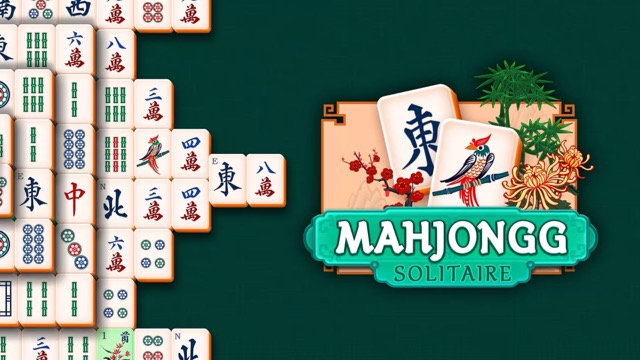
Mahjong Solitaire is one of the most beloved and enduring solo puzzle games in the world — a tile-matching game that rewards patient observation, methodical planning, and the kind of focused attention that melts away stress while quietly sharpening your mind. Unlike the traditional multiplayer mahjong game, this is a single-player experience built entirely around the satisfying loop of finding matching pairs, clearing the board, and gradually revealing the full tile formation as your work succeeds.
The game's elegance lies in its accessibility rule: only "free" tiles — those with no other tile immediately to their left or right — can be selected. This constraint transforms what could be a simple visual search into a layered strategic puzzle. The tiles you can see are not always the tiles you can match, and the tiles you can match are not always the tiles you should match. Planning the sequence of removals — which pairs to clear in which order to avoid painting yourself into an inaccessible corner — is the genuine intellectual challenge beneath the tile-matching surface.
The starting arrangement of tiles in intricate shapes and pyramids creates a different puzzle landscape every session. Some configurations have wide solution margins; others have narrow paths where wrong early moves lead to dead ends from which no recovery is possible. The tension between "I can match this now" and "but should I?" is where the game's strategic depth lives.
Regular Mahjong Solitaire play consistently delivers cognitive benefits — improved memory, enhanced pattern recognition, and sharper logical planning — alongside the meditative focus that makes it a uniquely calming recreational activity.
Key Details:
| Genre: | Puzzle / Mahjong / Solitaire |
| Difficulty Level: | Easy to Hard (varies by board configuration) |
| Average Play Time: | 10–25 minutes per game |
| Best For: | Solo puzzle players who enjoy methodical tile-matching, relaxing strategic challenges, and cognitive engagement without competitive pressure |
2. How to Play Mahjong Solitaire
Getting Started:
- Tiles are arranged in a stacked formation — pyramid, turtle, or other classic layouts.
- Identify "free" tiles — those with no tile immediately adjacent on their left or right side.
- Click two free tiles showing the same symbol to remove both from the board.
- Continue matching and removing pairs, systematically exposing tiles beneath and beside removed ones.
- Clear all tiles from the board to win. If no free matching pairs remain, the game ends.
Basic Controls:
- Click to Select: Click a free tile to select it (a highlight or outline indicates selection).
- Click to Match: Click a second free tile showing the same symbol to remove both.
- Mouse Only: All gameplay is controlled with mouse clicks.
Objective: Remove all tile pairs from the board by matching identical free tiles. Clear the complete board to win. If no free matching pairs remain anywhere on the board, the game ends — plan your removal sequence to avoid this outcome.
3. Mahjong Solitaire Features & Highlights
- ✓ Free tile accessibility rule — only tiles without adjacent neighbors on either side can be matched, creating a spatial planning layer
- ✓ Intricate tile formation layouts — pyramids, turtles, and other classic shapes provide varied structural challenges
- ✓ Cognitive benefits — regular play improves memory, logical thinking, focus, and pattern recognition
- ✓ Stress-reducing atmosphere — calm visuals and relaxed pacing make it a genuinely meditative gaming experience
- ✓ Cross-platform accessibility — fully playable on desktop, tablet, and smartphone
4. Mahjong Solitaire Tips & Strategies
Beginner Tips:
- Match from the top layers first. Tiles at the top of pyramidal formations are typically free on both sides and accessible immediately. Clearing them exposes the layers beneath and creates more matching opportunities. Work top-down, not bottom-up.
- Check what a removal exposes before clicking. Before clicking a tile pair, look at what tiles are beneath them. If the tiles beneath are more useful (have more waiting matches or are rarer symbols) than your current pair, the removal is a good one. If the tiles beneath are dead ends, reconsider.
- Don't match a tile just because you can. The most common mistake in Mahjong Solitaire is clicking every valid match as soon as it appears. Valid doesn't mean optimal — always ask whether matching this pair now leaves you better or worse positioned for the next five moves.
Advanced Strategies:
- Identify rare tile types at the start. Some symbols appear only once as a pair in the full board layout. Locate both tiles of each rare type before beginning to match. If one is deeply buried, clear a path to it before matching its partner — a partner tile waiting in an accessible position with no match available is a dead end.
- Prefer matches that create new free tiles over matches that don't. A removal that makes two or more previously blocked tiles free is worth more than a removal that leaves the surrounding accessibility landscape unchanged. Maximize cascade access with each move.
- Read the board for symmetry. Many Mahjong Solitaire formations are symmetrical. Exploiting symmetry — matching tiles on both halves of a formation in a coordinated sequence — often produces the most efficient clearing path.
What to Watch Out For:
- Stranding a tile's partner. If you clear all tiles adjacent to a specific tile without matching that tile itself, you may leave it in a free position with its partner still buried and inaccessible. Both tiles of a pair must be free simultaneously for a match — don't free one half while blocking the other.
- Chasing easy matches in late game. In the final third of a board, the temptation to quickly clear whatever's accessible increases. Late-game is exactly when the board is most fragile — a wrong move here creates irrecoverable positions more easily than at any earlier stage.
5. Mahjong Solitaire Game Elements Explained
The Free Tile Accessibility System: Mahjong Solitaire's defining constraint is the "free tile" rule: only tiles that have no other tile immediately adjacent to their left or right side (and nothing stacked on top of them) can be selected for matching. A tile buried between two other tiles — even if uncovered from above — is locked until its neighbors are cleared. This rule is what makes Mahjong Solitaire a genuine strategic puzzle rather than a visual matching exercise. The arrangement of the board at any moment determines not just which tiles are visible but which are actually playable, and those are often very different sets. Planning which tiles to free in which order — to ensure that both members of needed pairs become accessible simultaneously — is the core intellectual challenge the game develops.
The Formation Layout System: Mahjong Solitaire boards are built in themed formations that define the game's structural landscape. Classic formations include the Turtle (a rounded oval shape with layered tiers), the Pyramid (ascending layers tapering to a peak), and the Dragon, among others. Each formation creates a different strategic character: turtle formations have multiple accessible entry points around the perimeter; pyramidal formations concentrate accessibility at the top and force progressive layer-by-layer clearing; irregular formations may have isolated pockets that are only reachable through specific clearing sequences. The formation is not just aesthetic — it's the puzzle architecture that determines every strategic consideration in the game.
The Cognitive and Relaxation Dual Benefits: Mahjong Solitaire is unusual among puzzle games in that it simultaneously engages focused cognitive attention and produces a meditative, stress-reducing effect. The focused observation required for tile identification and accessibility evaluation occupies the mind fully enough to crowd out anxious or ruminative thought — a property that many players describe as the game's most distinctive quality. The visual rhythm of matching pairs and watching sections of the board clear creates a satisfying feedback loop that delivers small, consistent rewards throughout the session rather than concentrating all satisfaction in a single end-state. These properties make Mahjong Solitaire genuinely useful as a relaxation tool, not just a cognitive challenge — a combination that explains the game's extraordinary and sustained global popularity.
6. Mahjong Solitaire Frequently Asked Questions
Q: What makes a tile "free" and able to be selected?
A: A tile is free when it has no tile sitting immediately on top of it AND no tile immediately adjacent to either its left or right side. Both conditions must be met. A tile that's uncovered from above but blocked on both sides by adjacent tiles is not free.
Q: What should I do if no free matching pairs remain?
A: If no pairs of free matching tiles exist anywhere on the board, the game ends. To prevent this, focus during play on removal sequences that maintain matching possibilities — avoiding the clearing of tiles that leave their partners permanently inaccessible is the key preventive strategy.
Q: Is there a way to undo a move if I make a mistake?
A: Many Mahjong Solitaire implementations include an undo function. Check your version's interface for an undo button — if available, use it freely as a planning tool rather than only for correcting obvious mistakes.
Q: Can every Mahjong Solitaire board be solved?
A: Not always — some initial tile arrangements, depending on the formation, may lead to unwinnable states even with perfect play. However, many boards are fully solvable, and improving your strategic planning significantly reduces the frequency of reaching unwinnable positions from avoidable mistakes.
Q: Is Mahjong Solitaire playable on mobile?
A: Yes — the click-to-select controls translate naturally to tap controls, and the visual scale works well on tablet and smartphone screens. The game runs in mobile browsers without requiring a download.