







1. Tripeakz Game Overview
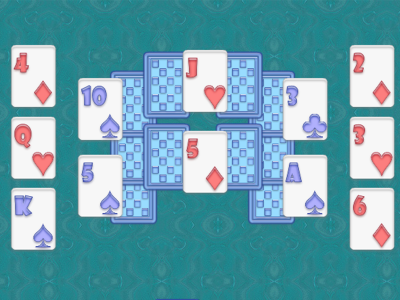
Tripeakz is a clean, focused card puzzle game that distills the TriPeaks clearing mechanic to its purest form: cards are randomly arranged in peak formations, and your task is to select them in continuously ascending or descending order until nothing remains. Level after level, new arrangements demand fresh sequence-reading approaches — the mechanic stays consistent while the challenge continuously evolves.
The core puzzle is elegant: you're always looking for the next card that is one rank higher or one rank lower than your current selection. Each valid selection continues the sequence and keeps your clearing run alive. When no valid next card is available among the current peaks, reserve cards give you backup options to draw from. The challenge grows not from rule complexity but from board complexity — as arrangements become denser and more intricate, finding the continuous sequence path through the peaks requires increasingly careful scanning.
What makes Tripeakz work as a standalone puzzle experience (rather than just a casual time-killer) is the "all cards must be sorted" win condition per level. You can't partially clear a board and call it done — every level requires complete clearance, which means every card has to participate in some part of your ascending or descending sequence. A single isolated card with no valid sequence path is a failure state that requires strategic prevention.
The multi-level structure with "how many levels can you pass?" as the central challenge creates natural session goals without imposing artificial time pressure.
Key Details:
| Genre: | Card Game / Puzzle / TriPeaks |
| Difficulty Level: | Easy to Hard (escalates across levels) |
| Average Play Time: | 5–10 minutes per level |
| Best For: | Casual card puzzle fans who enjoy clean sequence-based clearing; TriPeaks players who want a pure, stripped-down version of the mechanic |
2. How to Play Tripeakz
Getting Started:
- Cards are randomly arranged across peak formations on the board.
- Select a card from the peaks to begin your sequence.
- Each subsequent selection must be one rank higher or one rank lower than the previous card.
- When no valid next card exists on the peaks, draw from your reserve cards.
- Sort all cards to complete the level and advance to the next.
Basic Controls:
- Mouse / Touchscreen: Click or tap a valid card to select and add it to your sequence.
Objective: Clear every card from the peaks by selecting them in continuous ascending or descending sequence. A reserve is available when the peaks offer no valid continuation. Pass as many levels as you can.
3. Tripeakz Features & Highlights
- ✓ Pure ascending/descending sequence clearing — a clean, single-rule mechanic that creates genuine puzzle depth
- ✓ Complete-clearance win condition — every card must be sorted for level completion, with no partial-clear option
- ✓ Reserve card backup — a secondary card pool for when peaks offer no valid sequence continuation
- ✓ Multi-level progression — diverse arrangements across escalating levels that keep the sequence-finding challenge fresh
- ✓ Simple controls — mouse or touchscreen click-to-select without interface friction
4. Tripeakz Tips & Strategies
Beginner Tips:
- Scan the full peak arrangement before your first selection. The first card you choose determines your initial sequence direction and which subsequent cards become valid. Spend a few seconds identifying which starting card opens the longest visible sequence chain before clicking anything.
- Think in both directions simultaneously. Your sequence can go up or down at any point — a 7 can go to 8 or 6. Before each selection, evaluate both the upward and downward continuation options to choose the direction that extends your run further.
- Identify isolated cards early. Some cards in complex peak arrangements are surrounded by cards they can't connect to in a sequence. Spotting these isolated cards before they become end-of-level problems lets you route your sequence toward them while connections still exist.
Advanced Strategies:
- Use reserve cards to pivot sequence direction. Reserve cards give you more options than just "what's in the peaks." Strategically drawing a reserve card that bridges two otherwise disconnected sequence sections can unlock a long run that natural peak selection couldn't achieve.
- Plan the sequence that clears the most cards before any first pick. In denser level arrangements, trace three or four cards ahead before committing to your starting selection. The best first pick isn't always the most obvious one — it's the one whose sequence path has the most continuation options.
- Prioritize peaks that cover other cards. Cards resting on top of other cards prevent the covered cards from being selected. Clearing these "cover" cards unlocks the cards beneath — prioritize selections that expose new cards over selections that merely continue the sequence in already-accessible areas.
What to Watch Out For:
- Sequence dead ends. A dead end is when your current sequence value has no valid continuation in the peaks or reserve — a card one higher or one lower than your current top. When a dead end occurs, the level isn't completable from that state if cards remain. Prevent dead ends by maintaining awareness of which rank values exist in the remaining peaks before each selection.
- Reserve card exhaustion. Reserve cards are finite. Spending them on minor bridge plays when the peaks themselves could continue the sequence wastes a resource that's most valuable for genuinely stuck positions.
5. Tripeakz Game Elements Explained
The Ascending/Descending Sequence System: Tripeakz's core mechanic is the simplest possible card selection rule: each card you choose must be exactly one rank higher or one rank lower than the previous card selected. This single rule generates all the game's strategic complexity. A sequence can freely change direction at any point — ascending to descending, descending to ascending — as long as each step satisfies the one-rank adjacency requirement. The sequence continues until no valid card exists in the peaks or reserve. For a level to be completed, every card must be incorporated into this sequence — which means the sequence must thread through every peak card without hitting an unresolvable dead end.
The Peak Arrangement System: Each Tripeakz level presents cards arranged in a distinct peak configuration — the specific positioning, density, and layering of peaks varies from level to level. Higher-layer cards cover lower-layer cards and must be removed before the covered cards become accessible. This layered accessibility creates the puzzle's spatial dimension: it's not just "find the next card in sequence" but "find the next valid card that is also currently accessible." Knowing that a specific card exists somewhere in the arrangement is useless if it's buried under three other cards — sequencing decisions must account for both the sequence logic and the accessibility logic simultaneously.
The Reserve and Level Progression System: The reserve provides a finite pool of backup cards available when no accessible peak card continues the current sequence. Drawing from the reserve advances the sequence using the drawn card's value, potentially opening peak cards that the previous sequence endpoint couldn't reach. Reserve cards are limited per level, making each reserve draw a resource expenditure decision: is this stuck position genuinely unresolvable through peak selection, or is there a peak path that a more careful sequence trace would reveal? Across many levels of escalating complexity, developing the skill to answer this question quickly and correctly is what allows sustained level progression through Tripeakz's increasingly demanding arrangements.
6. Tripeakz Frequently Asked Questions
Q: Can my sequence go both up and down?
A: Yes — your sequence can change direction at any point. From any card, you can select a card one rank higher or one rank lower. The sequence direction doesn't need to stay consistent.
Q: What are reserve cards?
A: Reserve cards are a secondary pool of cards you can draw from when no accessible peak card is one rank adjacent to your current sequence top. Drawing from the reserve advances the sequence from the drawn card's value.
Q: What happens if I get stuck with cards remaining?
A: If no accessible peak card is one rank adjacent to your current sequence top and your reserve is exhausted, you can't continue the sequence. If cards remain uncleared, the level isn't completed in that attempt — restart and try a different sequence path.
Q: Do I have to clear all cards to pass the level?
A: Yes — Tripeakz requires sorting every card from the arrangement to complete each level. Partial clearances don't count as a win; all cards must be incorporated into your ascending or descending sequence.
Q: Is Tripeakz available on mobile?
A: Yes — the tap-to-select control works naturally on touchscreen devices, and the peak card arrangements are clear on phone and tablet screens.