






1. Merge The Numbers Game Overview
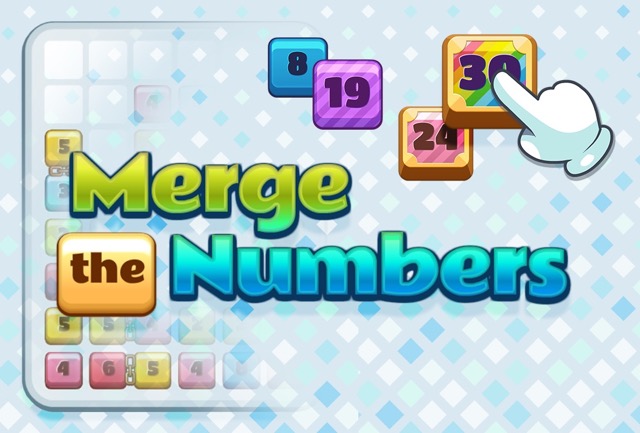
Merge the Numbers is an addictive number-combination puzzle that takes the satisfying core of 2048-style merging and rebuilds it around a drag-and-drop mechanic that gives you more direct control over where and when tiles combine. Instead of swiping an entire board in one direction, you pick up individual tiles and drop them onto matching ones — a more deliberate, hands-on interaction that turns each merge into a conscious strategic choice rather than a board-wide cascading reaction.
The goal is familiar to anyone who's played 2048: combine matching numbered tiles into ever-larger values, score as high as possible, and push the number ceiling as far as you can before the board fills beyond recovery. But the drag mechanic fundamentally changes how you approach the board. You're not managing a sweeping directional force — you're selecting specific tiles and placing them exactly where you want them. This precision gives you more control and also more responsibility: there's no accidental merge from a board-wide swipe, only the merges you deliberately execute.
As levels progress, the starting tile values increase and the path to high numbers grows more demanding. Early boards let you build comfortable merging chains; later boards are denser and faster-moving, requiring players to think not just about the next merge but the next three or four. The game rewards players who stay ahead of the board rather than reacting to it.
For players who love number-merging puzzles but want a more tactile, controlled variation on the formula, Merge the Numbers delivers a fresh and genuinely satisfying take.
Key Details:
| Genre: | Puzzle / Merge / Number Strategy |
| Difficulty Level: | Easy to Hard (escalates across levels) |
| Average Play Time: | 5–20 minutes per session |
| Best For: | Number puzzle fans who enjoy 2048-style merging with a more deliberate, drag-based control mechanic |
2. How to Play Merge The Numbers
Getting Started:
- The board is filled with numbered tiles of varying values.
- Drag a tile and drop it onto another tile showing the same number.
- The two tiles merge into a single tile of double the value (e.g., two 4s become an 8).
- Continue merging tiles to create progressively higher numbers.
- Survive as long as possible while achieving the highest tile value you can.
Basic Controls:
- Click & Drag (PC): Click a tile, hold, and drag it onto a matching-value tile to merge.
- Touch & Drag (Mobile): Tap, hold, and drag to the matching tile on touchscreen devices.
Objective: Merge matching numbered tiles to create tiles of increasingly higher value — as in 2048, working toward the largest possible number. Score as many points as possible while managing the board to prevent it from filling unworkably.
3. Merge The Numbers Features & Highlights
- ✓ Drag-to-merge mechanic — deliberate tile-by-tile merging for more precise control than board-wide swipe mechanics
- ✓ 2048-inspired number doubling — satisfying cascading value progression from small numbers to large ones
- ✓ Progressive level difficulty — higher starting values and denser boards challenge players as they advance
- ✓ Strategic tile management — individual tile placement creates meaningful long-term planning opportunities
- ✓ Addictive high-score loop — a persistent "just one more merge" pull that keeps sessions running longer than expected
4. Merge The Numbers Tips & Strategies
Beginner Tips:
- Merge higher-value tiles first. Higher tiles score more points per merge and often create more useful downstream opportunities. When you have the choice between a high-value merge and a low-value one, prioritize the higher number.
- Keep matching tiles close together. The drag mechanic means tiles that are far apart are harder to connect efficiently. Cluster same-value tiles near each other as you build, reducing the travel distance for future merges.
- Always think one merge ahead. Before executing a merge, ask what the resulting tile's value will be and whether another tile of that new value is already on the board — setting up an immediate follow-up merge is more efficient than creating a new tile that sits isolated.
Advanced Strategies:
- Plan chains, not individual merges. The most valuable play sequences in Merge the Numbers are chains — where merge A creates a value that immediately merges with an existing tile, which then merges with another, and so on. Identifying chain opportunities before beginning the sequence produces dramatically higher scores than executing merges opportunistically.
- Designate a merging zone. Rather than merging tiles wherever they happen to be, try to consolidate merging activity in one area of the board. This creates a dense, manageable high-value cluster that's easier to navigate than scattered high tiles across the full board.
- Don't neglect low-value tiles. Small tiles that accumulate without merging gradually crowd out space for the moves you actually want to make. Clear low-value pairs promptly to maintain board flexibility.
What to Watch Out For:
- Isolated high-value tiles. A high-value tile with no matching partner nearby is a space consumer that resists merging. Avoid creating high-value tiles in positions where their partner value can't easily reach them.
- Over-focusing on one corner. Concentrating all merging in one corner while the rest of the board fills creates a lopsided situation that rapidly becomes unmanageable. Maintain awareness of the full board, not just the section you're most excited about.
5. Merge The Numbers Game Elements Explained
The Drag-and-Merge System: Merge the Numbers' central departure from standard 2048-style games is its drag-based interaction model. Rather than swiping the entire board in a direction (causing all tiles to shift simultaneously), you select individual tiles and drag them onto matching tiles to trigger targeted merges. This one-at-a-time approach gives you precise control over which tiles merge and in what order — a significant strategic advantage over swipe mechanics, where a useful merge often comes bundled with unintended tile movements elsewhere on the board. The drag system means every merge is an explicit decision with no unintended side effects, which makes planning more straightforward but also removes the element of lucky accidental merges that swipe games occasionally produce.
The Number Progression System: Tile values in Merge the Numbers follow the same doubling sequence as 2048: 2, 4, 8, 16, 32, 64, 128, 256, 512, 1024, 2048, and beyond. Each merge doubles the merged tile's value — two 4s become an 8, two 256s become a 512. Pursuing higher tile values is both the game's primary scoring mechanism and its primary strategic challenge: larger tiles are harder to pair (fewer matching tiles of any given high value exist at any moment) and take up more visual and tactical board real estate while they wait for a partner. Building toward genuinely high tile values requires sustained, coordinated merging over many turns — a patient, long-horizon approach that the drag mechanic rewards more explicitly than reactive swipe play.
The Level Progression System: As players advance through levels, the game becomes more demanding in two ways: the initial tile values on the board increase (making the path to high-value merges longer from the start) and the board density can increase (leaving less open space for maneuvering). Early levels begin with tiles of small values and provide generous board space for building merging chains at a relaxed pace. Later levels populate the board with larger starting values and tighter configurations that demand efficient use of every available space. This progression ensures the game's mechanical difficulty scales with player familiarity — not through rule changes but through the board conditions that determine how much room for error you have at any given moment.
6. Merge The Numbers Frequently Asked Questions
Q: How do I merge two tiles?
A: Click and hold a tile, drag it onto another tile showing the exact same number, and release. The two tiles merge into one tile worth their combined value (double the individual value, since they're equal).
Q: What happens if no tiles on the board share the same value?
A: New tiles appear on the board periodically. If the board fills completely with no possible merges available, the game ends. Strategic merging maintains enough board space to prevent this.
Q: Is there a specific number I'm trying to reach?
A: The game encourages reaching as high a tile value as possible — like 2048, the aspiration is to create a tile with the value 2048 or higher. Your score accumulates through all merges, so maximum score and maximum tile value are parallel goals.
Q: Why should I focus on high-value tiles rather than just clearing everything?
A: High-value merges earn more points than low-value merges of equivalent tile count. Additionally, high-value tiles create downstream merging opportunities that compound in value — a 256 tile that merges with another 256 is worth far more than 64 separate pairs of 2s producing the same total.
Q: Is Merge the Numbers available on mobile?
A: Yes — the drag-to-merge mechanic works naturally with touch controls, and the game runs in mobile browsers without a download.