
1. Fish Eat Fish Game Overview
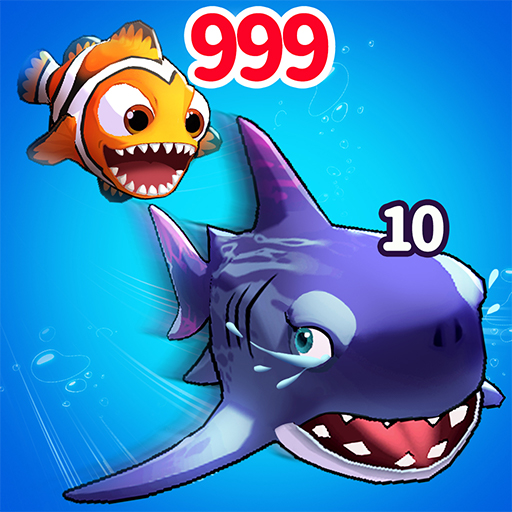
Fish Eat Fish is a live multiplayer survival game built around one of nature's most primal food chains: big fish eat small fish. You start as a tiny creature at the bottom of the ocean hierarchy. Through careful play, calculated aggression, and a healthy instinct for when to flee, you grow into something capable of hunting the hunters — a transformation that happens in real time against real opponents who are trying to do exactly the same thing to you.
The game's appeal is immediate and instinctive. You understand the rules in the first ten seconds: find something smaller, eat it, get bigger, avoid something bigger. But the multiplayer dimension turns that simple loop into a genuinely tense experience. The ocean isn't an abstract challenge — it's filled with other players actively making the same calculations you are. Someone who was smaller than you two minutes ago might have found a feeding streak and now outranks you. Someone you're chasing might lure you toward a fish three times your size.
The scoring constraint that makes the game strategically interesting: fish of nearly identical size can't harm each other. Your score must be significantly higher than an opponent's before you can consume them. This rule prevents instant snowball effects where one lucky eat makes you immediately dominant — you have to build a meaningful size advantage through sustained feeding before combat becomes viable. It creates natural power tiers within each session, and moving between those tiers is the progression arc of every match.
Mouse control keeps the barrier to entry near zero: move your cursor, your fish follows. Everything else — the strategy, the survival instincts, the read of the room — develops naturally through play.
Key Details:
| Genre: | Multiplayer Survival / Arcade |
| Difficulty Level: | Easy to Medium |
| Average Play Time: | 5–15 minutes per session |
| Best For: | Competitive players who enjoy real-time multiplayer survival games, risk-reward decision making, and size-based progression |
2. How to Play Fish Eat Fish
Getting Started:
- Enter the ocean as a small fish alongside other player-controlled fish.
- Move your fish toward smaller sea creatures to eat them and increase your size and score.
- As your size grows, you gain the ability to eat progressively larger prey.
- Avoid any fish whose score is significantly larger than yours — they can eat you.
- Fish of nearly equal size cannot harm each other — you need a substantial score advantage to consume an opponent.
Basic Controls:
- Mouse Movement (PC): Move the cursor in any direction — your fish swims toward the cursor position continuously.
- Touch / Tap (Mobile): Touch and drag to guide your fish in the desired direction.
Objective: Grow your fish to the largest size possible by eating smaller fish and sea creatures. Survive as long as possible while avoiding fish significantly larger than you. Climb the size hierarchy to become the ocean's apex predator.
3. Fish Eat Fish Features & Highlights
- ✓ Real-time multiplayer — all fish are controlled by other players, creating dynamic, unpredictable competitive sessions
- ✓ Size-based power hierarchy — your ability to eat and be eaten is determined by relative score, creating a natural progression arc
- ✓ Significant-advantage-required rule — prevents instant dominance; meaningful size gaps must exist before combat is possible
- ✓ Mouse and touch controls — fully accessible on both desktop and mobile with simple, single-input movement
- ✓ Non-stop growth loop — every successful eat builds toward greater capability, keeping the session momentum high
4. Fish Eat Fish Tips & Strategies
Beginner Tips:
- Hug the map edges in the early game. The center of the ocean is where large, powerful fish congregate. Small fish are safer near the edges where fewer apex predators roam and smaller prey is more consistently available.
- Don't chase prey near larger fish. A meal isn't worth it if catching it requires swimming through the territory of something that can eat you. Evaluate the full situation, not just the prey directly ahead.
- Move deliberately, not frantically. Rapid direction changes confuse your own routing as much as they confuse pursuers. Smooth, continuous movement toward food or away from threats is more effective than erratic darting.
Advanced Strategies:
- Use large fish as unwitting bodyguards. Swimming close to (but not too close to) a fish larger than you can deter medium-sized fish from approaching. Position yourself near a large fish when you need to eat safely in a contested area — as long as you maintain enough distance that the large fish can't turn on you.
- Target the fastest-growing fish in their vulnerable phase. A fish that's growing quickly is consuming lots of prey — which means they're probably moving through an area with abundant food. Following them at a distance (while they're still small enough to be safe to trail) can lead you to productive feeding zones.
- Feign retreat to lure aggressive pursuers. When a fish slightly smaller than the "safe" threshold is chasing you, briefly swimming toward a larger fish can cause your pursuer to break off pursuit to avoid becoming prey themselves.
What to Watch Out For:
- The nearly-equal-size trap. The "significant advantage" rule means fish of similar size can't eat each other — but "similar" is a range, not an exact match. Don't assume that because two fish are close in size they're completely safe. Confirm the score gap is too small for either to be prey before committing to close proximity.
- Tunnel vision on prey. Locking onto a specific target and pursuing it single-mindedly is how players get eaten from behind by a larger fish they didn't notice entering their periphery. Keep awareness of the full surrounding area, not just the meal directly ahead.
5. Fish Eat Fish Game Elements Explained
The Size-Based Combat System: Fish Eat Fish's power dynamic is entirely determined by relative score. Your score reflects your fish's accumulated size — every creature you eat adds to it. To consume another player's fish, your score must be significantly higher than theirs; a marginal difference isn't enough. This "significant advantage" requirement is the game's most important mechanical decision: it prevents any single lucky eat from instantly catapulting a player to dominance, and it ensures that growing through the size tiers requires sustained feeding work rather than one opportunistic attack. The gap required for combat creates natural "safe zones" of similar-sized fish who can peacefully co-exist, which in turn creates interesting territorial dynamics where clusters of similar-sized fish share feeding areas until someone breaks away from the pack.
The Growth and Feeding Loop: The game's moment-to-moment experience is the growth loop: find food, eat food, grow, find bigger food, eat that, grow more. In the early game, you're eating small ambient sea creatures that populate the ocean independently of the player-controlled fish. As you grow, those ambient creatures become less efficient food sources and player-controlled fish of lower size become the primary targets. This transition — from ambient-creature feeding to player-versus-player predation — is the game's key inflection point. It's where the session shifts from a growth race against the game to a survival competition against other players. Managing your approach to this transition (avoiding unnecessary combat risk while you build size, then capitalizing on your size advantage once it's meaningful) is the match-to-match strategic arc.
The Mouse-Follow Movement System: Your fish follows your mouse cursor continuously — wherever you move the cursor, the fish swims toward that point. This movement system is simple to understand but nuanced in practice: the fish follows the cursor at a consistent speed, so precise cursor positioning determines exact swimming direction rather than just general destination. Near-misses with both prey and predators often come down to cursor positioning precision in tight moments. The movement system also means there's no "stop" command — your fish is always moving toward wherever your cursor sits, which is an important factor when navigating near dangerous fish (a cursor that drifts toward a large fish will pull your fish toward danger even if you don't consciously intend it).
6. Fish Eat Fish Frequently Asked Questions
Q: How do I eat another fish?
A: Swim into direct contact with a fish whose score is significantly lower than yours. If the score gap is large enough, the contact automatically consumes the smaller fish and adds to your size. If the gap isn't sufficient, neither fish can harm the other.
Q: What should I do when a much larger fish is chasing me?
A: Move away immediately and prioritize creating distance — your fish is always moving toward your cursor, so redirect the cursor away from the threat and toward open space. Swimming toward the map edges or toward other large fish (which might deter the pursuer) are both valid escape routes.
Q: Is there a size limit, or can I keep growing indefinitely?
A: You can keep growing throughout the match by continuing to eat. There's no fixed cap — the largest fish in any session is simply the one that has eaten the most without being eaten.
Q: Can two fish of the same size eat each other?
A: No — the game's significant-advantage rule means fish of equal or nearly equal score cannot harm each other. A meaningful score gap is required before one fish can consume another.
Q: Is Fish Eat Fish playable on mobile?
A: Yes — the game supports touch controls on mobile browsers. Touch and drag to guide your fish in any direction, just as you would move the mouse cursor on desktop.