




1. Hanafuda Flash Game Overview
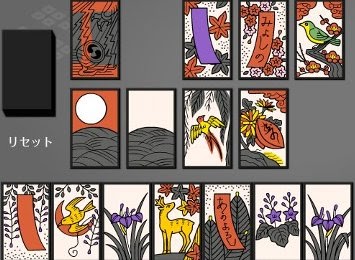
Hanafuda Flash brings one of Japan's most beautiful and historically rich card games into a fast-paced digital format that's accessible to newcomers and rewarding for those who dig into its strategic depth. Hanafuda — literally "flower cards" — is a traditional Japanese card game with origins stretching back centuries, played with a distinctive 48-card deck organized into 12 suits representing months of the year, each illustrated with seasonal flowers and nature imagery. Hanafuda Flash modernizes the experience without losing its essential character.
The core mechanic is an elegant cycle of discard, field management, and capture. On your turn, you play a card from your hand to the field — and if it matches the suit of a card already in the field, you capture both. A second draw from the deck follows, with the same matching opportunity. Building your captured pile into high-scoring sets is the path to victory. Each set rewards a different point value, and the strategic game is about managing what you discard, what you capture, and what you allow your opponent access to.
What Hanafuda Flash captures particularly well is the speed and social tension of the original game. Hands move fast — the game deals quickly, the matching decisions are rapid, and the swing moments when a player captures a high-value card or completes a scoring set create genuine competitive excitement. The visual design honors the traditional Hanafuda card artwork while making the card interactions legible in the digital format.
For players looking for something genuinely different from Western card game conventions, Hanafuda Flash is an excellent entry point into a centuries-old tradition.
Key Details:
| Genre: | Card Game / Traditional / Strategy |
| Difficulty Level: | Medium |
| Average Play Time: | 10–20 minutes per match |
| Best For: | Card game enthusiasts interested in Japanese traditional games; players who enjoy fast-paced matching mechanics with strategic set-building depth |
2. How to Play Hanafuda Flash
Getting Started:
- Cards are dealt to both players and the central field — the field contains face-up cards available for capture.
- On your turn, select a card from your hand and discard it to the field.
- If your discarded card matches the suit (month/flower) of a card already in the field, capture both.
- Draw a card from the top of the deck — if it matches a field card's suit, capture that pair too.
- Accumulate captured cards into high-scoring sets to win the match.
Basic Controls:
- Left Mouse Button / Tap: Click or tap cards to select and play them from your hand, or to capture matching field cards.
Objective: Build high-scoring card sets from your captures by matching suits between your hand, the deck draw, and the field. The player who accumulates the most points from completed sets wins the match.
3. Hanafuda Flash Features & Highlights
- ✓ Authentic Hanafuda card design — traditional Japanese flower card artwork honoring the game's centuries-old visual heritage
- ✓ Fast-paced deal and capture cycle — quick hands and rapid card interactions create a dynamic, exciting competitive pace
- ✓ Strategic discard and capture decisions — every card play involves simultaneous attack and defense considerations
- ✓ Set-based scoring system — different card combinations reward different point values, creating layered strategic objectives
- ✓ Classic meets digital — traditional Japanese card game mechanics in an accessible browser-based format
4. Hanafuda Flash Tips & Strategies
Beginner Tips:
- Learn the suit groupings before your first match. Hanafuda's 12 suits (months) each contain specific cards with different point values within the suit. Knowing which cards belong to which month — and which combinations score highest — is foundational knowledge that transforms random-seeming captures into deliberate set-building.
- Prioritize capturing high-value cards over low ones. Not all captures are equal. Securing the high-point cards within each suit — typically the special illustrated cards — is significantly more valuable than accumulating many low-point cards.
- Discard cards that give your opponent less access to matches. Your discard goes to the field. Discarding a card whose suit has no other field presence denies your opponent an easy capture on their next turn. Think about what you're giving them, not just what you're getting.
Advanced Strategies:
- Block opponent set completions. If you can see your opponent is close to completing a high-value set (three of a four-card suit already captured), consider whether you can capture or deny the fourth card before they reach it. Defensive set interruption is as valuable as offensive set building.
- Manage the field card count. A crowded field with many unmatched cards creates capture opportunities for both players. A sparse field limits both. Playing to control how many cards sit in the field — and which suits are represented there — gives you influence over the capture landscape.
- Use deck draw information. When you draw from the deck and capture (or fail to capture), that card reveals information about what suits are still in the undealt portion of the deck. Over multiple draws, you build a rough picture of what remains — useful for deciding which suits to prioritize in your hand plays.
What to Watch Out For:
- Feeding your opponent key suit captures. Discarding a card that matches an existing field card hands your opponent a free capture — and potentially helps them complete a scoring set. Before discarding, check whether the field already contains cards from that suit.
- Holding too many unplayable cards. A hand full of cards from suits with no field matches and no deck draw opportunities creates turns where you must discard unprofitably. Maintain variety in your hand where possible to ensure at least some turns produce useful captures.
5. Hanafuda Flash Game Elements Explained
The Hanafuda Card and Suit System: Hanafuda's 48-card deck is organized into 12 suits of 4 cards each, with each suit representing a month of the Japanese year and illustrated with that month's characteristic plant or flower — January's pine, February's plum blossom, March's cherry blossom, and so on through December. Within each suit, cards have different visual designs and corresponding point values: standard cards (kasu) are worth 1 point, ribbon cards (tanzaku) are worth 5 points, and special illustrated cards (tane and hikari) are worth 10 or 20 points. This internal suit hierarchy means some suits are more valuable to complete than others, and which specific cards you capture within a suit matters as much as simply having a suit represented in your collection.
The Discard-Field-Capture Cycle: Each turn in Hanafuda Flash follows a fixed three-phase cycle. First, you play a card from your hand to the field — if it matches a field card's suit, you capture both immediately. Second, you draw a card from the top of the deck — if it matches any field card's suit, you capture that pair as well. If neither your played card nor your drawn card produces a match, those cards remain in the field, available for future captures. This cycle creates a rhythm of two capture opportunities per turn (one from hand play, one from deck draw), with the field acting as the shared contested space between both players. Managing the field — what's in it, what suits are represented, and which captures it enables — is the strategic heart of Hanafuda Flash.
The Set-Based Scoring System: Points in Hanafuda Flash are earned by accumulating specific combinations of captured cards into recognized scoring sets, rather than just counting individual card values. These sets (called "yaku") reward different totals based on which cards and suits are combined. High-value yaku include sets featuring the special hikari (bright) cards — the highest-illustrated cards from select suits — which individually score high and in combination score dramatically higher. Lower yaku reward ribbons and standard card accumulation. The existence of these combinatorial yaku means the game has a strategic scoring layer beyond simple card point accumulation: chasing a high-value yaku is worth tolerating lower individual card captures along the way, but only if you can actually complete the set before your opponent disrupts it.
6. Hanafuda Flash Frequently Asked Questions
Q: How do I capture a card from the field?
A: Play a card from your hand whose suit (month/flower) matches a card already in the field — both cards are captured automatically. The same opportunity applies when you draw from the deck: if your drawn card matches a field card, capture that pair too.
Q: What are the highest-scoring cards in Hanafuda?
A: The hikari (bright) cards — special illustrated cards from specific months — are the most valuable individual cards and form the basis of the highest-scoring yaku combinations. Prioritizing their capture is a reliable path to competitive scoring.
Q: What should I do if I have no matching cards in my hand?
A: You must still play a card each turn — choose the discard that gives your opponent the least useful field card (ideally a suit not already represented in the field, to deny them an easy capture). You'll still have a deck draw opportunity after your discard.
Q: Is Hanafuda Flash suitable for players with no prior Hanafuda experience?
A: Yes — the digital format handles the mechanical complexity automatically, so you can learn the capture and scoring systems through play without memorizing all 12 suits upfront. The suits and their associations become familiar quickly through repeated play.
Q: Is Hanafuda Flash playable on mobile?
A: Yes — the tap-to-select interface works fully on touchscreen devices, and the game runs in mobile browsers without requiring a download.