



1. Reversi Game Overview
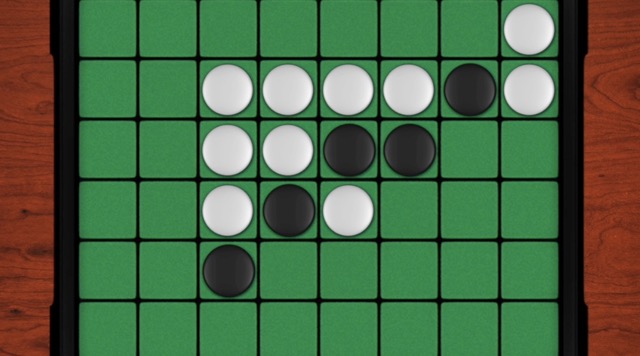
Reversi is one of the most strategically rich two-player abstract games ever invented — a battle of territory where every piece placed can flip dozens of your opponent's pieces to your color, and where a dominant position can reverse in a single well-placed move. The board starts nearly empty and fills progressively, with the winner determined not by who places more pieces, but by who has more pieces of their color when the final empty space is claimed.
The game's central dynamic — placing a piece to capture all opponent pieces sandwiched between it and another piece of yours — creates a constantly shifting board where apparent leads mean little until the game is truly over. A player with fewer pieces mid-game can be positioned to capture large swaths of the board in the endgame; a player with many pieces can suddenly lose most of them to a single strategic placement. This possibility for dramatic reversal is what gives Reversi its name and its lasting appeal.
This digital version offers both Classic Mode (the standard 8x8 board with 6 starting pieces) and Custom Mode (boards ranging from 4x4 to 16x16), letting you calibrate from a quick focused game to an extended strategic marathon. Both 1-Player (vs. AI) and 2-Player modes are available in each format — a clean, complete implementation that serves casual players and competitive enthusiasts equally.
The combination of immediately learnable rules and genuinely deep strategic complexity makes Reversi one of the best gateway games to abstract board game strategy — easy to start, rewarding to master.
Key Details:
| Genre: | Strategy / Board Game / Abstract |
| Difficulty Level: | Medium to Hard |
| Average Play Time: | 10–30 minutes per match |
| Best For: | Strategy game fans who enjoy abstract board games with deep positional play; great for both competitive AI and two-player human matches |
2. How to Play Reversi
Getting Started:
- Choose Classic Mode (8x8) or Custom Mode (select board size from 4x4 to 16x16).
- Choose 1 Player (vs. AI) or 2 Players mode.
- Select your color (black or white). Black moves first.
- On your turn, place one piece on any empty square that captures at least one opponent piece.
- All opponent pieces sandwiched between your new piece and any existing piece of your color (in any direction) flip to your color.
- The game ends when neither player can make a valid move; the player with more pieces on the board wins.
Basic Controls:
- Mouse Click: Click any valid empty square to place your piece there. Valid moves are typically highlighted.
Objective: Have more pieces of your color on the board than your opponent when no more valid moves remain. Each piece placement must capture at least one opponent piece — placing without capturing is not allowed.
3. Reversi Features & Highlights
- ✓ Classic and Custom modes — standard 8x8 or adjustable grid sizes from 4x4 to 16x16 for varied challenge levels
- ✓ 1 Player and 2 Player options — AI opponent or local two-player mode in both game formats
- ✓ Multi-directional capture — pieces are captured in horizontal, vertical, and diagonal lines simultaneously
- ✓ Dramatic reversal potential — board positions can flip dramatically with a single well-placed piece
- ✓ Scalable complexity — larger Custom Mode boards create proportionally deeper strategic challenges
4. Reversi Tips & Strategies
Beginner Tips:
- Corners are the most valuable squares on the board. A piece in a corner can never be flipped — it's permanently yours. Prioritizing moves that put you closer to capturing corners is a fundamental Reversi principle.
- Avoid giving your opponent the corners. Any square diagonally adjacent to a corner gives your opponent a path to that corner on their next move. Treat these "X-squares" (diagonal corner neighbors) as dangerous to occupy.
- Think about what you give your opponent. Every piece you place in a valid position also changes which squares become valid for your opponent on their next turn. A move that captures many pieces but opens a corner for your opponent is often worse than a quieter move that doesn't.
Advanced Strategies:
- Play for fewer pieces early, more late. Counter-intuitively, having fewer pieces in the early and mid-game often produces better late-game position. Fewer pieces means your opponent has fewer captures available, which means fewer valid moves, which can lead to a massive capturing advantage as the board fills.
- Maximize stable discs. Stable discs are pieces that can never be flipped for the rest of the game — corners are the most obvious, but pieces anchored to filled edges and rows are also stable. Building a high stable-disc count is the most reliable path to a winning endgame position.
- Force your opponent into bad moves. Reversi allows players to control their opponent's options by engineering situations where only poor moves are available to them. A player with only unfavorable moves gives up large captures on every turn — deliberately reducing your opponent's viable options is an advanced technique called "mobility control."
What to Watch Out For:
- The edge temptation. Edge squares (not corners) seem safe because opponents can only attack from one side. But edges adjacent to corners give opponents corner access. Occupy non-corner edges only when they don't expose the adjacent corner to your opponent.
- Piece-count overconfidence. Players who see a large piece-count lead mid-game often play more aggressively, making suboptimal positional moves in pursuit of more captures. Piece count mid-game is largely irrelevant — position and corner control determine who wins.
5. Reversi Game Elements Explained
The Flip Capture System: Reversi's core mechanic is the flip: when you place a piece, all opponent pieces lying in a straight line (horizontal, vertical, or diagonal) between your new piece and any existing piece of your color are flipped to your color simultaneously. This can apply in multiple directions at once from a single placement — a piece placed in the center might flip pieces in three or four directions simultaneously. The requirement that every placement must capture at least one piece in this way means you can never make a "neutral" move. Every turn is an active capture event, which also means every turn gives your opponent new pieces of their color at the other end of each captured sequence. The flip system creates the game's central tension: large captures now often mean your opponent has more pieces to work with on their next turn.
The Corner and Positional Value System: Not all empty squares are equal in Reversi — position value varies dramatically based on strategic implications. Corner squares are the highest value positions in the game: pieces placed in corners can never be flipped, making them permanent territory. This permanence makes corners worth significant sacrifice to capture. Adjacent to corners are the dangerous "X-squares" — diagonal corner neighbors — which give the next player who occupies them a direct path to the corner. Edge squares between corners have intermediate value: they can sometimes be permanent anchors for stable piece chains, but they also risk giving opponents corner access if poorly timed. The entire mid-game of Reversi can be understood as a contest for positional advantage that will determine who captures corners first.
The Custom Board Size System: Reversi's Custom Mode allows players to adjust the board dimensions from 4x4 (the smallest viable game) up to 16x16 (a genuinely complex strategic marathon). Smaller boards (4x4, 6x6) produce faster, more tactical games where every placement has immediate dramatic consequences and the endgame arrives quickly. Medium boards (8x8, 10x10) represent the classic Reversi range where positional principles fully apply and games develop satisfying strategic arcs. Larger boards (12x12, 14x14, 16x16) expand the strategic space significantly — more board real estate means longer games, more nuanced positional battles, and a more complex corner-and-edge interaction landscape that can sustain extended competitive play. Choosing the right board size to match your time availability and strategic appetite is itself a meaningful pre-game decision.
6. Reversi Frequently Asked Questions
Q: How do I capture my opponent's pieces?
A: Place your piece on any empty square such that it creates a straight line (horizontal, vertical, or diagonal) with one of your existing pieces, with opponent pieces filling the space between them. All opponent pieces in that sandwiched line flip to your color immediately.
Q: What if I can't make a valid move?
A: If no valid placement exists for you, your turn is skipped and play passes to your opponent. If neither player can make a valid move, the game ends and the player with more pieces wins.
Q: Why shouldn't I always try to capture as many pieces as possible?
A: Large captures often give your opponent more pieces and more valid moves on their following turn. Mid-game piece count is less important than positional advantage — particularly corner control. A move that captures fewer pieces but secures better position is usually better than a large capture that opens corners for your opponent.
Q: What's the difference between Classic and Custom Mode?
A: Classic Mode uses the standard 8x8 board with 6 starting pieces. Custom Mode lets you select board dimensions from 4x4 to 16x16. Larger boards create longer games with more complex positional challenges; smaller boards produce faster, more tactical games.
Q: Is Reversi available as a two-player game?
A: Yes — both Classic and Custom Modes include a 2 Player option where two people play on the same device. One player controls black, the other controls white, taking turns placing pieces.