







1. Mahjong Sort Puzzle Game Overview
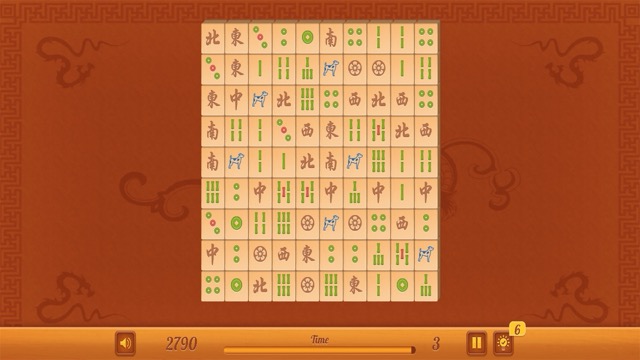
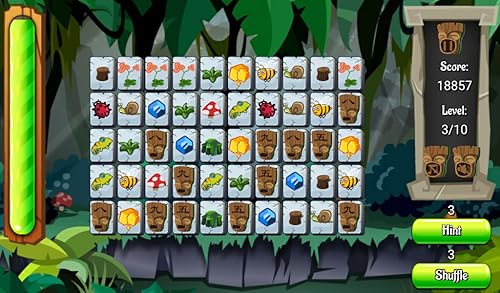
Mahjong Sort Puzzle is a clever hybrid that borrows the tile aesthetics of mahjong and fuses them with a color-sorting match-3 challenge — producing something that feels genuinely distinct from both parent genres. Instead of matching identical symbols, you're matching tiles by color. Instead of clearing pairs, you're organizing matched tiles into grids of three to eliminate them. The result is a spatial logic puzzle with a mahjong skin and match-3 bones that rewards both quick thinking and careful forward planning.
The sorting dimension is what makes Mahjong Sort Puzzle different. You're not just finding tiles that match — you're managing a working area where matched tiles need to be arranged in a grid formation before they clear. If that space fills with unmatched tiles before you've organized a clearable group, you're stuck. Keeping the sorting area manageable while simultaneously identifying color matches across the main board requires the kind of split-attention spatial thinking that makes the game genuinely challenging at higher levels.
The difficulty progression is honest and well-calibrated: early levels give you enough space to make mistakes and recover; later levels tighten the space and increase tile variety until planning several moves ahead becomes necessary rather than optional. The game works equally well for casual sessions where you engage with a few levels and stop, and for extended play where you push through the increasingly complex later stages.
For mahjong fans who want something with a fresher mechanical hook, or match-3 players who want the visual richness of the mahjong tile format, Mahjong Sort Puzzle occupies a satisfying space between both.
Key Details:
| Genre: | Puzzle / Mahjong / Match-3 / Sorting |
| Difficulty Level: | Easy to Hard (escalates progressively) |
| Average Play Time: | 5–15 minutes per level |
| Best For: | Puzzle fans who enjoy spatial sorting challenges; great for mahjong fans wanting a fresher mechanic and match-3 enthusiasts who enjoy tile aesthetics |
2. How to Play Mahjong Sort Puzzle
Getting Started:
- The board displays mahjong tiles in various colors.
- Tap or click a tile to select it and move it to the sorting area.
- Arrange tiles of the same color into groups of three in the sorting grid.
- When three matching-color tiles are grouped, they clear from the board.
- Clear all tiles from the board to win the level — don't let the sorting area fill completely.
Basic Controls:
- Click / Tap to Select: Click or tap a tile to add it to the sorting area.
- Mouse (PC): Click tiles to select and move them.
- Touch (Mobile): Tap the screen to select and position tiles.
Objective: Clear all tiles from the board by selecting and grouping matching-color tiles into sets of three. Manage the sorting area carefully to prevent it from filling with unmatched tiles — a full sorting area with no completable group ends the level.
3. Mahjong Sort Puzzle Features & Highlights
- ✓ Color-based match-3 tile clearing — a distinct mechanic that sets it apart from symbol-based mahjong matching
- ✓ Sorting area management — the working space creates a secondary strategic layer beyond simply identifying matches
- ✓ Progressive level difficulty — tile variety and space constraints increase meaningfully across levels
- ✓ Spatial and logical challenge — split-attention management of main board and sorting area develops genuine cognitive skills
- ✓ Accessible for casual and enthusiast players — lower levels welcome newcomers; higher levels challenge experienced puzzle players
4. Mahjong Sort Puzzle Tips & Strategies
Beginner Tips:
- Never fill the sorting area without a clear plan. Before adding a tile to the sorting area, know how it will eventually form a group of three. Tiles that enter the sorting area with no plan for matching become dead weight that consumes space.
- Complete groups as fast as possible. The sorting area has limited space. Every completed group that clears from it frees a slot for the next tile. Don't build up too many partial groups simultaneously — complete one before aggressively pursuing the next.
- Focus on the color you have the most of first. If you can see four or five tiles of the same color on the board, that color has the best matching potential. Clearing a color group from the board early reduces overall tile count and relieves space pressure.
Advanced Strategies:
- Think in groups of three, not in individual tiles. Before touching any tile, identify all three members of the group you're planning to complete. Only pull a tile toward the sorting area when you know where its two same-color partners are and can access them.
- Maintain a buffer slot in the sorting area. Keeping at least one open slot in the sorting area at all times gives you emergency flexibility when an unexpected tile needs to be parked before a better sequence can continue.
- In late levels, prioritize rare colors first. When tile variety is high, some colors appear in small quantities — just enough for one group of three, with little margin for error. Identify and clear these rare-color groups early before other tile movements inadvertently bury them.
What to Watch Out For:
- Sorting area gridlock. If the sorting area fills with tiles from different colors and no group of three can be completed, the level ends. This is the game's primary loss condition and almost always results from impulsive tile selection without a completion plan.
- Ignoring the board while managing the sorting area. Players under pressure in the sorting area focus entirely on the working space and stop scanning the main board for incoming group opportunities. Keep scanning both areas simultaneously — the main board is always generating the tiles you'll need next.
5. Mahjong Sort Puzzle Game Elements Explained
The Color-Match-3 Clearing System: Unlike standard mahjong that matches pairs of identical symbols, Mahjong Sort Puzzle matches tiles by color and requires groups of three rather than two. A tile is selected from the main board and added to the sorting area; when three same-color tiles accumulate in the sorting area, they clear simultaneously. The three-tile threshold (rather than two) increases the planning complexity per group: you need to identify and sequence the selection of three specific tiles rather than just two, and manage the sorting area across multiple partial groups simultaneously. The color-only matching rule (any tile of the same color, regardless of symbol) makes initial pair identification faster but the completion management more demanding.
The Sorting Area Management System: The sorting area is the game's unique structural innovation — a finite working space where selected tiles are staged before clearing. This space has a limited number of slots. As you select tiles from the main board, they occupy slots in the sorting area until three of the same color accumulate and clear. The strategic tension is entirely about this space: if you pull tiles from the board without completing groups, the sorting area fills. A full sorting area with no completable group is an immediate game-over. Managing the sorting area means maintaining a balance between partial groups in progress (which are necessary to complete groups) and total slot occupancy (which must never exceed capacity). Players who manage this balance effectively clear boards efficiently; those who over-commit to partial groups without completing them consistently run out of space.
The Progressive Difficulty System: Mahjong Sort Puzzle's difficulty escalates across levels through two independent dimensions: color variety and space constraints. Lower levels offer fewer distinct tile colors (making groups easier to form) and more generous sorting area capacity (providing more room for mistakes). Higher levels introduce more simultaneous colors (making the board more complex to scan and sort), while potentially tightening sorting space (reducing the margin for holding partial groups). Later levels also increase board tile count, extending the duration of each level and multiplying the number of color-management decisions required. This two-dimensional escalation means the game doesn't simply get "harder" in one way — it gets more complex, more spatially demanding, and more cognitively intensive simultaneously, ensuring meaningful new challenge continues through the level roster.
6. Mahjong Sort Puzzle Frequently Asked Questions
Q: What determines whether I can select a tile from the main board?
A: Check your version's accessibility rules — some versions allow any visible tile to be selected, while others restrict selection to tiles with free edges (standard mahjong accessibility rules). In either case, the sorting area must have at least one open slot to receive a selected tile.
Q: What happens if the sorting area fills completely?
A: If the sorting area has no open slots and no group of three matching-color tiles can be completed and cleared, the level ends. This is the primary loss condition — avoid it by only selecting tiles when you have a completion plan for the resulting group.
Q: Can I remove a tile from the sorting area back to the main board?
A: Most versions of Mahjong Sort Puzzle do not allow tiles to be returned to the main board once moved to the sorting area. Treat each tile selection as a committed decision and plan accordingly.
Q: How many tiles do I need to form a group?
A: Three tiles of the same color form a group. When three same-color tiles are in the sorting area simultaneously, they automatically clear from the area.
Q: Is Mahjong Sort Puzzle playable on mobile?
A: Yes — the tap-to-select interface works fully on touchscreen devices, and the game runs in mobile browsers without a download.