





1. Pyramid Solitaire Game Overview
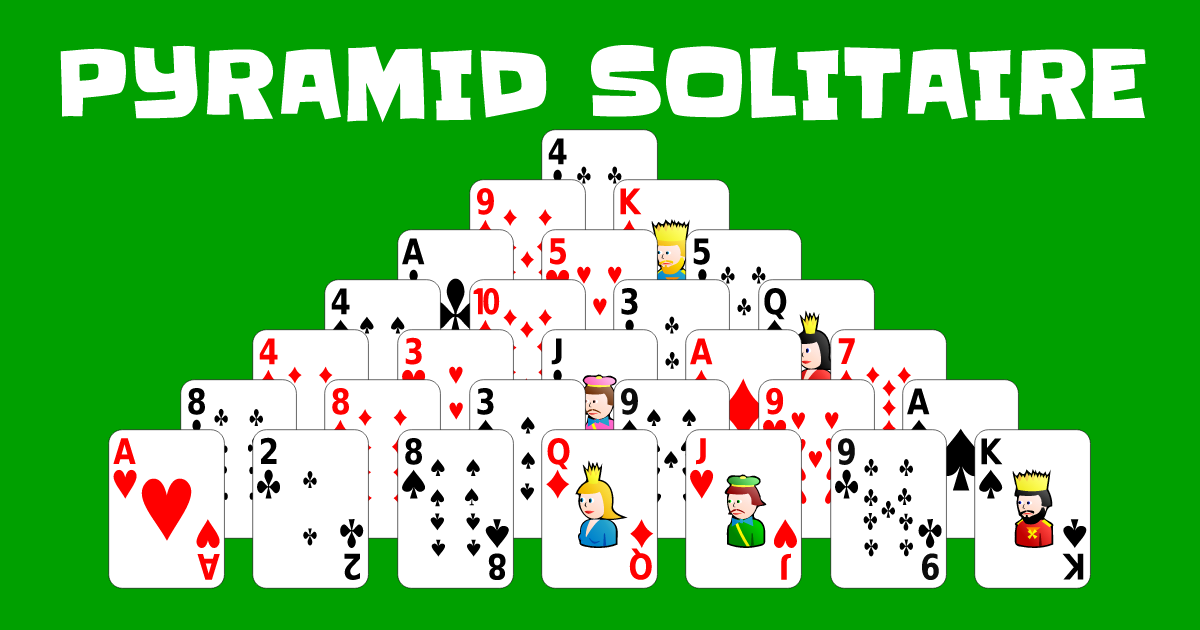
Pyramid Solitaire is a quick, satisfying card game built around one clean arithmetic challenge: find two cards that add up to exactly 13 and remove them from the pyramid. The pyramid starts stacked high, most cards buried beneath others, and your task is to work through it pair by pair — exposing lower cards by clearing the ones above them — until every card has been removed.
The math is accessible to anyone: an Ace (1) pairs with a Queen (12), a 2 pairs with a Jack (11), a 3 pairs with a 10, and so on symmetrically up the number line. Kings (13) remove themselves alone — no partner needed. This arithmetic simplicity is the game's accessibility anchor: you're never calculating anything complex, just identifying additive complements at a glance.
What elevates Pyramid Solitaire beyond a simple math quiz is the spatial layer. Cards buried beneath others are inaccessible — you can only select cards that are completely exposed (not covered by any other card). Clearing the pyramid efficiently requires planning which exposed cards to remove in what order to progressively uncover the cards beneath. The wrong sequence leaves you with only exposed cards that don't sum to 13, while the right sequence maintains a rich set of matching options as the pyramid unfolds.
The stockpile on the left provides additional cards when the pyramid alone can't yield a valid pair — but it's finite, and using it wisely is a key skill. Customizable themes, card sets, and backgrounds give the game a personal aesthetic touch that makes extended sessions feel like your own experience.
Key Details:
| Genre: | Card Game / Solitaire / Arithmetic Puzzle |
| Difficulty Level: | Easy to Medium |
| Average Play Time: | 5–15 minutes per game |
| Best For: | Casual card game players who enjoy arithmetic-based matching puzzles with spatial planning; suitable for all ages |
2. How to Play Pyramid Solitaire
Getting Started:
- Cards are arranged in a pyramid formation — fully exposed cards sit at the top and edges; others are partially or fully covered.
- Click any two exposed cards whose combined value equals 13 to remove both.
- Kings (value 13) can be removed individually with a single click.
- When no valid pair exists among exposed pyramid cards, click the stockpile on the left for additional cards.
- Clear all pyramid cards to win.
Basic Controls:
- Mouse Click: Click an exposed card to select it; click a second exposed card to attempt a pair removal.
- Stockpile Click: Draw an additional card from the left-side stockpile when no valid pyramid pair is available.
- Customization: Access the theme, card set, card back, and background settings to personalize your visual experience.
Card Values for Pairing:
- Ace = 1 (pairs with Queen)
- 2–10 = face value
- Jack = 11 (pairs with 2)
- Queen = 12 (pairs with Ace)
- King = 13 (removes alone)
Objective: Remove every card from the pyramid by pairing exposed cards that sum to 13 and using the stockpile strategically when needed.
3. Pyramid Solitaire Features & Highlights
- ✓ Simple arithmetic matching — a universally accessible sum-to-13 mechanic that's immediately intuitive
- ✓ Pyramid card layout — a visually distinct formation that creates a spatial planning challenge layered over the arithmetic
- ✓ King solo removal — Kings clear independently, providing welcome flexibility when the pair options are limited
- ✓ Stockpile backup — a supplementary card resource for when the pyramid alone can't yield a valid match
- ✓ Full visual customization — theme, card set, card back, and background personalization for a tailored experience
4. Pyramid Solitaire Tips & Strategies
Beginner Tips:
- Learn the pairs by heart. The sum-to-13 pairs are fixed: A+Q, 2+J, 3+10, 4+9, 5+8, 6+7. Memorizing these so you recognize them instantly (rather than calculating each time) dramatically speeds up your scanning and reduces missed matches.
- Prioritize pairs that expose buried cards. When multiple valid pairs exist among exposed cards, prefer the pair whose removal uncovers the most new cards. Removing an edge card that was blocking three buried cards is worth more than removing two isolated exposed cards.
- Save Kings for tight moments. Kings remove alone and are always valid. When the board seems stuck and no pair is visible, a King removal can shift the exposure pattern enough to reveal a hidden pair.
Advanced Strategies:
- Plan three removals ahead. Before clicking any pair, look at what will be exposed after that removal and whether a follow-on pair becomes available. The best sequences chain three or four removals without returning to the stockpile.
- Manage the stockpile as a resource. The stockpile is finite — each card drawn is one fewer available for later. Use it only when the pyramid genuinely offers no valid pair, and try to establish a rhythm where pyramid pairs carry you as far as possible before you need to draw.
- Watch for low-card abundance. The bottom rows of the pyramid tend to concentrate certain number ranges. If you've used most Aces and Queens from the top, the bottom may lack the pairs to clear itself — anticipate this by using stockpile draws strategically when you can see the bottom layer composition.
What to Watch Out For:
- Clearing cards that bury needed partners. Removing a card from the pyramid exposes the cards it was covering — but it also removes a potential pairing partner for other cards. Before removing any card, check whether it's the only remaining partner for another exposed card somewhere else.
- Stockpile exhaustion before pyramid clearance. If the stockpile runs out while cards remain in the pyramid and no valid pairs exist among exposed cards, the game ends without a complete clear. Stockpile conservation through longer pyramid-based matching sequences is the main skill that prevents this.
5. Pyramid Solitaire Game Elements Explained
The Sum-to-13 Matching System: Every removal in Pyramid Solitaire is determined by one arithmetic rule: two exposed cards whose values add to exactly 13 can be clicked together to remove both. The King, valued at 13 alone, removes without a partner. Every other card has exactly one natural complement: Ace pairs with Queen (1+12), 2 with Jack (2+11), 3 with 10 (3+10), 4 with 9, 5 with 8, and 6 with 7. This fixed pairing means the game's matching decisions are always binary — either a card's complement is available and accessible, or it isn't. The strategic challenge isn't finding the right pair among many options; it's sequencing the removals to ensure that both cards of each needed pair are simultaneously exposed rather than one buried behind the other.
The Pyramid Exposure System: The pyramid's layered structure is the game's spatial puzzle layer. Cards in the upper rows of the pyramid rest on top of cards in the rows below — a card is only accessible when every card above it has been removed. This stacking means the pyramid's lower rows are initially completely invisible as active choices, becoming available only as you work down from the top. Managing exposure is the strategic complement to the arithmetic matching: you're not just looking for cards that sum to 13, you're looking for cards that sum to 13 AND whose removal progressively exposes the cards you'll need for future pairs. A removal that clears a pair but leaves a dead-end column isolated from the rest of the pyramid is often less valuable than one that opens multiple future options.
The Stockpile System: The stockpile (positioned on the left side of the screen) is your supplementary card source when the pyramid's exposed cards offer no valid sum-to-13 pair. Clicking the stockpile deals one card at a time into an active draw position, where it can be paired with any exposed pyramid card or another stockpile draw card if their values sum to 13. The stockpile is finite — once exhausted, no new cards are available. This creates a resource management dynamic: using stockpile cards is sometimes necessary and sometimes avoidable, and the difference between using them wisely (only when genuinely stuck) and carelessly (whenever convenient) significantly affects how many full pyramid clears you achieve. The best Pyramid Solitaire sessions are ones where the pyramid largely clears itself, with the stockpile serving as occasional assistance rather than primary pairing resource.
6. Pyramid Solitaire Frequently Asked Questions
Q: Which cards pair together to sum to 13?
A: Ace+Queen (1+12), 2+Jack (2+11), 3+10, 4+9, 5+8, and 6+7. Kings equal 13 and remove alone. These are the only valid pairings in the game.
Q: How do I access a buried card in the pyramid?
A: A card is only accessible when every card resting on top of it has been removed. Work from the top rows down — clear upper-row cards to expose the rows beneath them.
Q: What should I do if no exposed cards sum to 13?
A: Click the stockpile to draw an additional card. Try pairing the drawn card with any exposed pyramid card, or with the next stockpile card, if those combinations sum to 13.
Q: Can I change how the game looks?
A: Yes — Pyramid Solitaire includes customization options for the game theme, card set design, card back, and background. Access these settings through the customization interface before or during play.
Q: What happens if the stockpile runs out before I clear the pyramid?
A: If the stockpile is exhausted and no valid sum-to-13 pairs exist among exposed pyramid cards, the game ends without a full clear. Starting a new game presents a fresh pyramid deal to attempt again.