




1. Solitaire Zero21 Game Overview
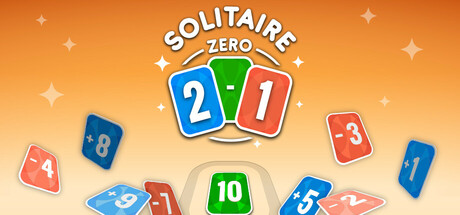
Solitaire Zero21 is a genuinely novel card game that replaces traditional solitaire's suit-sorting goal with a running sum challenge: collect numbered cards from the board while keeping your cumulative total between 0 and 21 at all times. Go under 0 or over 21 and the attempt fails. Stay within range across all 75 levels while clearing every card, and you've mastered one of the most strategically distinctive solitaire variants available.
The blackjack-adjacent sum constraint creates a completely different cognitive experience from standard card games. You're not organizing cards by color, suit, or sequence — you're thinking about mathematics. Each card has a numerical value, and adding it to your running total is the only operation that matters. The skill is reading which cards are safe to collect given your current sum, which would push you out of range, and how to navigate a board where both extremes — too high and too low — are equally dangerous.
The three special cards — MIN, MID, and MAX — are what give Solitaire Zero21 its tactical texture. MIN reduces your sum toward zero; MAX increases it toward 21; MID adjusts to a middle value. Using these special cards to manage dangerous sums before they cross the boundaries is the game's primary strategic tool. Holding a MIN card when your sum is dangerously high is valuable; spending it when you're comfortable wastes its potential.
75 unique levels of sum-management challenge provide sufficient content to develop genuine mastery of the game's distinctive mechanics.
Key Details:
| Genre: | Card Game / Solitaire / Arithmetic Strategy |
| Difficulty Level: | Medium to Hard (escalates across 75 levels) |
| Average Play Time: | 10–20 minutes per level |
| Best For: | Card game players who enjoy arithmetic-based strategy; fans of blackjack-style sum management in a solitaire puzzle format |
2. How to Play Solitaire Zero21
Getting Started:
- The board displays numbered cards with various values.
- Your current sum is displayed — it starts at a baseline and must stay between 0 and 21 at all times.
- Collect number cards from the board — each collection adds the card's value to your running total.
- Use MIN, MID, and MAX special cards to adjust your sum when needed.
- Collect all number cards while keeping your sum within the 0–21 range to complete the level.
Basic Controls:
- Click / Tap Card: Select a number card or special card to collect it and apply its effect to your running total.
Objective: Collect every number card from the board without allowing your running sum to fall below 0 or exceed 21. Use MIN, MID, and MAX special cards strategically to manage the sum. Complete all 75 levels.
3. Solitaire Zero21 Features & Highlights
- ✓ Unique 0–21 sum constraint — a genuinely novel solitaire mechanic built around running total management
- ✓ MIN, MID, and MAX special cards — three types of sum-adjustment tools that create the game's primary tactical dimension
- ✓ 75 levels — substantial content that develops full mastery of the sum-management challenge
- ✓ Mathematical card strategy — a different cognitive experience from pattern or sequence-based solitaire variants
- ✓ Mental stimulation alongside relaxation — the arithmetic engagement keeps the mind active within a calming card game format
4. Solitaire Zero21 Tips & Strategies
Beginner Tips:
- Always know your exact running sum. Unlike most card games where the sum is irrelevant, in Zero21 your running total is your most critical piece of information. Track it exactly after every card collection — don't approximate.
- Identify which cards will take you toward danger zones. Before collecting any card, calculate what your new sum will be. If collecting a specific card would bring you to 19 or 20, that's fine — if it would bring you to 22, that card must wait until your sum is low enough.
- Treat MIN cards as emergency tools. MIN cards reduce your sum toward the lower bound. When your sum is dangerously high (above 18), a MIN card rescues you. When your sum is comfortably mid-range, using a MIN card wastes its rescue potential.
Advanced Strategies:
- Plan special card use based on the remaining board. If several high-value cards remain on the board, proactively use MIN to lower your sum before being forced to collect them. Reactive special card use (waiting until you're at 20 before using MIN) is less efficient than anticipatory use.
- Treat MID as a flexible positioning tool. MID adjusts your sum to a middle value — useful when both extremes are threatening and a reset to the middle range opens the most safe collection options. MID is often underutilized compared to MIN and MAX because its benefit is less immediately obvious.
- Sequence high and low value cards deliberately. Rather than collecting cards in the order they're accessible, look at the board's full value distribution and sequence high-value cards when your sum is low, and low-value cards when your sum is high. This natural alternation often keeps the sum in a comfortable range without needing special cards.
What to Watch Out For:
- Forced collections. Some board configurations leave only high-value cards accessible when your sum is already high. This is the scenario where special cards become essential — recognize it early enough to have a MIN or MID card available when forced to collect a dangerous high value.
- Sum drift. Small positive-value collections accumulate — your sum drifts upward if you're collecting mostly mid-range or high values. Monitor the trend, not just the absolute current sum, and use special cards preemptively when drift toward 21 is apparent.
5. Solitaire Zero21 Game Elements Explained
The 0–21 Sum Management System: Solitaire Zero21's core mechanic is radically different from any standard solitaire variant. Rather than organizing cards by suit, color, or sequence, the game tracks a single running numerical sum that accumulates as you collect cards from the board. Each number card's value is added to (or subtracted from, depending on card sign) the running total. The constraint is absolute: the sum must remain between 0 and 21 inclusive at all times. Collecting a card that would push the sum above 21 or below 0 immediately fails the attempt. This binary constraint — in range or failed — creates the game's distinctive tension: every card collection is a mathematical evaluation of whether the addition is safe, and the strategy is sequencing collections to maintain viable range while progressively clearing the board.
The MIN, MID, and MAX Special Card System: Three types of special cards provide the tactical tools for managing dangerous sum trajectories. MIN cards reduce the running sum — pulling it back from the upper boundary when high-value number cards have accumulated the total toward 21. MAX cards increase the sum — rarely needed since most games trend toward the upper boundary, but critical in level configurations where many low or negative-value cards appear. MID cards adjust the sum to a middle value, providing a reset to the safer central range when the sum has drifted problematically in either direction. The strategic skill of special card management is knowing when to spend each type: used preemptively (before the sum reaches a dangerous threshold), they prevent crises; used reactively (after a crisis is imminent), they often have less flexibility to work with.
The 75-Level Progression System: Solitaire Zero21's 75 levels are designed to progressively develop the player's sum-management skill. Early levels introduce the mechanic with smaller boards and more forgiving value distributions — the sum naturally stays within range with minimal strategic intervention. Later levels present deliberately challenging value distributions where the sequence of card collection matters critically, and special card timing determines whether the level is completable. At 75 levels, the game is substantive enough to develop genuine mastery of the sum-management mechanic while remaining finite enough that completing all 75 represents a meaningful personal achievement.
6. Solitaire Zero21 Frequently Asked Questions
Q: What happens if my sum goes above 21 or below 0?
A: The level attempt ends immediately — the constraint is absolute. There's no warning threshold or grace period. If any card collection pushes your sum outside the 0–21 range, the attempt fails and must be restarted.
Q: When should I use a MIN card vs. a MID card?
A: Use MIN when your sum is dangerously high (above 17–18) and you have high-value cards still to collect — MIN pulls the sum back from the upper boundary. Use MID when the sum has drifted high but not critically so, and you want a flexible reset to the middle range that preserves collection options in both directions.
Q: Do all number cards have positive values?
A: Check your specific level's card set — some versions of Solitaire Zero21 include cards with negative values that reduce your sum when collected. These negative cards are valuable when your sum is trending high but can be dangerous when the sum is low.
Q: Is there a time limit in Solitaire Zero21?
A: The game focuses on the sum constraint rather than time pressure. Check your version's interface for any time limit features — the core challenge is sum management, not speed.
Q: What makes a level "completed" in Solitaire Zero21?
A: A level is complete when all number cards on the board have been collected while the running sum remained between 0 and 21 throughout. All 75 levels completed constitutes full game mastery.