





1. Solitaire Reverse Game Overview
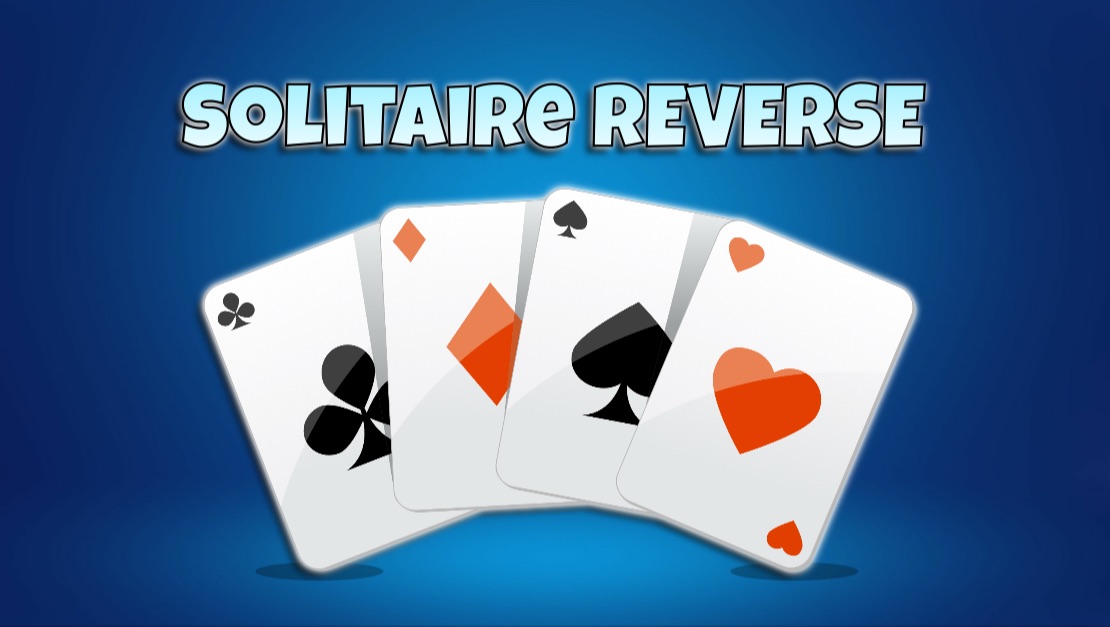
Solitaire Reverse is a fast-paced card-clearing game that takes the stock-matching solitaire formula and supercharges it with three types of special cards, a race-against-the-clock format, and hundreds of levels with daily challenges that keep the content perpetually fresh. The name captures the game's spirit well — it's solitaire, but with a twist that reverses the straightforward into the strategic and the manageable into the pressured.
The core mechanic is clean: clear cards from the board by selecting any card one rank higher or lower than the current top of the waste pile. Build chains, clear efficiently, and try to empty the board before the clock runs out. This stock-matching mechanic is immediately accessible and satisfying in its basic form. What Solitaire Reverse adds on top of it — wild cards, reverse cards, and shuffle cards — transforms that base into something with genuine tactical texture.
Wild cards play on anything, providing emergency chain continuations when the board otherwise has no valid next card. Reverse cards change the direction of the current sequence (ascending becomes descending, and vice versa), potentially unlocking a large section of previously unplayable cards in a single play. Shuffle cards redistribute the board cards into new positions, creating fresh clearing opportunities from a stuck layout. Using each type at the right moment — rather than as a panicked reaction to difficulty — separates efficient play from inefficient play.
The leaderboard, achievements, cloud save, and offline mode make Solitaire Reverse a complete casual game platform rather than just a card game mechanic.
Key Details:
| Genre: | Card Game / Solitaire / Time Challenge |
| Difficulty Level: | Easy to Hard (hundreds of levels) |
| Average Play Time: | 5–10 minutes per level |
| Best For: | Casual card game players who enjoy time-pressured chain-clearing with special card mechanics and daily challenge variety |
2. How to Play Solitaire Reverse
Getting Started:
- The board displays face-up cards available for selection.
- The waste pile shows its current top card — your reference for valid plays.
- Tap any board card that is one rank higher or lower than the waste pile top to remove it.
- The removed card becomes the new waste pile top — continue chaining for maximum efficiency.
- If no valid board card exists, tap the stock pile to draw a new reference card.
Basic Controls:
- Tap / Click Card: Select a valid board card (one rank from waste pile top) to remove it and update the reference.
- Tap / Click Stock: Draw a new waste pile card when no board card is valid.
- Special Card Activation: Tap a special card (wild, reverse, shuffle) from your inventory to use it.
Objective: Clear all cards from the board within the time limit. Use special cards wisely to maintain chain efficiency. Earn stars and coins based on performance.
3. Solitaire Reverse Features & Highlights
- ✓ Three special card types — wild, reverse, and shuffle cards each provide distinct tactical interventions
- ✓ Hundreds of levels — varied layouts and difficulty profiles across a massive level roster
- ✓ Daily challenges and rewards — fresh content and incentives every day beyond the main level progression
- ✓ Race against the clock — time limit creates genuine urgency that escalates as boards grow more complex
- ✓ Leaderboards and achievements — competitive tracking and milestone rewards for sustained engagement
4. Solitaire Reverse Tips & Strategies
Beginner Tips:
- Keep your chains going as long as possible. Every consecutive board card removed without a stock draw extends your chain. Stock draws break the chain and cost time. Before drawing, scan the full board for any card one rank from your current waste top.
- Use wild cards to rescue long chains, not to start them. A wild card used to continue a 7-card chain into an 8-card chain is worth much more than one used to start a fresh chain from scratch. Preserve wilds for chain continuation emergencies.
- Watch the clock but don't panic. Time pressure in the early portion of a level isn't critical — boards clear quickly with good chains. Reserve genuine urgency responses (fast draws, special card use) for when the clock is actually short, not as a reflexive response to seeing time pass.
Advanced Strategies:
- Use reverse cards to redirect into long unplayed sequences. Reverse changes ascending to descending and vice versa. If one direction of sequence is exhausted but several unplayed cards exist in the other direction, a reverse card unlocks them all at once. Time it for maximum consecutive chain benefit.
- Shuffle when the board is genuinely deadlocked. Shuffle redistributes all board cards — it creates new adjacency patterns and potentially new accessible sequences. Use it when no stock draw and no chain continuation exists, not as a casual reset when chains merely feel slow.
- Read each level's layout for natural chain directions. Some level layouts concentrate high-value cards in ascending clusters; others in descending clusters. Identifying the dominant sequence direction early helps you anticipate where the best chains will run.
What to Watch Out For:
- Special card hoarding. Saving special cards for a "perfect moment" that never arrives means they expire unused. Use wilds, reverses, and shuffles when they would meaningfully change the board situation — not just when the situation is desperate.
- Stock pile depletion. Drawing repeatedly without clearing board cards drains the stock. If you're drawing more than you're clearing, your chain efficiency is too low. Focus on finding natural chain cards before reaching for the stock.
5. Solitaire Reverse Game Elements Explained
The Three Special Card System: Solitaire Reverse's tactical depth above the base chain-clearing mechanic comes from three types of special cards that intervene in different ways. Wild cards bypass the one-rank matching rule entirely — they can be played at any time to remove any board card, making them emergency chain continuation tools that should be spent when they save a long, high-value chain from ending. Reverse cards change the direction of the waste pile sequence — if the pile was ascending (requiring a higher card next), reverse makes it descending (requiring a lower card next), or vice versa. This directional shift can instantly unlock large sections of board cards that were previously unplayable. Shuffle cards redistribute all remaining board cards into new positions, creating fresh sequence opportunities from stuck layouts. Each type addresses a different problem situation — the skill is recognizing which type serves the current board state.
The Timed Challenge System: Solitaire Reverse's clock creates the urgency that makes each level feel genuinely consequential. Without a time limit, the one-rank-chain mechanic would be relaxed and methodical; with one, every second of non-chain time (stock draws, special card decisions, scanning pauses) costs progress. The pressure calibrates differently across the game's hundreds of levels — some give generous time for complex layouts; others impose tight limits that require near-perfect chain efficiency to complete. This variation keeps the time element feeling dynamic rather than formulaic, and ensures that clock management is itself a skill that develops across many levels rather than a fixed anxiety.
The Daily Challenge and Achievement System: Beyond the main level roster, Solitaire Reverse generates daily challenges — fresh specific objectives that reset each day, providing ongoing variety above the permanent level progression. Daily challenges typically have unique requirements (clear a specific type of chain, use fewer stock draws than usual, reach a target score) that reward players who engage with the game's mechanics more deeply than basic completion. The achievement system tracks milestone accomplishments across the full game experience, from basic level completions to specific performance feats. Together, daily challenges and achievements create engagement structures at different time horizons — daily habits and long-term milestones that give sustained players ongoing goals at every level of commitment.
6. Solitaire Reverse Frequently Asked Questions
Q: Which board cards can I select?
A: Any face-up board card that is exactly one rank higher or lower than the current top card of the waste pile. A waste pile top of 7 accepts any 6 or 8; a top of King accepts any Queen; a top of Ace accepts any 2.
Q: What does a reverse card do exactly?
A: A reverse card changes the direction of valid waste pile continuations — if the next valid card was one higher, reverse makes it one lower, and vice versa. This unlocks board cards in the newly valid direction that were previously unavailable without it.
Q: When is the best time to use a wild card?
A: Wild cards are most valuable mid-chain — when a long chain would otherwise end because no valid rank-adjacent board card exists. A wild card played to extend a 6-card chain into a 7-card chain earns more than a wild card used to start a fresh chain from scratch.
Q: What is the daily challenge?
A: A daily challenge is a fresh specific objective that resets each day — distinct from the permanent level roster. Daily challenges typically have unique requirements that reward focused engagement with the game's mechanics and earn special daily rewards on completion.
Q: Does Solitaire Reverse work offline?
A: Yes — the game includes an offline mode that allows play without an internet connection. Cloud save preserves your progress across sessions and devices when online.