




1. Stickman Climb 2 Game Overview
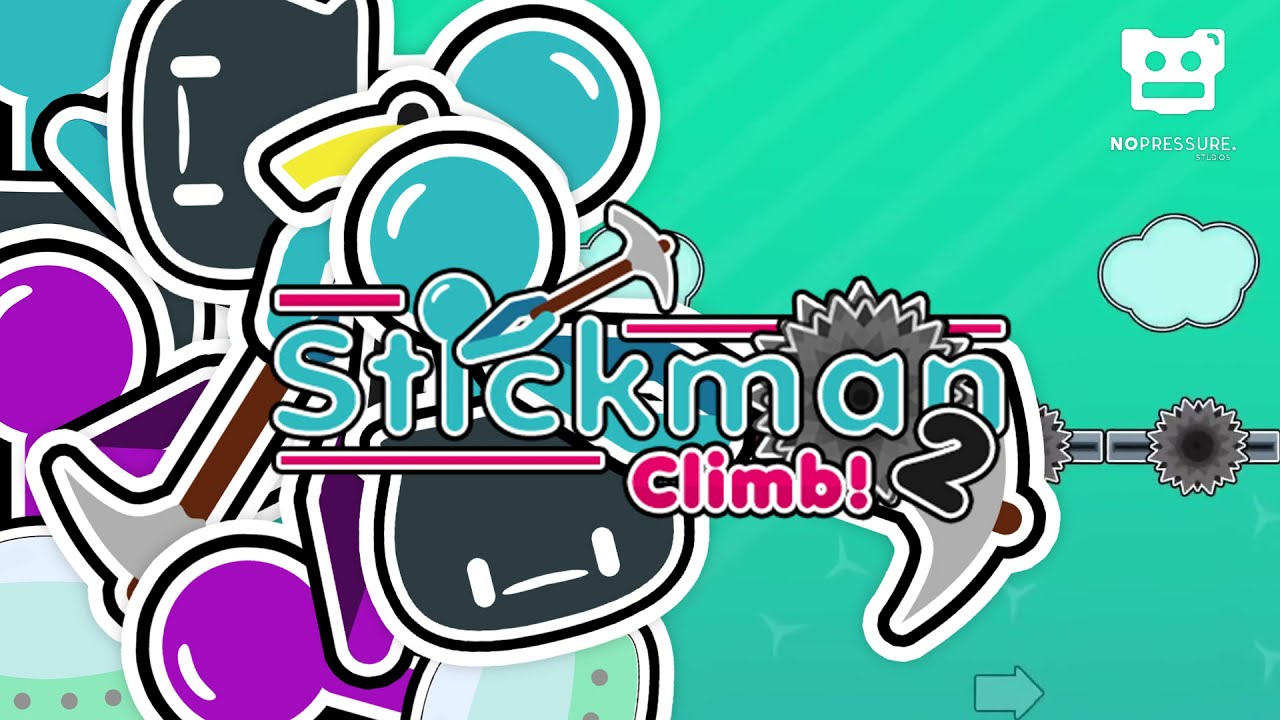
Stickman Climb 2 is a physics-based climbing platformer that puts a determined stick figure against a series of increasingly treacherous modern platforms — not grand mountain peaks, but man-made obstacle courses loaded with hazards that test every bit of your coordination and patience. Your job is to guide your stickman safely from bottom to top across each stage, navigating bubbles, strikes, and a rotating cast of obstacles that demand precise movement and quick reaction.
The game's personality lives in its physics. The stickman moves with just enough unpredictability that committed, confident inputs win out over tentative ones — players who hesitate at the wrong moment tend to find their stickman in a much worse position than those who commit and adjust. Each level is built around that dynamic: identifiable obstacle patterns that reward observation and precise timing, with enough variety that no two stages feel identical.
What elevates Stickman Climb 2 beyond a single-player skill game is its competitive two-player mode. Both players tackle the same stage simultaneously, racing to the finish line with identical challenges and no handicaps. It's a direct test of who reads the obstacles faster, makes cleaner decisions under pressure, and manages the course most efficiently. The competitive format turns a solid solo game into one of the better local multiplayer experiences in the browser platformer genre.
Whether you're grinding for a personal best in solo mode or going head-to-head with a friend, Stickman Climb 2 delivers the kind of tight, rewarding platforming challenge that makes one-more-attempt gameplay feel inevitable.
Key Details:
- Genre: Physics Platformer / Climbing / Skill Game
- Difficulty Level: Medium to Hard (Escalates with stage progression)
- Average Play Time: 5–15 minutes per session
- Best For: Players who enjoy physics-based platformers, skill challenges, and local competitive multiplayer with friends
2. How to Play Stickman Climb 2
Getting Started:
- Select a stage from the level menu — start with the earliest available stage to learn the climbing mechanics before obstacle complexity increases.
- Use your movement controls to push your stickman toward handholds, platforms, and climbing surfaces.
- Observe upcoming obstacles before moving into them — identify the hazard pattern and time your approach accordingly.
- Reach the finish line at the top of the stage to complete the level and unlock the next challenge.
- In two-player mode, coordinate who's controlling which player and race to the finish — identical stages, no head-starts.
Basic Controls:
- A / D — Move left / right
- Mouse — Alternative movement control
Objective: Guide your stickman from the start to the finish line of each stage by climbing through obstacle-filled platforms without falling or getting hit. In two-player mode, reach the finish line before your opponent does.
3. Stickman Climb 2 Features & Highlights
- ✓ Physics-based climbing mechanics — Responsive but unforgiving movement physics that reward committed, precise inputs over hesitant play
- ✓ Two-player competitive mode — Head-to-head racing on identical stages, testing who reads and executes the course more efficiently
- ✓ Diverse obstacle variety — Bubbles, strikes, and a rotating cast of hazards that keep stage layouts unpredictable and demanding
- ✓ Progressive stage difficulty — Levels escalate in complexity and obstacle density, ensuring skill development carries meaningful consequences
- ✓ Unlockable content — Additional stages and content unlock as you progress through the game's challenge ladder
4. Stickman Climb 2 Tips & Strategies
Beginner Tips:
- Observe the full obstacle pattern before committing to a movement. Many hazards in Stickman Climb 2 move in predictable cycles — watching one complete cycle before entering gives you the timing data you need to pass cleanly.
- Commit to your inputs. Tentative half-inputs with the stickman's physics often produce worse outcomes than a decisive move followed by a correction. When you decide to go, go.
- In two-player mode, prioritize clean movement over rushing. Crashes and restarts cost more time than a cautious but steady approach — the player who falls less almost always wins.
Advanced Strategies:
- Learn which obstacles can be baited or bypassed from unconventional angles. Some hazards that look unavoidable from a direct approach have a gap that's only accessible from a specific position or timing window.
- In two-player mode, watching your opponent's approach to a new obstacle section can reveal timing windows you might have missed — use their run as a scouting pass if they reach a section before you.
- Prioritize consistent stage completion over aggressive speed-running until you know a stage's full obstacle layout. Speed comes naturally once the hazard positions are memorized; chasing speed before that point produces more crashes than time savings.
What to Watch Out For:
- Rushing through unread sections — New obstacle configurations that you haven't seen before are the primary cause of unexpected failures. Slow down at any point where the obstacle layout changes significantly.
- Two-player pressure decisions — In competitive mode, watching your opponent pull ahead can trigger rushed inputs that send your stickman into hazards you'd have cleared easily at your own pace. Maintain your rhythm rather than reacting to their position.
5. Stickman Climb 2 Game Elements Explained
Physics Climbing System
The climbing physics in Stickman Climb 2 are the game's defining mechanical characteristic. The stickman's movement responds to inputs with a degree of momentum and weight that makes precise positioning a genuine skill rather than a binary input-to-outcome relationship. This means that the same input applied at slightly different timing or from a slightly different position can produce noticeably different results — which is both the source of the game's frustration and its satisfaction. Players who develop a feel for the stickman's physics — how much lateral momentum a direction change carries, how the stickman settles into a platform versus bouncing off it — find that the game's apparent randomness resolves into a learnable, consistent system. That transition from "the physics are unpredictable" to "I understand the physics" is the core skill development arc of the game.
Obstacle & Hazard Design
Each stage in Stickman Climb 2 is built around a combination of static platform challenges and moving or triggered hazards. Bubbles alter trajectory and movement physics when contacted; strike-type hazards punish mistimed entry with knockback or resets; other obstacles introduce specific timing windows that must be read before approaching. The hazard variety is deliberate — no single technique handles all obstacles, which prevents players from finding one approach that works universally. Different obstacle types demand different responses: some require patient waiting for a cycle to complete, others require committed fast movement through a gap, and others require a specific approach angle that isn't immediately obvious. Learning to identify hazard type quickly — and switch between response modes accordingly — is the pattern recognition skill that experienced players develop across the stage progression.
Two-Player Competitive Mode
The two-player mode in Stickman Climb 2 is a direct skill comparison: both players tackle the same stage simultaneously with identical obstacles, no power differences, and no handicaps. The winner is whoever reaches the finish line first, which means the competitive outcome is a pure function of decision-making speed and movement precision under pressure. The shared stage format creates interesting observational dynamics — watching an opponent approach a difficult section can inform your own timing, and seeing them clear an obstacle you're hesitating on can trigger a useful decision. The competitive format also changes how mistakes feel: a crash in solo mode means retrying; a crash in two-player mode means watching your opponent potentially extend their lead, which creates a distinct pressure dynamic that tests composure alongside skill.
6. Stickman Climb 2 Frequently Asked Questions
Q: How do I get past a particularly difficult obstacle section?
A: Stop and observe the full hazard cycle before entering. Most obstacles in Stickman Climb 2 follow repeating patterns — identifying the safe window in that cycle and entering with commitment at the right moment will clear the majority of sections that feel impossible on a rushed approach.
Q: What should I do if I keep falling at the same point?
A: Identify whether the failure is a timing issue or a positioning issue. Timing failures — where you're entering the right gap but at the wrong moment — are fixed by waiting and watching the cycle before committing. Positioning failures — where your approach angle puts you in contact with the hazard — require adjusting where you start the approach, not just when.
Q: Is Stickman Climb 2 compatible with mobile devices?
A: The game supports mouse control as an alternative to keyboard input, which can work on some touchscreen devices. For the most precise control experience, particularly in two-player mode, keyboard play on a desktop or laptop is recommended.
Q: How does two-player mode work?
A: Both players share the same device and screen. Player 1 uses A/D or the mouse; Player 2 uses a separate key set for their stickman. Both players tackle the same stage layout simultaneously — the first to reach the finish line wins. Check the in-game controls menu for the specific two-player key assignments.
Q: How do I unlock new stages?
A: Complete the current available stages to unlock the next set of levels. Progress is saved automatically in your browser — returning to the game in the same browser retains your unlocked stages and completion status.