


1. Spider Solitaire Pro Game Overview
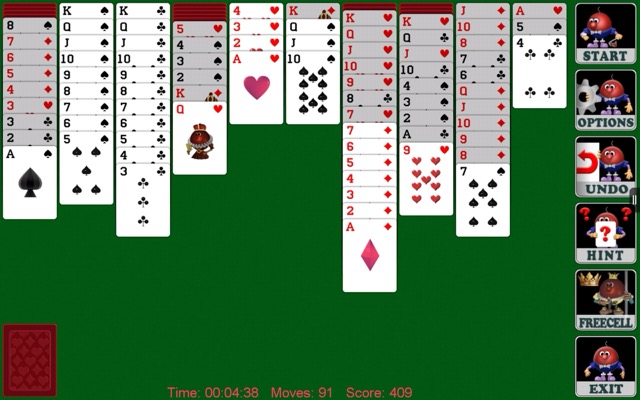
Spider Solitaire Pro is a variant that strips the game down to its most challenging essential form — two full decks, no foundation slots, and a web-like tableau where the only goal is to stack cards in descending sequences until all stacks are eliminated. With no suit-sorting requirement to simplify early decisions, the entire game is about sequence management and survival.
The no-foundation-slots design is the game's most distinctive structural choice. In standard Spider, completed same-suit sequences remove to specific foundation pile targets that give you a clear organizational framework. In Spider Pro, that framework doesn't exist — instead, completed stacks simply eliminate from the board. This means there's no visual "home" for suit groups and no foundation-building logic to guide your sequencing decisions. You're managing a pure tableau clearing exercise where all progress comes from building and eliminating descending stacks.
The "spider web" metaphor in the name reflects the interconnected, complex tableau that emerges as you move cards between stacks. Each connection between cards creates dependencies that make future moves more or less possible. Good Spider Pro players are constantly anticipating three to five moves ahead, visualizing how the web of card relationships will change with each placement. Moving too reactively without that forward visualization is how runs out of moves quickly.
The stock replenishment adds one more layer: when moves are exhausted, the stock deals new cards to each column. Timing this deal well — using it before positions become unsolvable rather than after — is a separate strategic consideration.
Key Details:
| Genre: | Card Game / Solitaire / Spider |
| Difficulty Level: | Very Hard |
| Average Play Time: | 20–45 minutes per game |
| Best For: | Experienced Spider Solitaire players who want a more challenging variant; players looking for pure tableau-clearing without foundation mechanics |
2. How to Play Spider Solitaire Pro
Getting Started:
- Two full decks (104 cards) are dealt across the tableau in the spider web pattern.
- Stack cards in descending order — place lower-ranked cards on higher-ranked cards.
- There are no foundation slots — completed sequences eliminate directly from the board.
- When no moves remain, click the stock to deal new cards to each column.
- Eliminate all stacks to win.
Basic Controls:
- Click to Select: Click a card to select it.
- Click Destination: Click a valid destination (one rank higher card) to move it.
- Stock Click: Deal new cards to all columns when no moves are available.
Objective: Clear the entire 104-card tableau by building descending sequences and eliminating completed stacks — without any foundation slots. Manage your stock deals carefully to avoid running out of moves.
3. Spider Solitaire Pro Features & Highlights
- ✓ No foundation slots — pure tableau elimination without the organizational framework of foundation building
- ✓ Two-deck 104-card challenge — double the cards of Klondike for maximum complexity
- ✓ Spider web tableau pattern — interconnected card relationships that require multi-move forward visualization
- ✓ Stock replenishment mechanic — timed dealing that requires strategic judgment about when to use it
- ✓ Heightened concentration requirement — the most demanding Spider variant for experienced players
4. Spider Solitaire Pro Tips & Strategies
Beginner Tips:
- Count your available moves before taking any. Before clicking anything, identify all possible card moves and evaluate each one's downstream consequences. In Spider Pro, reactive play that takes the first available move consistently runs out of options faster than planned play.
- Build sequences as long as possible. Longer descending sequences are more powerful staging tools than short ones — they provide more flexibility for future reorganization and are closer to the completion threshold that eliminates them from the board.
- Avoid stranding individual high-ranked cards. A King that has no cards beneath it (nothing being built on it) is occupying space without contributing. Position Kings where descending sequences can be built on them.
Advanced Strategies:
- Maintain at least one open column. An empty column is your most powerful resource — it can temporarily receive any card or sequence, enabling complex reorganization impossible without it. Deliberately clear a column and protect its emptiness for several moves afterward.
- Use stock deals to rebalance the tableau, not rescue it. The ideal stock deal moment is when your tableau is in a position where new cards would open multiple move opportunities simultaneously. Dealing when the tableau is completely stuck adds cards to columns that are already problematic.
- Trace elimination paths in advance. Identify which sequence is closest to completion (all 13 descending cards assembled) and direct your next five to ten moves toward completing it. A targeted elimination path is more efficient than general tableau organization without a specific sequence goal.
What to Watch Out For:
- Move exhaustion in the mid-game. Spider Pro's greatest difficulty is mid-game lockout — where enough complex mixed sequences have accumulated that valid moves exist but no sequence is close to completion. Prevent this by maintaining clear suit tracks in at least some columns rather than mixing cards freely.
- Stock deal timing. If the stock is exhausted with cards still in the tableau and no moves available, the game ends. Preserve stock deals by playing tableau moves as long as any exist, and use each deal at a moment that unlocks maximum subsequent moves.
5. Spider Solitaire Pro Game Elements Explained
The No-Foundation-Slots System: Spider Solitaire Pro's defining structural departure from standard Spider is the absence of foundation slots. In standard Spider, completed King-to-Ace same-suit sequences are sent to specific foundation piles — a clear visual and organizational framework that tells you where completed sequences "live." Spider Pro has no such framework. Completed descending sequences simply eliminate from the board — they disappear rather than being placed anywhere. This sounds like a minor difference but has significant strategic implications: without foundation slots, there's no suit-specific organizational logic to guide your sequencing decisions. You're building descending sequences purely for board-clearing purposes, without the suit-sorting constraint that gives standard Spider much of its structure.
The Spider Web Tableau System: The "spider web" metaphor in the game's name reflects the interconnected dependency structure that emerges as cards are arranged across the tableau. Unlike Klondike's relatively independent columns, Spider Pro's tableau is a web of relationships: each card's position determines what can be placed on it, and every move simultaneously changes multiple relationships across the board. A card moved from column A to column B changes what's accessible in A (the next card below is now exposed) and what's buildable in B (the destination card's new top card changes what fits on it). Planning moves in Spider Pro means mentally simulating this web of relationship changes through three to five future moves, not just evaluating the immediate placement.
The Stock Replenishment System: When no valid moves remain on the tableau, the stock provides a single-use deal: one card dealt face-up to each occupied column simultaneously. This deal adds 10 cards (one per original column) to the tableau, creating fresh placement opportunities from a board that had run out. The strategic skill of stock use is timing: dealing too early when moves still existed wastes the deal on an unnecessary situation; dealing at the right moment unlocks multiple columns simultaneously. The stock is limited to the number of remaining undealt cards divided into deal rounds, making each use a resource expenditure that reduces the available future deals.
6. Spider Solitaire Pro Frequently Asked Questions
Q: How is Spider Solitaire Pro different from standard Spider Solitaire?
A: The main difference is the absence of foundation slots. Standard Spider sends completed same-suit sequences to specific foundation piles. Spider Pro has no foundation piles — completed sequences simply eliminate from the tableau. This changes the organizational logic significantly.
Q: Do I need to match suits when building sequences?
A: No suit matching is required for tableau movement — any card one rank lower can be placed on any card one rank higher regardless of suit. The game focuses on descending sequence building without suit constraints for movement.
Q: What happens when I click the stock?
A: One new card is dealt face-up to each tableau column. This provides fresh placement options when no moves remain. The stock is limited — once exhausted, no more deals are available, and if the tableau is stuck with no moves, the game ends.
Q: Why does it say "easy to run out of moves"?
A: Spider Pro's complex two-deck tableau creates many positions where cards are accessible but no valid sequence-building moves exist — a phenomenon called "lockout." This happens more frequently in Spider Pro than other solitaire variants, making forward planning and sequence integrity maintenance especially important.
Q: Is Spider Solitaire Pro for experienced players only?
A: Spider Pro is one of the more demanding solitaire variants available. It's best approached after developing comfort with standard Spider Solitaire (1-suit or 2-suit). Players new to Spider Solitaire should build foundational skills in standard Spider before attempting Spider Pro.