



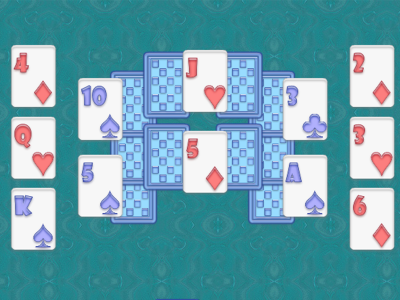


1. Card Shuffle Sort Game Overview
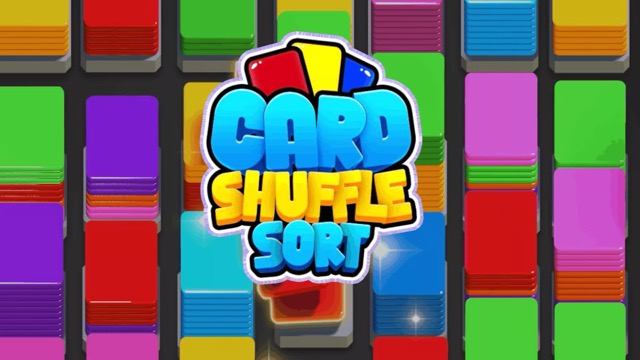
Card Shuffle Sort is a satisfying organizational puzzle game that transforms the simple concept of sorting by color into a progressively demanding strategic challenge. Cards are scattered across the board in a jumbled mix of colors, and your job is to rearrange them — through drag-and-drop moves — until every color group is cleanly consolidated. It sounds orderly. It gets surprisingly complex.
The appeal of Card Shuffle Sort lies in the very human satisfaction of taking disorder and making it neat. There's something deeply gratifying about watching a chaotic arrangement of mixed-color cards resolve, move by move, into perfectly organized groupings. The game taps into that organizational instinct and turns it into a proper puzzle format where every move matters and the path from chaos to order requires genuine forethought.
What elevates Card Shuffle Sort beyond a simple sorting exercise is how quickly the puzzle's apparent simplicity gives way to real strategic demands. Moving one card to group it with matching colors invariably displaces another, potentially breaking up a cluster you were building elsewhere. Every move has a ripple effect, and anticipating those ripples — planning moves that group your target colors without scattering others — is the core cognitive challenge the game develops.
The progressive level structure ensures the game scales appropriately with your growing competence. Early levels offer straightforward sorting puzzles. Later levels introduce complex mixed arrangements where finding a valid sorting sequence requires careful pre-planning and occasionally creative lateral thinking. With endless levels to work through, Card Shuffle Sort is a reliable, mentally stimulating puzzle game with staying power.
Key Details:
| Genre: | Puzzle / Sorting Strategy |
| Difficulty Level: | Variable (escalates progressively across levels) |
| Average Play Time: | 5–15 minutes per level |
| Best For: | Puzzle enthusiasts who enjoy organizational challenges, methodical problem-solving, and progressively complex spatial arrangements |
2. How to Play Card Shuffle Sort
Getting Started:
- Examine the board and identify the full range of colors present across all cards.
- Note which colors have the most cards scattered across the board — these are your priority grouping targets.
- Use drag-and-drop to begin moving cards toward their matching-color clusters.
- Anticipate how each move affects the positions of other cards you haven't sorted yet.
- Continue rearranging until every color is fully grouped together, completing the level.
Basic Controls:
- Drag & Drop: Click and hold a card, drag it to your desired position, and release to place it.
- Tap & Hold (Mobile): Tap and hold a card on touchscreen, drag to destination, release to place.
Objective: Rearrange all cards on the board so that every card of the same color is grouped together. Each level is complete when no mixed-color adjacencies remain — full color separation across the entire board.
3. Card Shuffle Sort Features & Highlights
- ✓ Intuitive drag-and-drop interface — smooth, tactile card movement that feels natural on both mouse and touch
- ✓ Progressive difficulty scaling — levels grow meaningfully more complex without arbitrary difficulty spikes
- ✓ Color-grouping satisfaction loop — the visual payoff of watching disorder become order is genuinely rewarding
- ✓ Strategic depth beneath simple rules — each move's consequences ripple across the board, rewarding careful planning
- ✓ Endless level variety — a wide range of puzzle configurations ensures no two levels feel identical
4. Card Shuffle Sort Tips & Strategies
Beginner Tips:
- Survey the full board before your first move. Identify where each color's cards are scattered and mentally map the groupings you need to create. Starting without a plan leads to circular rearranging that doesn't make progress.
- Start with the most scattered color. The color with cards spread furthest apart requires the most moves to consolidate. Tackle it first while the board is still open, before other cards have filled potentially useful intermediate positions.
- Create staging areas. Before moving a card to its final grouped position, sometimes it needs to be temporarily parked in a neutral space while you rearrange its destination. Identify open areas of the board where temporary parking won't interfere with other sorting work.
Advanced Strategies:
- Sort in chains, not individual moves. Rather than placing one card perfectly and moving on, plan sequences where move A enables move B enables move C, each step progressively tightening a color group. Chain-planning dramatically reduces total moves needed.
- Work toward adjacent grouping. Cards don't need to be in any particular pattern — just grouped by color. Aim to consolidate each color into a contiguous block rather than trying to organize them in a specific order or formation.
- Identify the bottleneck card. In complex levels, one card is usually the key to unlocking several other groupings — moving it first opens a cascade of easier moves. Find that card before making any other move.
What to Watch Out For:
- Circular rearranging. A common trap is moving cards in a loop — card A to position 1, card B to position 2, card A back to somewhere near position 2 — without making net progress. If you've made 10 moves and the board looks similar to when you started, stop and re-plan from scratch.
- Consolidating one color at the expense of all others. Fully grouping one color early can leave the rest of the board so scrambled that subsequent groupings become extremely difficult. Advance multiple color groups in parallel rather than fully resolving one at a time.
5. Card Shuffle Sort Game Elements Explained
The Drag-and-Drop Sorting System: Card Shuffle Sort's core interaction is the drag-and-drop move — selecting any card on the board and placing it in a new position. Unlike some sorting games that restrict which cards can be moved or require moves to follow specific sequences, Card Shuffle Sort gives you full freedom to move any accessible card anywhere there's space. This freedom is both the game's accessibility advantage and its strategic complexity generator: with all moves available at all times, the puzzle challenge is entirely in choosing the right move rather than in navigating mechanical constraints. The drag-and-drop interface is designed to be smooth and responsive, making the physical act of sorting feel as satisfying as the strategic act of planning it.
The Color Grouping System: The win condition in Card Shuffle Sort is fully grouping all cards by color — every card of a given color must be adjacent to at least one other card of the same color, with no isolated outliers. This grouping requirement creates the game's central tension: moving a card toward its color group may inadvertently scatter another color's nearly-complete cluster. The board is a system where everything is connected, and every move that helps one color group slightly disrupts the overall equilibrium elsewhere. Learning to see the board as an integrated system — where the goal is simultaneous progress across all color groups, not sequential completion of one group at a time — is the cognitive shift that marks a developing Card Shuffle Sort player.
The Progressive Level System: Card Shuffle Sort's level structure is designed around meaningful escalation. Early levels feature a small number of colors in relatively simple scattered arrangements where two or three moves can consolidate a full color group. As levels advance, the number of colors increases, the board size expands, and the initial card arrangements become more deliberately entangled — with colors interleaved in ways that make any single move affect multiple groupings simultaneously. Late-game levels can require extensive pre-planning and occasionally the willingness to temporarily make the board look more disordered in service of setting up a clean chain of grouping moves. Each difficulty tier introduces configurations that require a new strategic principle, keeping the learning curve active deep into the level library.
6. Card Shuffle Sort Frequently Asked Questions
Q: How do I move a card?
A: Click and hold (or tap and hold on mobile) on any card you want to move. Drag it to your desired destination on the board and release to place it there. The card snaps into position when released over a valid location.
Q: What counts as cards being "grouped" by color?
A: All cards of the same color must be in adjacent positions with no cards of other colors between them. The level is complete when every color on the board forms a contiguous, connected group.
Q: What should I do if I've been rearranging cards for a while with no progress?
A: Stop, mentally reset, and survey the full board from scratch. Identify the minimum number of moves needed to consolidate the most isolated color, then work that chain. Sometimes accepting a temporarily messier board is necessary to set up a clean resolution sequence.
Q: Is Card Shuffle Sort available on mobile?
A: Yes — the drag-and-drop mechanics translate naturally to touch controls, and the game runs in mobile browsers without requiring a download.
Q: Is there a move limit per level?
A: Most versions don't impose a hard move limit — you can take as many moves as needed to sort the board. Some versions track move count and award efficiency bonuses for lower-move solutions, incentivizing cleaner, more planned approaches.