


1. Pyramid Solitaire Blue Game Overview
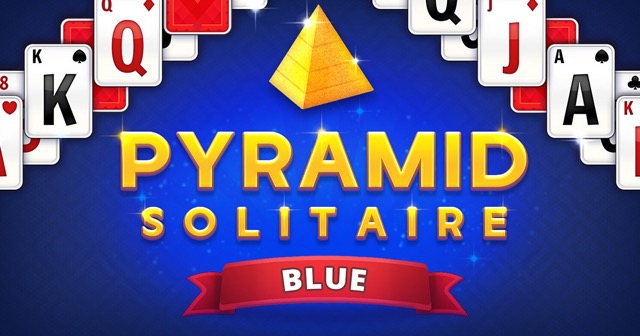
Pyramid Solitaire Blue is a polished, feature-rich version of the classic arithmetic card game — one that goes beyond the bare-bones pyramid clearing experience with a structured attempt system, a hint button for stuck moments, a score system that rewards efficient clearing, and colorful graphics that make the card layouts genuinely pleasant to engage with session after session.
The core challenge is the same timeless puzzle: identify two exposed cards from the pyramid whose values sum to exactly 13 and remove them. Kings, worth 13 on their own, disappear with a single click. Work through the pyramid from top to bottom, exposing buried rows as you clear the ones above, and supplement the pyramid's options with the spare pile when valid pairs run dry.
What distinguishes Pyramid Solitaire Blue from simpler implementations is its structured competitive layer. You have six attempts per session to clear all the cards — creating a meaningful stakes framework around what might otherwise be an unlimited retry experience. Clearing efficiently earns a better score; the game tracks your performance and rewards faster, cleaner solutions over drawn-out ones. The score-sharing feature extends the experience into a social dimension for players who want to compare results.
The hint button ensures that genuinely stuck players have a path forward, while the six-attempt structure means that every hint decision carries a small implicit cost: using a hint is always available, but building the skill to solve without it produces better scores and deeper satisfaction.
Key Details:
| Genre: | Card Game / Solitaire / Arithmetic Puzzle |
| Difficulty Level: | Easy to Medium |
| Average Play Time: | 5–15 minutes per session |
| Best For: | Casual card game players who enjoy score-optimized solitaire with a help system; great for players who want a polished, feature-complete Pyramid Solitaire implementation |
2. How to Play Pyramid Solitaire Blue
Getting Started:
- Cards are arranged in a pyramid — click two exposed cards summing to 13 to remove them.
- Kings (value 13) are removed individually with a single click.
- When no pyramid pair is available, click the spare pile to draw an additional card.
- Use the hint button if stuck — it highlights a valid pair you may have missed.
- Clear all cards within six attempts to win with the best score.
Basic Controls:
- Left Mouse Button: Click an exposed card to select it; click a second exposed card to attempt a pair removal.
- Spare Pile Click: Draw from the spare pile when no valid pyramid pair exists.
- Hint Button: Highlights a valid available pair — no score penalty, but good for learning.
Card Values:
- Ace = 1 (pairs with Queen, value 12)
- 2–10 = face value
- Jack (J) = 11 (pairs with 2)
- Queen (Q) = 12 (pairs with Ace)
- King (K) = 13 (removes alone)
Objective: Clear all pyramid cards within six attempts, pairing exposed cards that sum to 13. The fewer attempts used and the faster the clear, the higher the score.
3. Pyramid Solitaire Blue Features & Highlights
- ✓ Six-attempt structure — adds meaningful stakes to each clearing session without being harshly punishing
- ✓ Score system — rewards faster, more efficient clears with better scores
- ✓ Hint button — accessible assistance for stuck moments, with social score-sharing for motivated players
- ✓ Beautiful colorful graphics — visually appealing card design that makes extended sessions comfortable
- ✓ Full card value system — complete with A=1, J=11, Q=12, K=13 explained in-game for newcomers
4. Pyramid Solitaire Blue Tips & Strategies
Beginner Tips:
- Memorize the pair values before starting. The sum-to-13 pairings are always the same: A+Q, 2+J, 3+10, 4+9, 5+8, 6+7, and K alone. Internalizing these removes all calculation time and lets you scan for matches instantly.
- Remove cards that expose the most buried cards. When multiple pairs are available simultaneously, prefer the pair whose removal uncovers the largest number of currently buried cards. More exposed cards equals more future pairing options.
- Use the spare pile conservatively. Each spare pile card drawn is finite. Draw only when the pyramid genuinely offers no valid pair — not as a first resort when the search feels difficult.
Advanced Strategies:
- Optimize for score with speed and attempt efficiency. The score system rewards you for clearing faster and in fewer attempts. Setting a mental target (clear in four attempts, clear in under five minutes) and working toward it builds the efficiency habits that translate into high scores.
- Track what the spare pile has provided. As you draw spare pile cards, note their values. If you've drawn several Aces and no Queens have appeared in the pyramid, those Queens are likely still buried — plan accordingly rather than assuming they'll surface when you need them.
- Reserve the hint button for genuine dead-ends, not early uncertainty. The hint shows you one valid pair. Using it when you haven't fully scanned the board misses the pairing practice that improves future unaided performance. Use it only after a thorough independent search.
What to Watch Out For:
- The six-attempt limit. Each failed clear (reaching a state with no valid pairs and no spare pile remaining) counts as one attempt. Approach each attempt as if it might be your last one — deliberate card sequencing from the first click produces more complete clears than casual early-game play.
- Paired cards that orphan their partners. Before removing any pair, briefly check whether either card is the only accessible partner for another card somewhere in the pyramid. Removing it might leave that other card with no viable match for the rest of the game.
5. Pyramid Solitaire Blue Game Elements Explained
The Sum-to-13 Card Pairing System: Pyramid Solitaire Blue's core mechanic is identifying two exposed cards whose values add to exactly 13 and removing them. The complete pairing roster is: Ace (1) + Queen (12), 2 + Jack (11), 3 + 10, 4 + 9, 5 + 8, 6 + 7. Kings, valued at 13, remove individually. This fixed arithmetic means every card in the pyramid has exactly one partner value — and the challenge is ensuring both a card and its partner are simultaneously exposed and accessible. The simple arithmetic is the game's accessibility strength: there's no calculation complexity, only the spatial challenge of sequencing removals to make the right pairs available at the right time.
The Six-Attempt Scoring System: Pyramid Solitaire Blue wraps its pyramid-clearing challenge in a structured attempt framework: you have six tries to clear the pyramid completely. Each attempt ends when you successfully clear all cards (a win) or reach a dead-end state where no valid pair exists and the spare pile is exhausted (a failed attempt). Your score reflects both how many attempts were needed and how quickly you cleared. Fewer attempts and faster clears produce higher scores, creating an efficiency optimization incentive that makes the game more engaging than an unlimited retry format. The score-sharing feature lets you post results for comparison — a social competitive layer for players who want to measure their performance against others.
The Hint System: The hint button in Pyramid Solitaire Blue highlights a currently valid sum-to-13 pair on the board, solving the "I see nothing" stuck state that can occur even with valid pairs present. This assistance is available without a direct score penalty but can be supplemented by watching an advertisement for additional hints if the button's natural availability is exhausted. The hint system serves dual purposes: it rescues players from genuine dead-ends and acts as a learning tool for players developing their pair-recognition skills. A player who uses hints less over successive sessions is demonstrably improving their pyramid-scanning ability — making the hint button a measurable progress indicator as well as a gameplay assist.
6. Pyramid Solitaire Blue Frequently Asked Questions
Q: What card values pair together to sum to 13?
A: Ace (1) + Queen (12), 2 + Jack (11), 3 + 10, 4 + 9, 5 + 8, and 6 + 7. Kings equal 13 alone and are removed with a single click.
Q: What does the hint button do?
A: It highlights one valid sum-to-13 pair that's currently accessible on the pyramid or spare pile. Use it when you've scanned the board and genuinely can't find a valid pair.
Q: How many attempts do I get to clear the pyramid?
A: Six attempts. Each failed clearing — reaching a state with no valid pairs and an exhausted spare pile — counts as one attempt. The game continues until you've either won or used all six.
Q: How is my score calculated?
A: Score is based on how completely you clear the pyramid, how few attempts are used, and how quickly you clear. Faster and more efficient solutions with fewer failed attempts produce higher scores.
Q: How is Pyramid Solitaire Blue different from regular Pyramid Solitaire?
A: Pyramid Solitaire Blue adds the six-attempt structure, the score system with social sharing, the hint button, and enhanced colorful graphics. The core sum-to-13 mechanics are identical, but the Blue version provides a more feature-complete, performance-oriented experience around them.