

1. Classic UNO Game Overview
Classic Uno is the digital version of one of the world's most beloved card games — faithful to the original rules, fast-paced, and endlessly entertaining. Four players, one deck, and a single goal: be the first to shed every card in your hand. It's a race where the cards you hold, the timing of your special plays, and a healthy dose of competitive instinct determine whether you cross the finish line first.
This version preserves everything that made Uno a cultural phenomenon. The satisfying rhythm of matching colors and numbers. The tension of holding one card while someone plays a Draw Four against you. The thrill of shouting "Uno!" — metaphorically, in this digital form — when you're one card away from victory. And the chaos of special cards reshuffling the order of play just when someone thought they had it locked up.
What makes Classic Uno distinct from other online card games is the fixed four-player format. Every match is a full table, creating genuine multi-player dynamics where you're not just managing your own hand but watching what cards others are cycling through, anticipating their strategies, and deciding when to unleash your special cards for maximum disruption. Alliances form and dissolve. Front-runners get targeted. The player in last place can surge to victory in two turns with the right cards.
Whether you're a longtime Uno fan or a newcomer to the game, Classic Uno delivers the full authentic experience in a clean, accessible digital package.
Key Details:
| Genre: | Card Game / Multiplayer |
| Difficulty Level: | Easy to Medium |
| Average Play Time: | 10–20 minutes per match |
| Best For: | All ages; great for players who enjoy competitive multiplayer card games with a mix of strategy and chance |
2. How to Play Classic UNO
Getting Started:
- Each of the four players is dealt a starting hand of cards.
- One card is flipped face-up to start the discard pile — its color and number set the opening play.
- On your turn, play a card that matches the top card's color, number, or symbol.
- If you have no valid card to play, draw from the deck — if the drawn card is playable, you may play it immediately.
- The first player to empty their hand wins the match.
Basic Controls:
- Click to Play: Click a valid card in your hand to play it to the discard pile.
- Click to Draw: Click the draw pile to take a card when you have no valid play.
- Special Card Use: Playing special cards (Change Color, Draw Two, Skip, Reverse) triggers their effect automatically.
Objective: Be the first player to play all the cards in your hand. Use number and color matching along with special action cards to manage your hand and disrupt your opponents' progress.
3. Classic UNO Features & Highlights
- ✓ Authentic Uno rules — faithful to the classic card game with all standard special cards included
- ✓ Fixed four-player matches — a full table every game creates genuine multi-directional competitive dynamics
- ✓ Special action cards — Change Color, Skip, Reverse, and Draw cards add strategic depth and chaos in equal measure
- ✓ Quick match format — most games resolve in 10–20 minutes, perfect for fast competitive sessions
- ✓ Accessible for all ages — instantly understandable rules make it welcoming for new players while remaining engaging for veterans
4. Classic UNO Tips & Strategies
Beginner Tips:
- Hold action cards for critical moments. Skip, Reverse, and Draw cards are most valuable when played against a player who's close to winning — not burned early in the game when their impact is minimal.
- Pay attention to how many cards your opponents hold. When someone gets down to two or three cards, it's time to start directing your disruption cards their way rather than playing for pure hand reduction.
- Match numbers over colors when possible. Matching by number gives you more flexibility for your next turn since it doesn't lock you into a specific color. Reserve color-specific plays for when they strategically benefit you.
Advanced Strategies:
- Use Change Color cards to switch to your dominant color. If your hand is heavy in one color, play a Change Color card to redirect the discard pile to that color, making several of your cards immediately playable.
- Read the table's card flow. Pay attention to which colors are being played frequently — heavy traffic in a color suggests other players hold many of those cards too, meaning switching away from that color with a Change Color play can create immediate hand problems for others.
- Time your Draw Four strategically. Draw Four forces the next player to draw cards and skip their turn — but use it when the targeted player is close to winning, not just as soon as you draw it.
What to Watch Out For:
- Forgetting the Uno declaration. In physical Uno, failing to call "Uno" when you're down to one card results in a penalty. Some digital versions enforce this rule — be aware of whether your version does and act accordingly.
- Over-relying on action cards early. Using all your special cards in the first few rounds leaves you without disruption tools when the endgame gets critical. Spread them across the match based on when they'll have the most impact.
5. Classic UNO Game Elements Explained
The Card Matching System: Uno's core mechanic is sequential color or number matching. On your turn, you must play a card that matches the current discard pile's top card by either color (any red card on a red card) or number/symbol (any 7 on a 7, any Skip on a Skip, regardless of color). This dual-matching rule gives you more valid options than a pure color-matching game, but the constraint is still tight enough to create genuine hand management challenges. The art of good Uno play is managing your hand so you always have at least one valid option available, while also curating the right mix of colors and numbers to maximize your playable options across the next several turns — not just the immediate one.
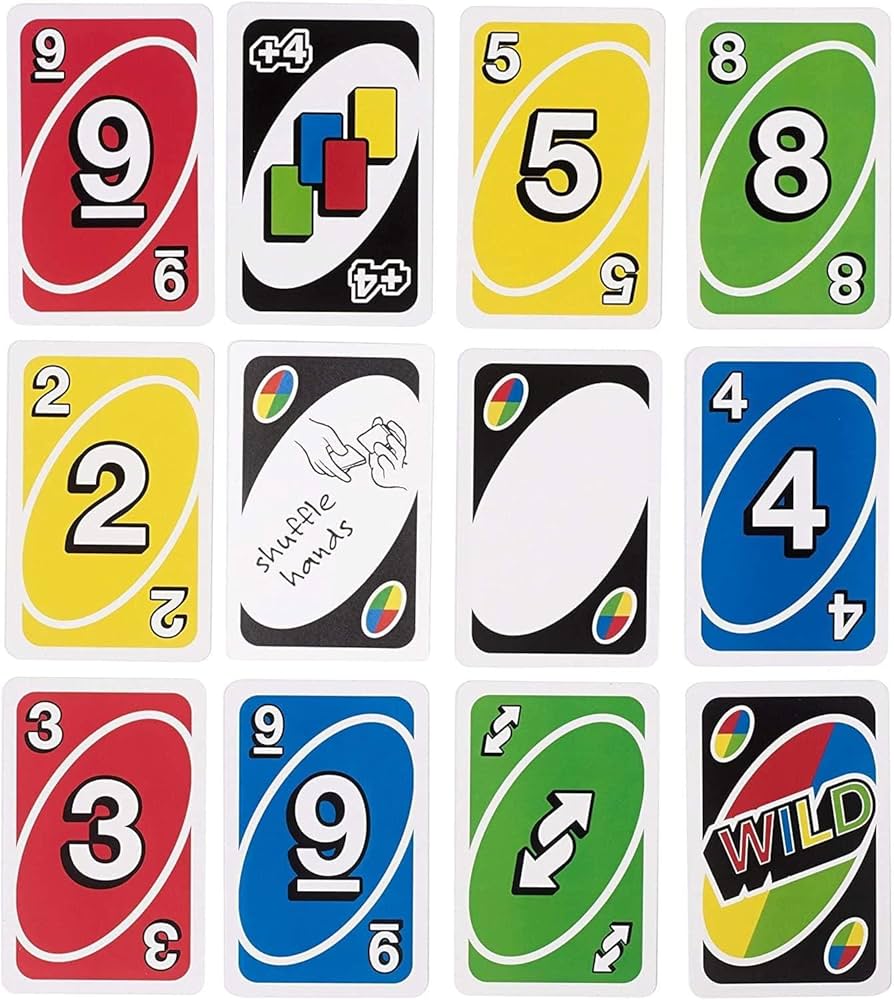
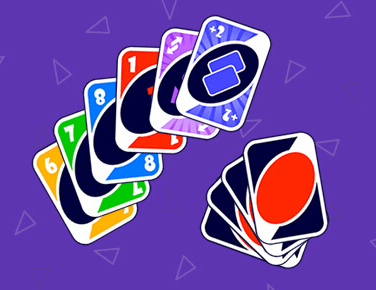
The Special Card System: Uno's identity is defined as much by its special cards as by its basic matching mechanic. Classic Uno includes several action card types: Skip (the next player loses their turn), Reverse (the order of play flips direction), Draw Two (the next player draws two cards and loses their turn), Wild/Change Color (you declare the new active color), and Wild Draw Four (the next player draws four cards, loses their turn, and you change the color). These cards create the game's drama and unpredictability. A player can go from dominant to struggling in one turn if multiple Draw cards land on them in sequence. Knowing when to play these cards — and against whom — is the primary strategic layer that separates experienced Uno players from newcomers.
The Four-Player Dynamic: Classic Uno's fixed four-player format creates a genuinely different strategic environment than two-player versions. With four participants, the turn order means actions you take don't directly affect the next person you'll play against — your Skip card hits the player to your left, but the effects of doing so ripple around the table in complex ways. Multi-player Uno also creates informal targeting dynamics: when one player surges ahead, others naturally direct their action cards against them, creating a self-correcting competitive balance that makes comebacks common and premature celebrations dangerous. Managing these social dynamics — knowing when you're the target and when to temporarily "cooperate" with others to slow down a runaway leader — is a skill layer unique to the four-player format.
6. Classic UNO Frequently Asked Questions
Q: What should I do if I have no valid card to play?
A: Click the draw pile to take one card. If the drawn card is a valid play (matching the current discard pile's color or number), you may play it immediately on the same turn. If it's not valid, your turn ends and play passes to the next player.
Q: How does the Change Color (Wild) card work?
A: When you play a Wild card, you declare which color the next player must match. You can play a Wild card at any time on your turn, regardless of what's currently on the discard pile. It's one of the most flexible cards in the deck — save it for when changing the color benefits your hand significantly.
Q: What happens when someone plays a Draw Four card against me?
A: You draw four cards from the deck and your turn is skipped. In some versions, you can challenge the Draw Four if you believe the player had a valid regular card to play instead — check whether your version supports the challenge rule.
Q: Can I play multiple cards in one turn?
A: Standard Uno rules allow only one card per turn (unless a specific version includes house rules otherwise). Play your chosen card, let its effect resolve, and then play passes to the next player.
Q: How is the winner determined if multiple players are close to finishing?
A: The first player to play their final card wins immediately, regardless of how close other players are. There are no tiebreakers — it's a pure race to empty your hand first.