

1. Bridge Game Overview
Bridge is widely regarded as the most sophisticated card game ever devised — a game that has captivated competitive players, casual enthusiasts, and strategic thinkers for over a century. Unlike most card games, Bridge is fundamentally cooperative: you and a partner must communicate, coordinate, and execute together to outsccore the opposing team. That partnership dimension makes it unlike anything else in the card game world.
This online version of Bridge brings the full complexity of the classic game to your browser while making it accessible to solo players through a clever dual-player mode — you control both seats of your team simultaneously, allowing you to experience Bridge's complete strategic depth without needing a live partner. It's an ideal way to learn the game's intricate mechanics and develop the bidding intuition that separates beginner players from skilled ones.
What makes Bridge enduringly compelling is its three-phase structure. The bidding phase is itself a communication puzzle where you and your partner must convey information about your hand through a constrained bidding language. The play phase is a trick-taking challenge requiring precise card management. And the scoring phase rewards careful contract execution over simple card strength. Mastering all three phases is a multi-session journey that reveals new depth with every game.
If you're looking for a card game that offers genuine intellectual depth, meaningful teamwork, and a learning curve that keeps rewarding engagement over time, Bridge is the gold standard — and this online version is an excellent place to begin.
Key Details:
| Genre: | Card Game / Trick-Taking / Cooperative Strategy |
| Difficulty Level: | Hard |
| Average Play Time: | 20–45 minutes per match |
| Best For: | Players seeking a deep, intellectually demanding card game with cooperative strategy and long-term skill development |
2. How to Play Bridge
Getting Started:
- Four players sit at the table divided into two teams: North-South and East-West. Partners sit opposite each other.
- All 52 cards are dealt equally — 13 cards per player.
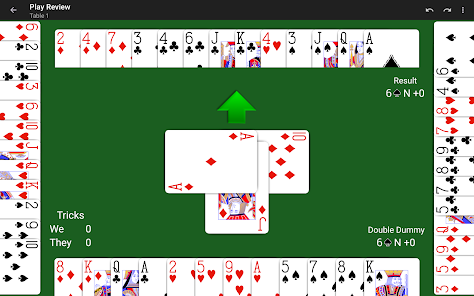
- The Bidding phase begins: players take turns making bids to determine the final contract (which team will win how many tricks and in which suit).
- The team that wins the contract enters the Play phase, attempting to win the number of tricks they committed to.
- After play, the Scoring phase awards or deducts points based on whether the contract was fulfilled.
Basic Controls:
- Click to Bid: During the bidding phase, click your desired bid from the available options.
- Click to Play: During the play phase, click a card from your hand to play it to the current trick.
- Partner Control (Solo Mode): In solo play, you manage both seats of your team, clicking through each player's turn as it arrives.
Objective: Win enough tricks to fulfill the contract established during bidding. Score more total points than the opposing team across the full match. Precise coordination between partners and careful contract selection are the keys to consistent success.
3. Bridge Features & Highlights
- ✓ Full cooperative Bridge mechanics — authentic bidding, play, and scoring phases from the classic card game
- ✓ Solo dual-player mode — control both partner seats simultaneously to experience the full game without a live partner
- ✓ Deep strategic layering — bidding, trick-taking, and contract management create a rich multi-phase challenge
- ✓ Genuine team coordination — the cooperative dynamic sets Bridge completely apart from competitive solitaire games
- ✓ Enduring replay value — the complexity of Bridge ensures no two matches play identically
4. Bridge Tips & Strategies
Beginner Tips:
- Count your high card points before bidding. Standard Bridge bidding is anchored to point counts — aces are worth 4 points, kings 3, queens 2, jacks 1. Knowing your hand's strength before bidding keeps your bids accurate.
- Don't overbid. New players are often tempted to bid aggressively. Failing to fulfill a contract costs significant points. It's better to bid conservatively and fulfill your contract than to bid high and fall short.
- Lead from your longest suit. When your team wins the contract and plays out the hand, leading from your longest suit forces the opponents to use high cards early, making tricks easier to win later.
Advanced Strategies:
- Use bidding conventions. Established bidding systems (like Stayman or Blackwood) allow partners to communicate detailed hand information through specific bid sequences. Learning even a few conventions dramatically improves bidding accuracy.
- Count the cards as they're played. Track which high cards have already been played in each suit. Knowing the remaining card distribution lets you finesse (play a lower card to trap an opponent's higher one) with confidence.
- Play the hand — not just your cards. Managing the order in which you play cards to control the lead, draw out opponents' trumps, and establish long suit winners is what separates good Bridge players from great ones.
What to Watch Out For:
- Misreading your partner's bids. In Bridge, every bid from your partner carries information. Misinterpreting a bid and responding incorrectly can derail an entire hand. Take time to understand what your partner's bid communicates before responding.
- Going down doubled. If opponents double your contract and you fail to fulfill it, the point penalty is severe. Be confident your hand can make the contract before accepting a doubled bid.
5. Bridge Game Elements Explained
The Bidding System: Bridge's bidding phase is a language. Each bid communicates information about your hand — how many cards you have in a suit, how strong your hand is overall, and what contract you believe your team can fulfill. Players bid in sequence, with each bid needing to be higher than the previous one (or a pass). The final bid becomes the "contract" — a commitment that the winning bidding team will take at least a specified number of tricks in a specified trump suit (or no trump). Bidding is often considered the most complex aspect of Bridge because it requires simultaneously conveying your hand's information accurately while interpreting your partner's bids correctly. Even without a live partner, developing bidding accuracy is the single highest-leverage skill improvement a Bridge player can make.
The Trick-Taking Play System: Once the contract is set, the play phase begins — a 13-trick sequence where all four players contribute one card per trick. The player with the highest card of the led suit wins the trick, unless trump cards are in play, in which case even a low trump beats any non-trump card. The goal for the declaring team is to win at least as many tricks as their contract commits to. The defending team aims to prevent this. Card management during play — deciding which cards to play when, when to use high cards, and when to hold back — is a sophisticated exercise in probability and sequencing that develops naturally over many games.
The Scoring System: Bridge scoring is multi-layered and rewards precision. Fulfilling your contract earns points based on the number of tricks committed and the trump suit — minor suits (clubs and diamonds) score less than major suits (hearts and spades), and no-trump contracts score the most. Extra tricks beyond the contract earn bonus points. Failing to fulfill the contract earns the opponents penalty points instead. Additional bonuses apply for high-level contracts (game and slam bonuses), making ambitious but achievable contracts the most lucrative targets. This scoring structure means selecting the right contract level during bidding is as strategically important as winning the tricks during play.
6. Bridge Frequently Asked Questions
Q: How do I place a bid during the bidding phase?
A: Click the bid you want to make from the available options displayed on screen. Bids must be higher than the previous bid unless you're passing. The bidding phase ends when three consecutive passes follow the last real bid.
Q: What is the "contract" and why does it matter?
A: The contract is the final bid agreed upon during bidding — it specifies how many tricks your team commits to winning and in what trump suit. Everything in the play phase is evaluated against this contract: fulfill it and score points; fall short and your opponents score instead.
Q: How do I play in solo mode without a partner?
A: In solo mode, you control both seats of your team. When your partner's turn comes, you click their cards and make their bids on their behalf, giving you full visibility and control over the team's entire strategy.
Q: Is Bridge suitable for complete beginners to card games?
A: Bridge has a steeper learning curve than most card games. Basic trick-taking mechanics are accessible, but bidding conventions and advanced play strategy take time to develop. Starting with a few introductory sessions focused on simple hand play before worrying about advanced bidding is the recommended approach.
Q: Can I save my progress or resume a match?
A: Match progress within a session is maintained as long as you keep the browser open. Individual match results and scores are typically tracked within the session, though full game state may not persist across browser closures.