

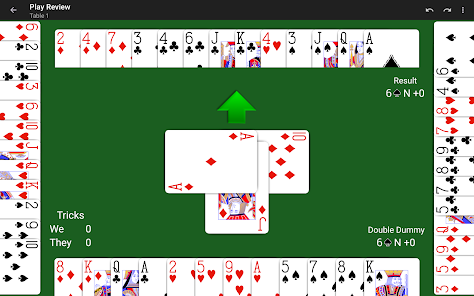




1. Spades Game Overview
Spades is one of the great classic partnership card games — a trick-taking game played by four players in two teams, where every hand begins with a bidding process that defines what each team must achieve, and where the interplay between fulfilling your contract and disrupting your opponent's is the strategic heart of every round.
What makes Spades distinctive among trick-taking games is its trump suit: spades always trump every other suit, every hand, without exception. You never choose the trump suit — it's baked into the game's identity. This permanent trump creates a consistent strategic foundation where knowing how to play your spade cards — when to use them aggressively, when to hold them, and when to discard them — is central to competitive play.
The bidding system adds another layer that most casual card games lack. Before cards are played, each player estimates how many tricks they'll win. Partners' bids combine into a team contract. Fulfilling the contract exactly earns 10 points per trick bid. Overtricks (winning more than bid) earn 1 point each but accumulate "bags" — and every ten bags incurs a 100-point penalty that can swing a game dramatically. This penalty system creates a fascinating tension: you want to win every trick you can, but not so many that the bags pile up dangerously.
Blind Nil — bidding zero tricks without looking at your cards — offers double the bonus or double the penalty: a high-stakes gambit for teams willing to commit to complete defense before seeing what they hold.
Key Details:
| Genre: | Card Game / Trick-Taking / Partnership |
| Difficulty Level: | Medium to Hard |
| Average Play Time: | 20–45 minutes per game |
| Best For: | Card game enthusiasts who enjoy partnership trick-taking games with bidding systems; great for players who want genuine team strategy complexity |
2. How to Play Spades
Getting Started:
- Four players are divided into two partnerships (North-South and East-West). Partners sit opposite each other.
- All 52 cards are dealt face-down — pick up your hand and sort it by suit.
- Each player bids the number of tricks they expect to win; partners' bids combine into the team's contract.
- Play proceeds clockwise — each player contributes one card per trick, following the led suit if possible.
- The highest card in the led suit wins the trick — unless a spade is played, in which case the highest spade wins.
Basic Controls:
- Mouse Click: Click a card to play it during your turn.
Bidding Rules:
- Minimum bid is 0 (Nil — you intend to win no tricks, earning bonus or penalty)
- Blind Nil (bidding 0 without seeing your cards) doubles the Nil bonus/penalty
- Spades always trump other suits
Objective: As a team, win at least as many tricks as your combined bid each round. Score 10 points per trick bid plus 1 per overtrick. First team to reach the target score (avoiding the bag penalty along the way) wins.
3. Spades Features & Highlights
- ✓ Partnership team play — cooperative bidding and trick-winning with a partner creates a collaborative strategy layer
- ✓ Permanent spade trump — the consistent trump suit creates a stable strategic foundation that rewards spade management
- ✓ Bidding contract system — each round's outcome is measured against what each team committed to win
- ✓ Bag penalty mechanic — overtricks accumulate as bags, with ten bags triggering a 100-point penalty for balance
- ✓ Nil and Blind Nil bids — high-risk high-reward bidding options that add dramatic variance to the game |
4. Spades Tips & Strategies
Beginner Tips:
- Count your winners honestly when bidding. New players routinely overbid by counting "possible" winners rather than "likely" winners. Count only the cards you're highly confident will win tricks — Ace Spades, high spades, other suit Aces. Bid those; don't add hoped-for tricks.
- Follow suit unless you can't. The dealer's suit (the led suit) must be followed if you have any cards in that suit. Only when you have no cards in the led suit can you play spades to trump or discard from another suit.
- Use your Ace Spades wisely. Ace of Spades is the single highest card in the game — it wins any trick it's played in. Use it to capture valuable cards in a trick, not as a routine lead unless you're establishing spade control.
Advanced Strategies:
- Coordinate with your partner through leads. Bidding gives your partner information about your strength, and your leads give them more during play. Leading a high card in a suit signals strength; leading a low card signals weakness and an invitation for your partner to take control of that suit.
- Manage the bag count across multiple rounds. Bags accumulate across rounds and the 100-point penalty is severe. When your team is approaching 10 bags, play defensively — intentionally limiting your tricks to prevent the penalty even at the cost of some offensive opportunity.
- Consider when to cover your partner's Nil bid. When your partner bids Nil, your job shifts to covering — preventing opponents from leading cards your partner can't follow while also avoiding giving your partner trick-winning opportunities. Playing defense for a partner's Nil bid is a fundamentally different strategic mode from normal play.
What to Watch Out For:
- The bag trap. Teams who consistently win more tricks than they bid feel comfortable — until the tenth bag triggers the 100-point penalty. Count your accumulated bags each round and adjust your bidding or play style before the penalty becomes inevitable.
- Overbidding on a weak hand. Overconfident bidding leads to teams failing their contracts and scoring zero (or negative) for the round. Conservative, accurate bidding consistently outperforms ambitious bidding in the long run.
5. Spades Game Elements Explained
The Bidding and Contract System: Before any card is played, each Spades round begins with bidding — each player announces how many of the 13 available tricks they expect to win. Partners' bids add together to form the team's contract. A team that bid 7 must win at least 7 tricks; failing to reach the contract scores 0 for the round. Winning exactly the bid scores 10 points per trick bid. Winning more than the bid scores the contract points plus 1 point per overtrick — but those overtricks accumulate as "bags," creating the 10-bag penalty risk. The bidding system creates an accountability framework that transforms every trick from an individual contest into a measurement against an earlier commitment. Good Spades players not only win tricks effectively — they bid accurately enough that their wins align with their commitments.
The Permanent Trump System: Spades' core design decision is that spades are always the trump suit — they beat any card in any other suit in any trick where a spade is played. This permanent trump creates a consistent strategic fabric that runs through every hand regardless of the card distribution. High spades are the game's most powerful cards; managing when to play them and when to hold them is the central tactical skill. Playing a spade to win a trick in a non-spade suit is called "ruffing" — it's often the correct move when you have no cards in the led suit, but timing ruff plays carefully (to win important tricks, not waste trump on unimportant ones) is what distinguishes skilled from casual Spades play.
The Nil and Blind Nil Bid System: Nil is a special bid where a player commits to winning zero tricks in the round. Successfully winning zero tricks earns a bonus; winning any trick loses a penalty of the same magnitude. Blind Nil is the same commitment made without looking at your cards first — the stakes double in both directions. These bids create high-variance strategic options that can dramatically accelerate or reverse the game's score trajectory. The team whose partner bids Nil faces a secondary challenge: covering — strategically preventing opponents from leading cards that would force the Nil bidder to win a trick. Nil and Blind Nil create moments of dramatic tension that distinguish Spades from more mechanically straightforward trick-taking games.
6. Spades Frequently Asked Questions
Q: What happens if I can't follow the led suit?
A: If you have no cards in the led suit, you may play any card — including a spade (to trump and win the trick) or a card from any other non-led suit (a discard, which won't win the trick). You cannot intentionally "fail" to follow suit when you have cards in the led suit.
Q: What is a "bag" and why does it matter?
A: A bag is an overtrick — a trick won beyond your team's bid for that round. Each bag earns 1 point but also accumulates toward the bag count. When your team accumulates 10 bags, you lose 100 points as a penalty, which can reverse a comfortable score lead. Managing bags by bidding accurately is as important as scoring points.
Q: What is Blind Nil and when is it worth attempting?
A: Blind Nil is bidding zero tricks without looking at your hand first. If successful, the bonus is doubled compared to a standard Nil. If any trick is won, the penalty is also doubled. It's typically attempted when your team is significantly trailing and needs a dramatic score swing to stay competitive.
Q: How does the Ace of Spades work?
A: The Ace of Spades is the highest card in the entire game — it beats every other card, including other spades. It wins any trick it's played in, making it one of the most valuable cards for securing specific tricks you need for your bid.
Q: How do partners communicate strategy without talking?
A: Partners communicate through their bids (which signal hand strength) and their leads (which signal suit preferences and strength). Bidding accurately tells your partner roughly how many winners you hold; leading a high card in a suit invites your partner to continue in that suit; leading a low card suggests weakness. Reading these signals and responding appropriately is a core partnership skill.