





1. Subway Surfers Game Overview
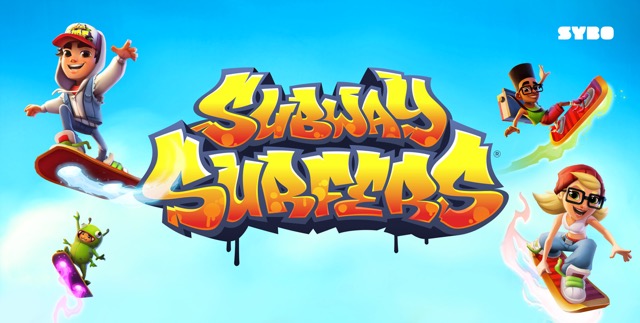
Subway Surfers is the endless runner that needs no introduction — one of the most downloaded mobile games ever made, still delivering that same addictive rush of dodging trains and collecting coins at increasing speed. You play as a young graffiti artist chased by an inspector and his dog across infinite train tracks, weaving between obstacles, vaulting over barriers, and collecting everything you can reach before the run inevitably ends.
The track-switching system is what gives Subway Surfers its distinctive feel. Unlike runners with a fixed lane, you're navigating multiple parallel paths that each present different obstacle configurations. Choosing the right path at the right moment — based on what's coming and where the best coins are concentrated — is the game's primary decision-making skill. Train cars block specific lanes; your job is to always have a viable lane available.
The reward structure goes well beyond survival distance. Missions unlock new skins. Vehicles provide unique movement advantages. The weekly world tour updates bring new city themes with location-specific visual designs that keep the game visually fresh. Every run simultaneously advances multiple progression systems — coins collected, missions completed, characters unlocked — making each session feel like meaningful progress even when the run ends earlier than expected.
At its best, Subway Surfers achieves a flow state where the track reads intuitively, reactions become automatic, and the accumulating coins and distance feel effortless — right up until a lapse of attention ends the run and immediately makes you want to start again.
Key Details:
| Genre: | Endless Runner / Skill / Arcade |
| Difficulty Level: | Easy to Hard (escalates with speed) |
| Average Play Time: | 5–15 minutes per session |
| Best For: | Casual and competitive players who enjoy skill-based endless runners; great for chasing high scores and progression unlocks |
2. How to Play Subway Surfers
Getting Started:
- Your character automatically runs forward on the train tracks.
- Swipe left or right (mobile) or use arrow keys (PC) to switch lanes.
- Swipe up to jump over barriers; swipe down to roll under low obstacles.
- Collect coins and special items along the track while avoiding trains and obstacles.
- Use power-ups (jetpacks, magnets, multipliers) collected during runs to extend distance and score.
Basic Controls:
- Left / Right Swipe or Arrow Keys: Switch between track lanes.
- Swipe Up / Up Arrow: Jump over barriers.
- Swipe Down / Down Arrow: Roll under low obstacles.
- Collect Power-Ups: Run over them to activate automatically.
Objective: Run as far as possible while collecting coins, completing missions, and activating power-ups. Avoid trains, barriers, fences, and other obstacles. Achieve the highest distance and score possible before the run ends.
3. Subway Surfers Features & Highlights
- ✓ Infinite track obstacle running — an endlessly generated track that never repeats, ensuring every run is unique
- ✓ Multiple parallel lane paths — distinct lanes with different obstacle patterns to read and navigate
- ✓ Mission system — specific challenges that unlock new characters, skins, and progression rewards
- ✓ Vehicle unlocks — hoverboards and other vehicles with unique movement advantages
- ✓ Weekly world tour — rotating city themes with location-specific visuals that keep the game fresh
4. Subway Surfers Tips & Strategies
Beginner Tips:
- Look ahead, not at your character. The most common beginner mistake is focusing on the character's current position rather than reading the obstacles approaching two to three seconds ahead. Train your eyes to track the incoming obstacle pattern rather than where your character currently is.
- Stay in the center lane as your default. The center lane gives you access to both the left and right lanes from one switch. Starting from the left or right lane limits your response options — from the center, any obstacle can be avoided with a single lane switch in either direction.
- Prioritize obstacle avoidance over coin collection. Every coin run costs distance and increases collision risk. In early stages, focus on clean obstacle navigation — coins can be collected more efficiently through the magnet power-up than through routing through coin clusters.
Advanced Strategies:
- Learn power-up timing. The jetpack and magnet power-ups have specific optimal activation times. Activating a magnet just before entering a coin cluster doubles its value; activating it in an obstacle-dense section wastes most of its duration. Develop awareness of when to actively seek power-ups.
- Complete missions actively, not passively. The mission system drives the progression rewards that unlock new content. Read your current missions before starting a run and make specific decisions during the run to complete them — "collect X coins in a single run" is achieved by a different run strategy than "roll under X obstacles."
- Use hoverboards as one-time shields. Hoverboards activate automatically when your character would otherwise collide with an obstacle, providing a brief invincibility period. They're most valuable as protection during high-multiplier moments in a run — save them for when distance multipliers are active and the run has significant score investment.
What to Watch Out For:
- Speed complacency. Subway Surfers accelerates progressively — the speed that felt manageable at 3,000 meters feels frantic at 8,000. Players who develop reflexes for an early-run speed often fail to consciously recalibrate as the run becomes faster. Stay actively alert to the pace increase.
- Tunnel focus on coin clusters. Clusters of coins positioned on the edge of a lane adjacent to a train car are a common trap — the coins attract your attention, and you switch into the train. The rule is: if a coin cluster requires switching toward a visible obstacle, skip the coins.
5. Subway Surfers Game Elements Explained
The Infinite Track Generation System: Subway Surfers' track is procedurally generated in real time — no two runs are identical in obstacle configuration, coin placement, or power-up location. This infinite generation is the fundamental reason the game sustains replay across years of use: you're never playing the same course twice. The generation system introduces obstacle density and pattern complexity that increases as run distance grows, ensuring that longer runs are progressively more demanding rather than just more of the same. The perceived infinity of the track — always another corner, always another train car to dodge — creates the endless-run psychological dynamic that makes stopping and starting feel so natural.
The Multi-Lane Track System: Subway Surfers divides its running track into multiple parallel lanes — typically three main lanes, with occasional additional paths above and below (via jumps and rolls). The lane structure is the game's primary spatial decision layer: at any moment, trains or obstacles block specific lanes while leaving others open. Reading the incoming obstacle pattern and choosing the correct lane — ideally two to three seconds before the obstacle arrives — is the core gameplay skill. Different lanes often have different coin distributions, creating a secondary decision about whether the coins in a specific lane justify the obstacle risk of accessing them. Managing this lane-reading and coin-routing simultaneously is what distinguishes skilled runs from average ones.
The Mission and Progression System: Subway Surfers structures its long-term engagement around a mission system that assigns specific run challenges — collect a certain number of coins, achieve a specific distance, use a particular power-up a defined number of times. Completing missions earns keys, characters, and cosmetic unlocks that expand the roster of playable characters and visual variety. The weekly world tour rotation updates the game's visual environment — placing the track in a new real-world city every week with location-specific architecture, color schemes, and character designs. This rotation keeps the visual experience fresh for players who have been playing for years, ensuring the game never looks exactly the same across consecutive weeks.
6. Subway Surfers Frequently Asked Questions
Q: How do I switch lanes?
A: Swipe left or right on mobile to switch lanes in that direction. On PC, use the left and right arrow keys. Your character moves one lane in the selected direction per input.
Q: What is a hoverboard and how does it help?
A: A hoverboard is an item that provides temporary protection — when activated, it absorbs one collision that would otherwise end your run. Hoverboards are collected during runs or can be earned through the progression system. They activate automatically on collision.
Q: How do missions work?
A: Missions are specific challenges shown before and after each run — collect X coins in one run, roll under Y obstacles, run a specific distance. Completing them earns progression rewards including keys, characters, and unlocks. Three missions are active at a time; completing all three advances your mission board.
Q: Does the game get faster over time?
A: Yes — Subway Surfers accelerates progressively as your run distance increases. The speed at which new obstacles approach increases, reducing your reaction window. This progressive speed increase is what makes longer runs harder than shorter ones.
Q: What is the weekly world tour?
A: The weekly world tour rotates the game's visual theme to a new real-world city every week — Paris, Tokyo, New York, and many others. Each city brings location-specific visual design including architecture, colors, and exclusive characters. The rotation refreshes weekly.