
1. One Card Game Game Overview
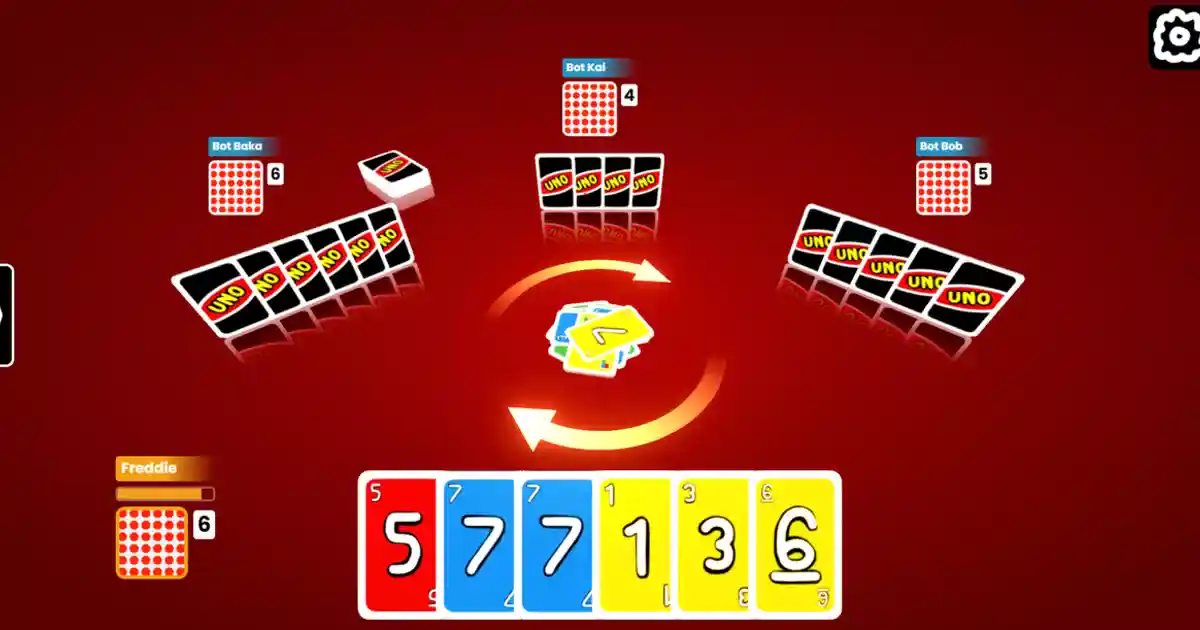
One Card Game is a fresh, polished Uno-style card game that adds meaningful choice to the standard format through its flexible player mode selection and a starting hand of 9 cards that keeps each match feeling substantial. Choose to play against 1, 2, or 3 opponents — a decision that fundamentally changes the match's competitive dynamic — and compete to be the first to shed every card in your hand.
The player mode selection is One Card Game's primary structural innovation. In a 2-player match, every special card you play hits your one opponent directly — the competitive relationship is intimate and each disruption has maximum impact. In a 4-player match, you're managing relationships with three opponents simultaneously, targeting the player closest to winning while protecting yourself from two other directions. The different modes don't just vary in difficulty — they require genuinely different strategic approaches and read differently as competitive experiences.
The 9-card starting hand is slightly larger than the Uno standard 7, which creates a richer initial hand-management puzzle and extends the early phase where color strategy is most important. The familiar color-and-symbol matching mechanic handles the rest: match the color or symbol of the discard pile top card, use special cards to create unexpected advantages, and sprint to zero cards before your opponents do the same.
The redesigned card interface and refreshed visual design give One Card Game a distinct visual identity within the Uno Online series — immediately recognizable as a familiar game in a new look.
Key Details:
| Genre: | Card Game / Multiplayer |
| Difficulty Level: | Easy to Medium |
| Average Play Time: | 10–20 minutes per match |
| Best For: | Multiplayer card game fans who want a polished Uno variant with flexible player count options and a refreshed visual presentation |
2. How to Play One Card Game
Getting Started:
- Select your player mode: 2, 3, or 4 Players.
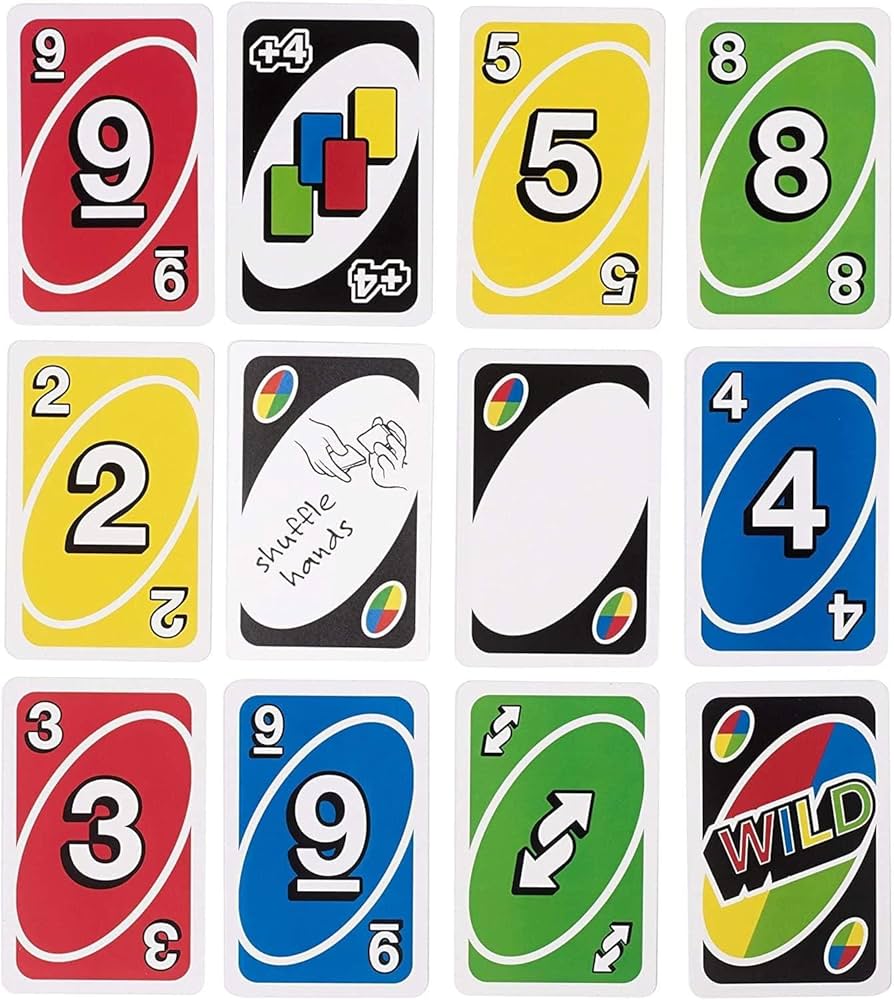
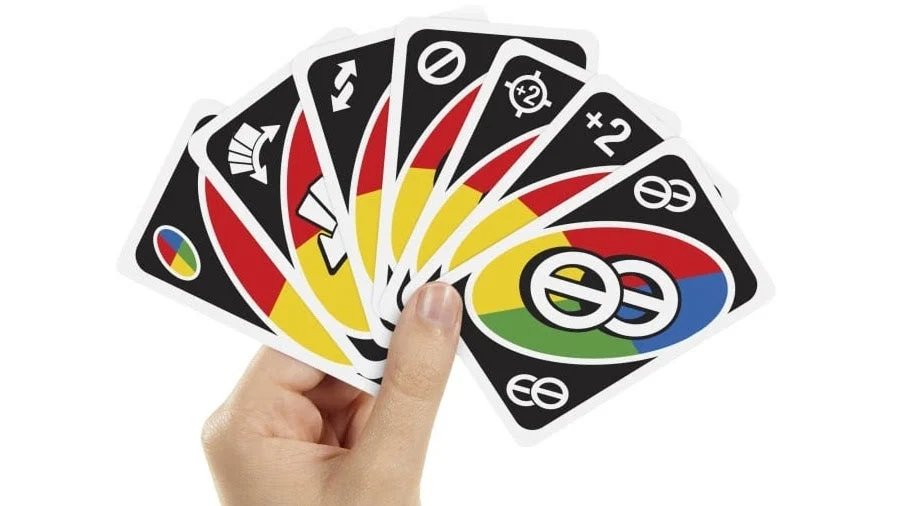
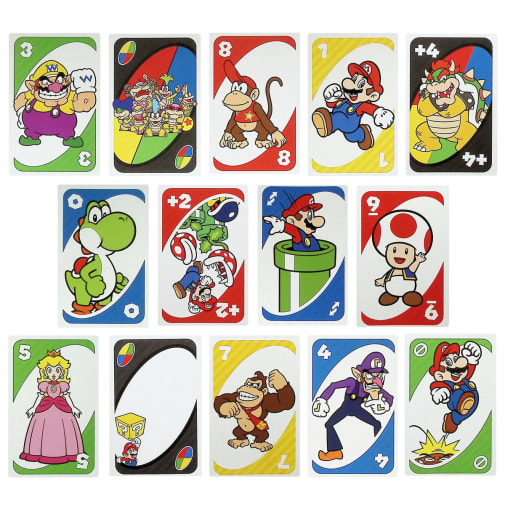
- Each player receives 9 cards in four colors (red, yellow, green, blue) with number and special symbol cards.
- On your turn, play a card matching the discard pile's current color or symbol.
- If no valid card is available, draw one card from the storage pile — if it's playable, you may play it immediately.
- When you reach exactly one card remaining, press the Uno button immediately. Empty your hand to win.
Basic Controls:
- Click / Tap Card: Play a valid card from your hand.
- Click / Tap Draw Pile: Draw from storage when no valid play is available.
- Uno Button: Press when you have exactly one card remaining — failure to press results in a 2-card penalty.
Objective: Be the first player to discard all cards. Match colors and symbols, use special cards strategically, and press the Uno button at the right moment to avoid penalty.
3. One Card Game Features & Highlights
- ✓ Three player count modes — 2, 3, and 4-Player modes each create a distinct competitive dynamic
- ✓ 9-card starting hand — a slightly fuller starting hand than standard that creates richer early-game color strategy
- ✓ Uno button mechanic — a mandatory timing element that adds high-stakes tension to every endgame
- ✓ Color-changing special cards — shift the active color to your dominant hand color at key moments
- ✓ Refreshed visual design — a newly designed card interface and main screen that gives the game its own visual identity
4. One Card Game Tips & Strategies
Beginner Tips:
- Know your color distribution before playing anything. With 9 cards in hand, you have a real color portfolio. Before your first play, identify which color you hold the most of — that's the color you want to keep active as much as possible.
- The Uno button is non-negotiable. When you play your second-to-last card and reach one remaining, press the Uno button immediately. A missed press costs you two extra cards at the exact moment you were about to win. Build the reflex.
- Use ban (Skip) cards against players near winning, not players with large hands. Skipping a player with 10 cards buys you very little. Skipping a player about to win can save the match.
Advanced Strategies:
- In 4-Player mode, watch two threats simultaneously. With three opponents, two players can be approaching their final cards at the same time. Prioritize the one nearest to winning, but keep your eye on the second-closest — they become the new primary target the moment you've disrupted the leader.
- Use color-changing cards when your hand peaks in one color. A color-changing card declares whatever color you want active. If 5 of your 9 cards are green, declare green — suddenly nearly half your hand is potentially playable on your next turn.
- React to other players' Uno button presses immediately. When you see a Uno notification from another player, you know they have one card remaining and will win next turn unless disrupted. Immediately evaluate every special card in your hand for whether it can stop them.
What to Watch Out For:
- Carrying the wrong color too long. If the active color stays consistently on a color you hold only one or two cards in, you're drawing more and falling behind. Use color-changing and matching opportunities to redirect the pile toward your dominant color.
- Missing the Uno button under excitement. Players who are excited about being close to winning sometimes play their second-to-last card without pressing the Uno button first — and receive two penalty cards right before victory. Stay composed and press the button before celebrating.
5. One Card Game Game Elements Explained
The Three Player Mode System: One Card Game's three player count modes — 2, 3, and 4 Players — create meaningfully different strategic environments rather than simply varying difficulty. In 2-Player mode, every special card (Skip, Draw, color change) directly affects your sole opponent — the relationship is bilateral, immediate, and highly consequential per card. Every advantage you gain is an equal disadvantage for your opponent with no buffer. In 3-Player mode, there are now two opponents to monitor and a natural "gang up" dynamic where two players might implicitly cooperate against the leader. In 4-Player mode, the full complexity of multi-player card games emerges: turn order matters, special cards may wrap around the table unexpectedly, and the player nearest to winning changes frequently as multiple hands are managed simultaneously.
The 9-Card Starting Hand: One Card Game begins each match with 9 cards per player rather than the 7-card standard in many Uno variants. This additional starting depth has genuine strategic implications. Nine cards provide a richer initial color distribution — you're more likely to have several cards in your two strongest colors, which makes early color-management decisions more nuanced. It also means the early game phase (where hand size reduction from matching runs smoothly) lasts longer, creating more opportunity for special card positioning before the high-stakes endgame begins. The path from 9 cards to 0 is also slightly longer, which rewards sustained strategic consistency rather than lucky early bursts.
The Uno Button Timing Mechanic: One Card Game's Uno button mechanic introduces a mandatory timing element that creates genuine endgame tension. When a player reaches exactly one card in hand, they must press the Uno button — immediately, at the moment their previous card was played. Failure to press it results in a 2-card penalty, which can reverse a winning position to a competitive one in an instant. The mechanic serves two purposes simultaneously: it demands attention at the exact moment excitement peaks (when you're about to win), and it signals to all other players that someone is on their final card — triggering the defensive response of using disruptive special cards against them. The Uno button is both a risk and an announcement, making it one of the game's most dramatically charged moments.
6. One Card Game Frequently Asked Questions
Q: How many cards does each player start with?
A: Each player begins with 9 cards — slightly more than the 7-card standard in most Uno variants, creating a richer opening hand-management challenge.
Q: What happens if I forget to press the Uno button?
A: You receive 2 penalty cards added to your hand. This happens at the exact worst moment — when you were one card away from winning. Build the habit of pressing the Uno button at the same moment you play your second-to-last card.
Q: What do the special cards do?
A: Color-changing cards let you declare the new active color. Ban cards (Skip) cause the next player to lose their turn. Draw cards force the next player to take additional cards and lose their turn. The full suite of effects is aligned with standard Uno-style special card rules.
Q: What should I do when another player presses the Uno button?
A: Immediately check your hand for any Skip, Draw, or color-change card that can disrupt them before their winning turn. If you can delay their win by one turn, someone else may be able to finish first.
Q: Is One Card Game available on mobile?
A: Yes — the game uses click and touch controls and runs in mobile browsers without requiring a download.