



1. Watermelon Game Game Overview
Watermelon Game is a fruit-dropping merge puzzle that combines the visual joy of a colorful falling-fruit game with the strategic satisfaction of a merge progression challenge. Fruits cascade from above, and your job is to match identical ones — two cherries become a strawberry, two strawberries become a grape, and the chain of merges climbs through a lineup of progressively larger, more colorful fruits, all aimed at the ultimate prize: the watermelon.
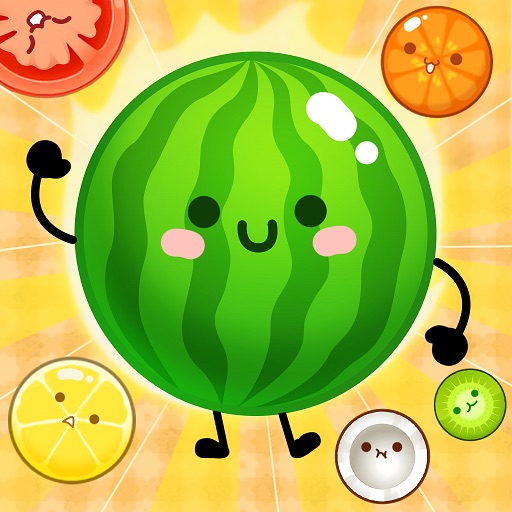
The game is a close cousin of Suika Game, sharing the fruit-merge premise with its distinctive cascade format. Where Watermelon Game distinguishes itself is in its visual presentation and the specific energy its colorful character animations bring to the experience. This is a game that takes obvious pleasure in its own cheerfulness — the vibrant colors pop, the fruit animations charm, and the upbeat soundtrack keeps the pace feeling energetic even in longer sessions.
The core mechanic generates an addictive loop: drop a fruit, watch for match opportunities, trigger a merge that creates a larger fruit, position the next drop to chain another merge, and keep building toward the watermelon. When the screen fills before the watermelon is achieved, a new session starts — and the lessons of the previous run immediately inform the next. Speed is a factor: as fruits accumulate, the strategic pressure of the filling screen demands increasingly quick, accurate drop decisions.
The "elusive watermelon jackpot" framing in the game's identity is exactly right — reaching the watermelon is the challenge that keeps sessions running.
Key Details:
| Genre: | Puzzle / Merge / Arcade |
| Difficulty Level: | Easy to Hard (escalates as screen fills) |
| Average Play Time: | 5–20 minutes per session |
| Best For: | Casual puzzle fans who enjoy fruit merge games; players seeking a visually charming, immediately accessible merge challenge |
2. How to Play Watermelon Game
Getting Started:
- A fruit appears at the top of the screen — position it horizontally above your target landing zone.
- Release the fruit to let it fall into the play area below.
- When two identical fruits touch, they automatically merge into the next larger fruit in the sequence.
- Continue dropping and positioning fruits to trigger merges while managing the available space.
- The game ends when any fruit overflows above the play area's boundary.
Basic Controls:
- Mouse Movement / Touch: Position the fruit horizontally before dropping.
- Mouse Click / Release / Tap: Drop the fruit to fall.
Fruit Sequence (small to large): Cherry → Strawberry → Grape → Orange → and progressively larger fruits → Watermelon
Objective: Merge fruits upward through the sequence toward the watermelon. Achieve the highest score possible before the play area fills to overflowing.
3. Watermelon Game Features & Highlights
- ✓ Multi-stage fruit merge sequence — a satisfying visual progression from tiny cherries to the prized watermelon
- ✓ Physics-based fruit stacking — fruits roll and settle realistically, creating organic merge positioning
- ✓ Vibrant colorful graphics — vivid fruit colors and adorable character animations that create genuine visual charm
- ✓ Energetic soundtrack — upbeat music that maintains pace and energy throughout sessions
- ✓ Quick reflexes challenge — escalating fill pressure demands increasingly rapid, accurate drop decisions
4. Watermelon Game Tips & Strategies
Beginner Tips:
- Drop near matching fruits rather than open space. A fruit dropped next to its identical type triggers an immediate merge. A fruit dropped into open space away from matching fruits only adds to the pile without advancing the sequence. Deliberate placement near matches is the fundamental improvement over random dropping.
- Keep larger fruits toward the bottom. Large fruits take up significant space. When large fruits roll to the top of the pile, they crowd the drop zone. Position drops to keep larger fruits settled low, maintaining more headroom for subsequent drops.
- Plan for cascade potential. Before dropping, consider whether the merge would create a fruit that immediately contacts another of the new type — triggering an automatic cascade of merges. Cascade planning multiplies the strategic value of each drop.
Advanced Strategies:
- Work from one side of the play area. Rather than dropping across the full width of the play area, concentrate drops in one region to build a height-controlled column of merging fruits. Spreading drops randomly creates chaotic height distribution that's hard to manage.
- Small fruits into gaps, large fruits on stable surfaces. Cherries and small fruits fit into narrow gaps between larger ones, filling space efficiently. Large fruits (oranges and above) dropped onto curved, unstable surfaces roll unpredictably. Match fruit size to the target surface stability.
- Merge chains produce more value than individual merges. A cascade chain where one merge triggers another, which triggers another, clears multiple fruit stages simultaneously — maintaining play area space far more efficiently than the same number of individual merges spread across different moments.
What to Watch Out For:
- Rim overflow. The game ends when any fruit crosses the top boundary — not when the area appears visually full. A large fruit that rolls toward the rim after settling is often the cause of unexpected endings. Monitor rim proximity actively, not just visual fullness.
- Speed pressure creating hasty drops. As the play area fills, the pressure to drop quickly can produce careless placements. Deliberate drops are almost always better than rushed ones — a well-positioned drop that takes one extra second prevents multiple suboptimal merge situations.
5. Watermelon Game Game Elements Explained
The Fruit Merge Sequence: Watermelon Game's progression chain runs from the smallest fruit (cherry) upward through increasingly large fruits, with the watermelon as the ultimate achievement. Each stage's merge requires two identical fruits to touch — they combine automatically on contact and become the next fruit in the sequence. The visual size progression across the chain is substantial: a cherry is small enough to fit several in a palm, while a watermelon occupies significant play area space. This size escalation is both the game's aesthetic hook (watching cherries eventually become a massive watermelon is inherently satisfying) and its strategic challenge (large fruits consume the play area space you need for continued dropping). The merge chain is finite — the watermelon is the top — but reaching it requires sustained, efficient merging across the full sequence from the smallest starting fruits.
The Physics Settling System: Unlike grid-based merge games where pieces occupy fixed cells, Watermelon Game uses physics-based fruit behavior. Dropped fruits fall realistically, bounce on impact, and settle based on the surface they land on. Round fruits roll along other round surfaces; fruits land in physics-determined positions rather than grid-snapping into fixed spots. This physical realism creates both visual charm (the fruits look like actual fruits falling and rolling) and strategic complexity (predicting exactly where a fruit will settle is harder than in grid-based games). Experienced players develop an intuitive sense for how specific fruits roll on specific surfaces — a skill built through repeated play rather than rules knowledge.
The Visual and Audio Design: Watermelon Game's presentation is a deliberately cheerful aesthetic designed to make the challenge feel inviting rather than stressful. Vibrant fruit colors chosen for maximum visual pop, adorable character animations that add personality to merge events, and an energetic upbeat soundtrack that sustains momentum through sessions all contribute to a consistent mood that differentiates the game from visually neutral puzzle implementations. This careful visual and audio investment serves a practical gameplay function: a game that's pleasant to look at and listen to encourages longer, more engaged sessions — and the cascade-planning skills that produce high scores develop with session length.
6. Watermelon Game Frequently Asked Questions
Q: What's the highest fruit I can create?
A: The watermelon is the largest fruit in the sequence — the ultimate achievement of the merge chain. Reaching the watermelon requires sustained efficient merging through the full fruit progression.
Q: What ends the game?
A: The game ends when any fruit's position extends above the play area's upper boundary — not when the area appears full. A fruit that rolls toward the rim after a physics settlement can end a session unexpectedly. Monitor the rim actively.
Q: How do I trigger a cascade merge?
A: Position a drop so that the resulting merge creates a fruit that immediately contacts another fruit of the new type. When the merge produces a fruit that touches an identical fruit, the cascade triggers automatically.
Q: Is this the same as Suika Game?
A: They share the fruit-dropping merge premise, but Watermelon Game has its own visual presentation with distinct fruit designs and character animations. The core mechanic is closely related; the aesthetic experience is its own.
Q: Is Watermelon Game available on mobile?
A: Yes — the tap-to-drop control works naturally on mobile touchscreens, and the vibrant fruit colors display well on phone and tablet screens.